Why Afrikaans should not be weaponised in South African education
Ambassador Carl Niehaus, an EFF Member of Parliament, argues against the establishment of an Afrikaans university like Akademia, contending that it threatens social cohesion and perpetuates racial divisions in South Africa.
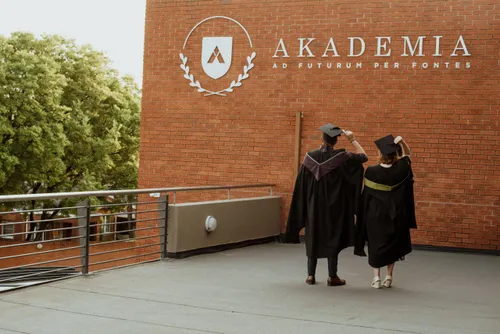
The Afrikaans language holds deep personal significance for the author, harkening back to their childhood, family conversations, cherished literature, and early experiences of learning and self-discovery. However, the author resolutely refuses to equate Afrikaans with the identity of being an Afrikaner. To them, the term "Afrikaner" has become tainted by its appropriation and abuse by those who view it as an exclusive racial and cultural bastion, rather than a linguistic identity shared by people of diverse backgrounds.
The notion of the Afrikaner, as currently propagated by bodies such as AfriForum and the broader Solidarity Movement, is steeped in nostalgia for power, racial anxiety, and the desire to recreate the segregated worlds of apartheid through private means. The author vehemently opposes this identity and unequivocally condemns the plan to establish and grow Akademia as an Afrikaans-medium university.
This stance is not an anti-Afrikaans sentiment, but rather a rejection of the utilization of Afrikaans as a means to foster exclusion, racial segregation, and the perpetuation of historical advantages. The new university campus projects associated with AfriForum and Solidarity, backed by hundreds of millions of rand and reportedly nearing R3 billion in private investment, signify a calculated endeavor to construct an academic space that, in practice if not always explicitly, is barred to the vast majority of South Africans – namely, the Black population.
The language barrier is a tangible reality. The demographic fact that Afrikaans is predominantly spoken by a minority of the population is well-known. To claim that a private Afrikaans-medium university is merely about promoting mother-tongue education is to overlook the history, power dynamics, and societal implications of such a project in a nation still grappling with profound racial disparities.
Naledi Pandor has expressed this viewpoint with clarity and bravery. In a recent interview, she emphasized that the construction of an Afrikaans-medium university receiving substantial private funding should not be tolerated. She pointed out that Jonathan Jansen has been the lone voice of dissent, while many others have remained silent, complacent with their freedom.
Pandor accurately situated the project within the broader struggle against centuries of racism and colonialism. She noted that those who once held power do not relinquish it easily; instead, they seek alternative methods. Private capital, cultural organizations, and the language of "community initiative" have become tools to perpetuate privilege beyond the purview of democratic oversight.
The author shares Pandor's concerns wholeheartedly. When a former minister of international relations, and an individual deeply rooted in the education sector, feels compelled to raise alarm about this development, it is a signal that must be heeded. Professor Jonathan Jansen, a former Rector of the University of the Free State, has consistently and rigorously criticized the Afrikaans-exclusive educational approach.
In his July 2026 column, "A degree in isolation," Jansen cuts to the heart of the issue. He argues that Afrikaans-only education confines young people to ideological and racial isolation, leaving them ill-prepared for the multifaceted society they will navigate in their adult lives. Jansen has long warned that institutions exclusively focused on Afrikaans are not primarily concerned with language rights; rather, they prioritize maintaining segregation.
They uphold the intergenerational transmission of bitterness, superiority, and fear of others, known by Jansen as "knowledge in the blood." As an Afrikaans speaker who has dedicated their life to rejecting this legacy, the author finds Jansen's analysis profoundly accurate. A university that isolates its students from the majority of their fellow citizens is not equipping them for democratic citizenship.
It is shaping them for a parallel existence. The Higher Education Transformation Network has, over the years, highlighted the discriminatory nature of such institutions. Akademia's language policy, and the tangible consequences of its Afrikaans medium, raise significant questions regarding consistency with the Constitution, the Education White Paper, and the Higher Education Act's commitment to equitable access and the elimination of unfair discrimination.
Blade Nzimande, during his tenure as Minister of Higher Education, correctly identified the racial ramifications of an institution built around Afrikaans exclusivity and suggested the possibility of regulatory intervention. These are not mere grievances. They address the very essence of what a post-apartheid higher education system is intended to accomplish.
This writer, who grew up in a world where Afrikaans was the language of power, also witnessed its use as a means of humiliation, exclusion, and delineation of belonging. They chose a different path, rejecting the racial nationalism that claimed ownership of Afrikaans. They joined the struggle against apartheid precisely because they refused to allow their language and cultural background to be commandeered for the benefit of white supremacy.
Today, when they observe AfriForum and its allies amassing billions to construct an Afrikaans university, they discern the same old logic, now cloaked in different attire. The argument is framed as cultural preservation. However, the outcome is the establishment of a space where Black South Africans are largely left out due to language.
This is not the preservation of a language; it is the preservation of a racially structured social order by other means. The danger to social cohesion is palpable. South Africa's universities have been battlegrounds over language for decades because language policies have, for generations, fostered racially segregated lecture halls and residences.
Parallel-medium arrangements at historically Afrikaans institutions have repeatedly failed the test of integration.
Written by urgent.news from IOL's reporting — not their text. Machine-written — may contain errors; check the original before relying on it.