Scientists left giant Arctic fossil behind; 78 years later it set a record
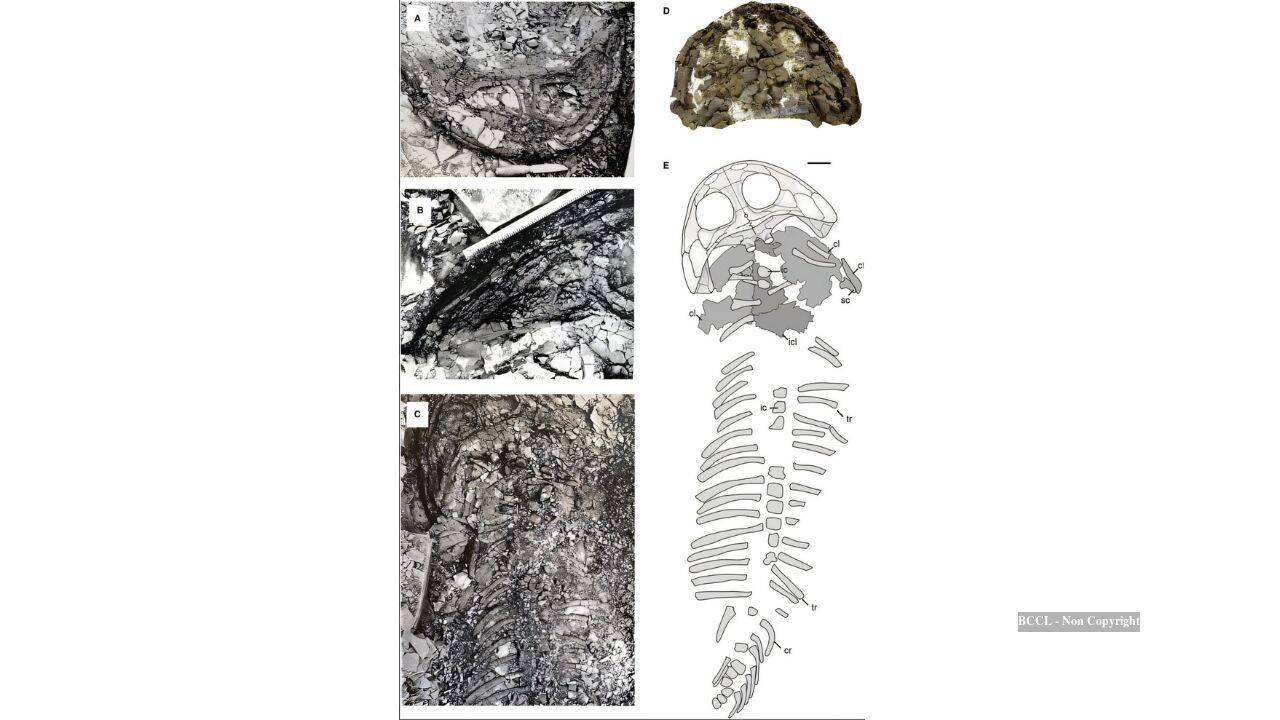
Nearly 80 years ago, a British expedition found a giant fossil on the peak of Bjørnøya (Bear Island) in the Arctic. Unable to transport it, they photographed it and left the fossil behind. The fossil was rediscovered in 1984 by a Norwegian field party after lying exposed to harsh Arctic conditions for decades. The fossil, named Arctobatrachus urdensis, was identified as a new species of ancient amphibian-like creature called a plagiosaurid.
This creature, roughly 2.7 meters (8.9 feet) long, is the largest plagiosaurid ever discovered. Plagiosaurids were extinct bottom-dwelling, flat-bodied creatures that lived during the Triassic period (251 to 201 million years ago). Known for their peculiar body shape resembling a boomerang, these creatures inhabited rivers, lakes, and seas, waiting for prey with their wide mouths lined with tiny teeth.
The Arctobatrachus urdensis fossil, discovered after 37 years, was fully prepared at the Stuttgart museum and analyzed, revealing its place in the plagiosaurid family tree as one of the earliest members. The discovery provides valuable insights into the early appearance and life of this unique lineage, offering a glimpse into the ancient world of these elusive marine creatures.
Written by urgent.news from Times of India's reporting — not their text. Machine-written — may contain errors; check the original before relying on it.