'Govt can't act alone': Welfare Chief calls for community help as PwD cases climb
KLANG: The welfare of vulnerable groups, including the elderly, children, persons with disabilities (PwD) and bedridden patients, cannot be left to a single agency or the government alone, said Social Welfare Department (JKM) director-general Datuk Che Murad Sayang Ramjan.
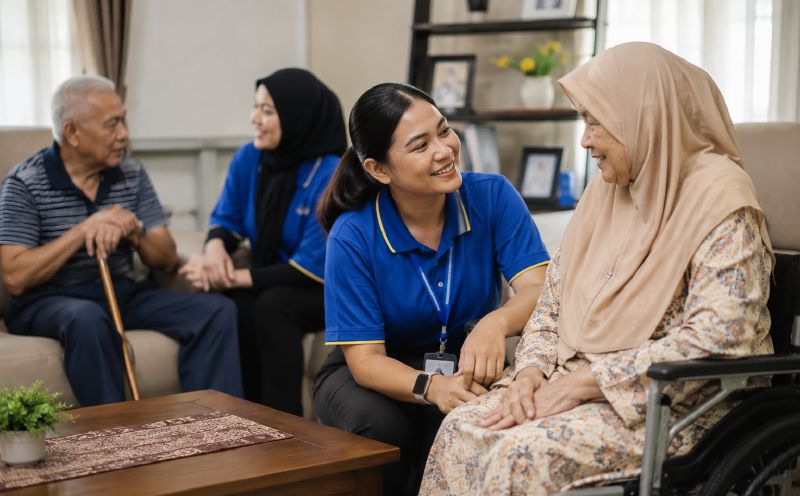
KLANG: Social Welfare Department director-general Datuk Che Murad Ramjan stressed that caring for vulnerable groups like the elderly, children, persons with disabilities and bedridden patients cannot rely solely on the government. He highlighted a growing need for community involvement and non-governmental organization (NGO) participation as the number of people requiring social support continues to rise year after year.
Che Murad noted a significant increase in registered persons with disabilities, jumping from 814,966 in the previous year to 849,775 as of June 2025, and a sharp rise in registered autistic children from around 10,000 in 2015 to 89,000 in 2026. Furthermore, the total number of financial assistance recipients managed by JKM reached 636,232 in 2025, with 568,103 recipients recorded from January to May of the current year.
As such, a single agency or the government cannot be solely responsible for supporting these vulnerable groups. The welfare director encouraged society to join forces and collaborate to help those in need. He addressed the seminar after its inauguration, speaking alongside Selangor JKM director Azmir Kassim. Che Murad explained that caregiving challenges are also felt by families caring for bedridden patients, especially when caring for them full-time prevents them from working.
Financial assistance provided to caregivers is often insufficient to cover all their needs, as care expenses include things like nappies, medicines, equipment, and special milk. Therefore, the welfare approach should extend beyond financial aid by offering training, skills, and opportunities to help vulnerable individuals and their caregivers build more resilient lives.
The 2-day seminar focused on improving knowledge, basic skills, and public awareness of holistic care, emotional well-being, and community support for the elderly and persons with disabilities. The RYTHM-Rhythm of Harmonious Life Programme, a joint initiative by the Women, Family and Community Development Ministry, JKM, Youth and Sports Ministry, and Higher Education Ministry, aims to encourage greater community participation, volunteerism, and the involvement of younger generations in strengthening the national social support system.
The programme brought together 500 participants, including caregivers for the elderly and persons with disabilities, Senior Citizens Activity Centre supervisors, Community-Based Rehabilitation Centre staff, volunteers, youths, higher education students, NGOs, JKM officials, and local communities from Selangor, Perak, and Kuala Lumpur.
Topics covered included basic care for the elderly and persons with disabilities, managing carers' emotional stress, safety and daily care, strengthening community support systems, and practical simulations for patient management. Che Murad emphasized that this collective approach is essential for fostering a more caring and compassionate society while ensuring caregivers acquire the necessary knowledge and skills to care for vulnerable groups.
Written by urgent.news from New Straits Times's reporting — not their text. Machine-written — may contain errors; check the original before relying on it.