Europa frente al desafío chino: el coche es solo el principio
China ya no compite principalmente por costes, compite por productividad, por tamaño de su mercado, por tecnología y por capacidad para innovar. Mientras Europa debatía durante años sobre marcos regulatorios, el gigante asiático ejecutaba una estrategia industrial a largo plazo. Leer
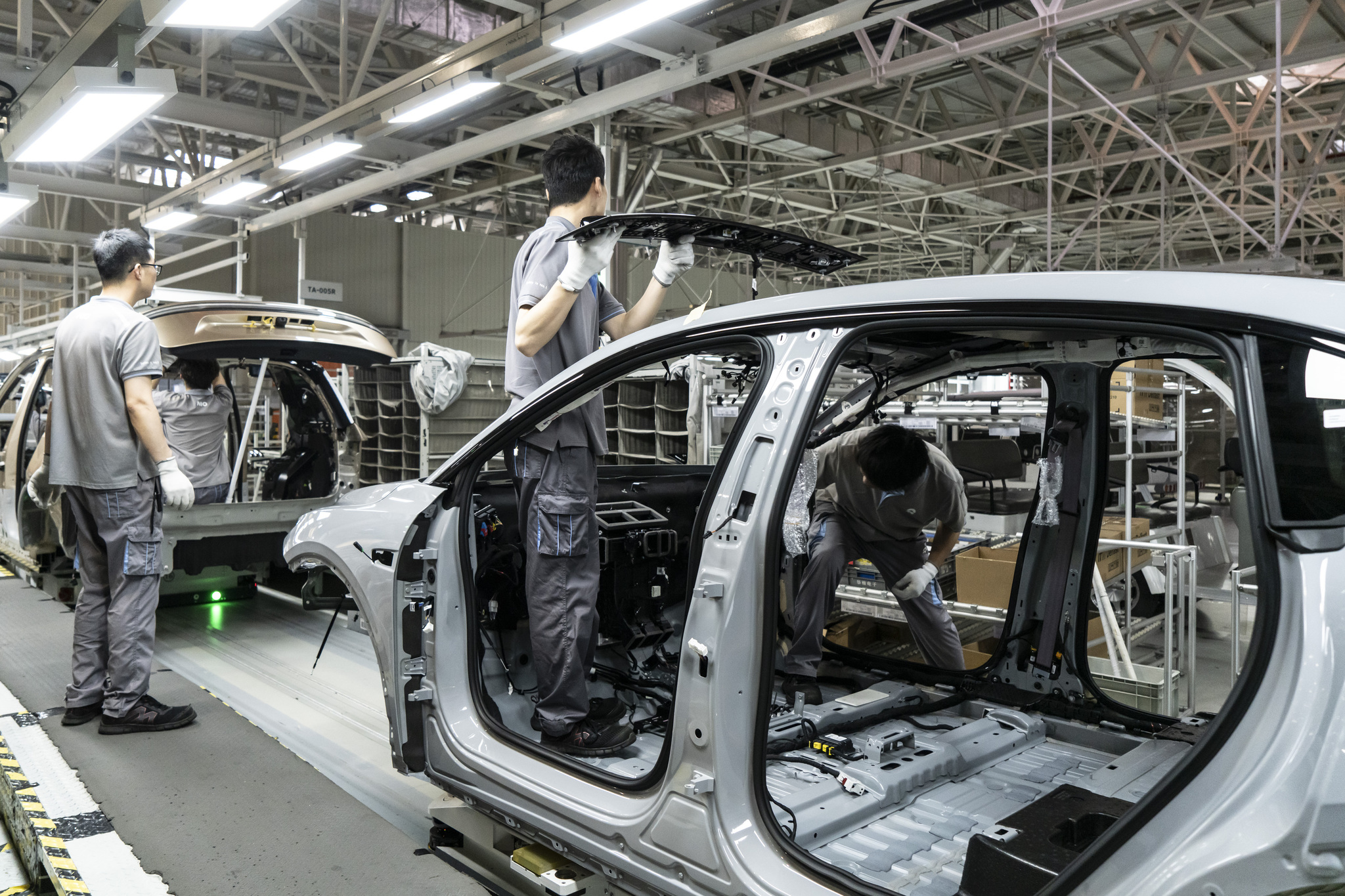
China no longer competes primarily on cost, it competes on productivity, market size, technology, and the ability to innovate. While Europe debated regulatory frameworks for years, China executed a long-term industrial strategy. Every time a Chinese manufacturer arrives in Europe with a cheaper, more advanced, and more equipped electric vehicle, the same question arises: What are we doing wrong?
The easy explanation attributes Chinese success to low wages, government subsidies, or unfair competition. While these factors influence the outcome, none alone explains why technological leadership is shifting to Asia. The real reason is that China has changed faster than Europe. For decades, China was seen as a factory of cheap products.
That image is no longer true. Chinese industrial wages have been rising for years and in many regions significantly surpass those of other Asian countries. If the only secret were to pay workers less, production would have shifted massively to Vietnam, Indonesia, or Bangladesh. However, China remains the focus. The reason is simple: China no longer competes primarily on cost.
It competes on productivity, market size, technology, and the capacity for innovation. Europe, meanwhile, debated regulatory frameworks for years, while China implemented a long-term industrial strategy. It didn't just think about manufacturing cars. It aimed to dominate the entire value chain: refining critical minerals, batteries, power electronics, software, artificial intelligence for mobility, and charging infrastructure.
They understood that the electric vehicle was not just a car with a different engine; it was a computer on wheels. The battery accounts for about a third of the vehicle's value, and the rest increasingly depends on software, sensors, energy management systems, and artificial intelligence. The car has stopped being a purely mechanical product and has become a technological one.
It would be unfair to say that Europe has stopped innovating. Just look at Airbus or ASML to prove otherwise. The first global aviation competition is with Boeing. The second manufactures the most sophisticated machines on the planet for producing advanced semiconductors. European companies like Siemens, SAP, and Schneider Electric remain benchmarks.
The problem isn't the lack of excellence; it's that we lack a critical mass of companies. Because while the United States leads major digital platforms and China multiplies technological giants in numerous sectors, Europe has few companies leading their sectors. A revealing fact is that China invests more in research and development in absolute terms than the entire European Union.
But what matters more is the fate of that investment. Much of China's R&D is focused on artificial intelligence, robotics, industrial automation, semiconductors, new materials, biotechnology, or quantum computing. These are the technologies that will determine competitiveness in the coming decades. Europe also invests in research and development, and it does very well.
However, too often excellent research is transformed into scientific publications, while others turn it into global companies. Often, it is said that China's success is based exclusively on public subsidies. It's an incomplete view. Subsidies exist and are significant. But there is also a vast internal market where dozens of manufacturers compete intensely.
Margins are reduced, prices don't rise, and innovation never stops. Companies that survive this competition end up in international markets surprisingly strengthened. It's also worth mentioning another common place. It's often said that Europe completely opened its market, while China kept its market closed. That's not true. For years, European manufacturers sold millions of vehicles in China and obtained a significant part of their profits there.
However, that access was never symmetrical. There were local production requirements, joint ventures, technology transfer, and a deliberate policy to favor the development of Chinese manufacturers. Amid this situation, calls for more European protectionism proliferate. It's a understandable reaction, but insufficient. Tariffs can provide relief, but they can never replace competitiveness.
If that additional time reduces energy costs, simplifies regulation, accelerates investment, strengthens research, facilitates business financing, and recovers European industrial attractiveness, it would have been worth it. If it only delays a structural problem, the result will be the same, just a few years later. Europe remains a tourism, gastronomy, cultural, heritage, luxury, and fashion power.
It must continue to be this way. No one questions the importance of these sectors. But no great economy has maintained long-term leadership without a strong industrial and technological base. The United States still dominates much of software, artificial intelligence, and biotechnology. South Korea has world-class technological giants.
Written by urgent.news from Expansion ES's reporting — not their text. Machine-written — may contain errors; check the original before relying on it.