Chokepoints and the cost of cutting off access
In 2022, Ukraine asked SpaceX CEO Elon Musk to activate Starlink coverage around Sevastopol to support an attack on Russia’s Black Sea Fleet. He refused, saying SpaceX would become “explicitly complicit in a major act of war”; he later also cited US sanctions covering Crimea. At the moment that mattered, one private actor had the final say. It exposed a question hidden inside every chokepoint. We…
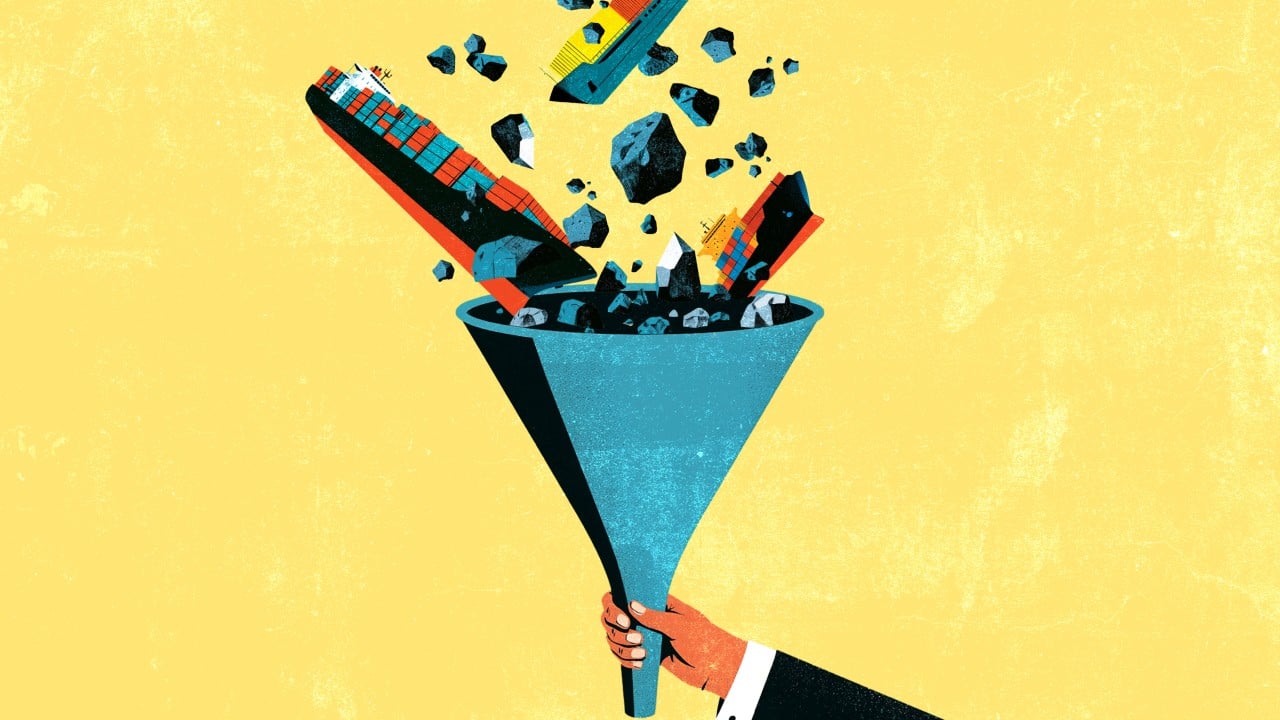
In 2022, Ukraine approached SpaceX CEO Elon Musk to expand Starlink coverage around Sevastopol for an attack on Russia’s Black Sea Fleet. Musk declined, citing involvement in an act of war and US sanctions on Crimea. This instance illustrated a central question regarding chokepoints: who holds the final decision? The three primary questions to consider are how much reliance exists on a chokepoint, the effort required to exploit it, and who holds the power to decide.
China has been grappling with the first question for over two decades. In 2003, President Hu Jintao warned of potential control over the Malacca Strait by "certain major powers," highlighting China's dependence on imported energy. This concern, dubbed the "Malacca dilemma," contributed to the country's naval expansion. However, the Strait of Malacca itself was not the sole catalyst for China's naval build-up.
Other factors like territorial disputes and great-power competition played vital roles. The Strait of Hormuz demonstrated the significant threshold associated with seaways. After Iranian attacks, the strait was blocked, disrupting a waterway responsible for approximately 20% of global oil and gas shipments. Since then, Iran and Oman have been negotiating new shipping lanes, with Iran attaching additional political conditions for reopening.
The consequences of closing a major strait extend beyond the targeted nation, affecting importers, exporters, insurers, allies, and neutral economies. Technological chokepoints exhibit a sharper second question: what is needed to capitalize on the leverage? Nations or companies can impose export restrictions, but the counterpart may seek alternative suppliers, develop local capabilities, or adapt to the absence of the input.
For example, Japan tightened export controls on specific materials in 2019, but Korean companies responded by diversifying suppliers and localizing production. This test of technological chokepoints reveals the irreplaceability or value of limited alternatives. The third question concerning chokepoints is often the least visible and pertains to decision-making.
Institutions may seem more predictable as decisions pass through laws, agencies, and procedures. However, the level of discretion possessed by individuals can determine the outcome. In 2018, the US Commerce Department denied ZTE access to American suppliers, leading to the company's eventual collapse. However, President Trump intervened, instructing the department to assist ZTE's revival.
The final consideration is the individual or group with decisive power. Conventional resilience assessments often overlook this aspect. In today's context, the emerging chokepoints in low Earth orbit present a new risk. SpaceX's Starlink, with around 10,000 satellites, faces competition from China's planned Guowang constellation, estimated at 13,000 satellites, and Amazon's Leo constellation.
While the sheer scale of these networks doesn't automatically make them chokepoints, it becomes a critical question when governments, businesses, or military operations rely on them, alternatives dwindle, and switching becomes difficult. The ultimate question shifts from "who built the network?" to "who can deny access to it?" Conventional resilience audits are insufficient in identifying these controlling entities.
Boards and governments must map both control and exposure to understand chokepoint thresholds and decision-makers. How much does dependence rely on a chokepoint? What occurs if access is severed, and how quickly can it be replaced? What decisions or actions are required to utilize leverage? Identifying the individuals or groups who can grant or deny access is crucial in understanding chokepoints.
Written by urgent.news from South China Morning Post's reporting — not their text. Machine-written — may contain errors; check the original before relying on it.
This story
This is one outlet's version. Read the fullest account.