Why Chennai journalists went on a fast on Independence Day 25 years ago
Chennai journalists, protesting the frequent attacks on mediapersons by the police, decided to observe a day-long fast near the State Guest House on Independence Day in 2001, demanding a CBI inquiry
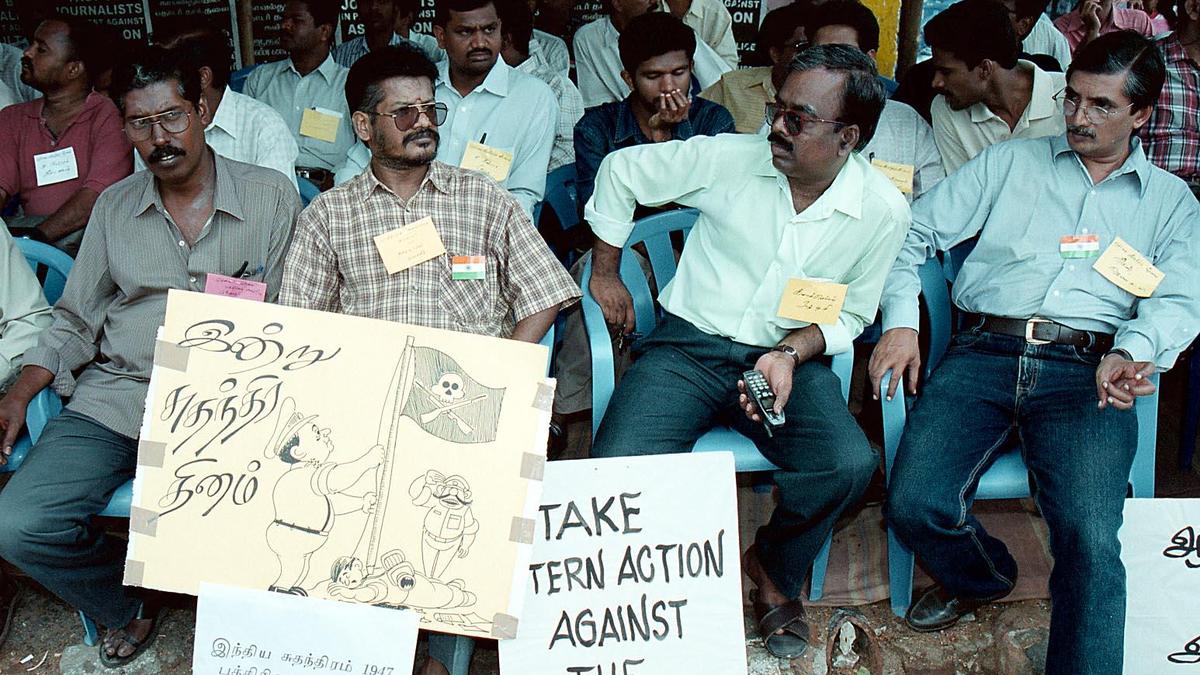
On August 15, 2001, Tamil Nadu Chief Minister J. Jayalalithaa hoisted the national flag at Fort St. George in Chennai, while journalists assembled outside the M.A. Chidambaram Cricket Stadium, near the State Guest House, to observe a fast. This protest stemmed from an attack on journalists by the police on August 12, during a DMK rally aimed at condemning alleged police misconduct following the arrest of former Chief Minister M. Karunanidhi.
The police intervened during the rally, leading to violence between the well-armed officers and unruly elements. While journalists were held inside the DGP control room for safety, 15 others were attacked by the police outside, suffering bleeding injuries and having their camera equipment damaged. Upon confronting Chennai Police Commissioner Muthukaruppan, Jayalalithaa claimed she was distressed by the attacks and asked police to prevent such incidents in the future.
The journalists, however, demanded a CBI inquiry into the attack, but the government declined this request. The journalists also boycotted the Justice Bhaktavatsalam Commission, which was set up to probe the police firing at the rally and the attack on journalists, arguing that the commission could not enforce the Constitution or punish those responsible.
Written by urgent.news from The Hindu's reporting — not their text. Machine-written — may contain errors; check the original before relying on it.