US Navy 3D prints combat-ready drones and 1,000+ parts aboard aircraft carrier during exercise — containerized factory fabricated 80-mph FPVs and critical spares despite rough seas and 12-foot waves
During a two-week journey to Hawaii, a containerized factory aboard the USS Essex 3D-printed a dozen flight-ready drones, as well as over 1,000 parts including vital spares for Apache helicopters.
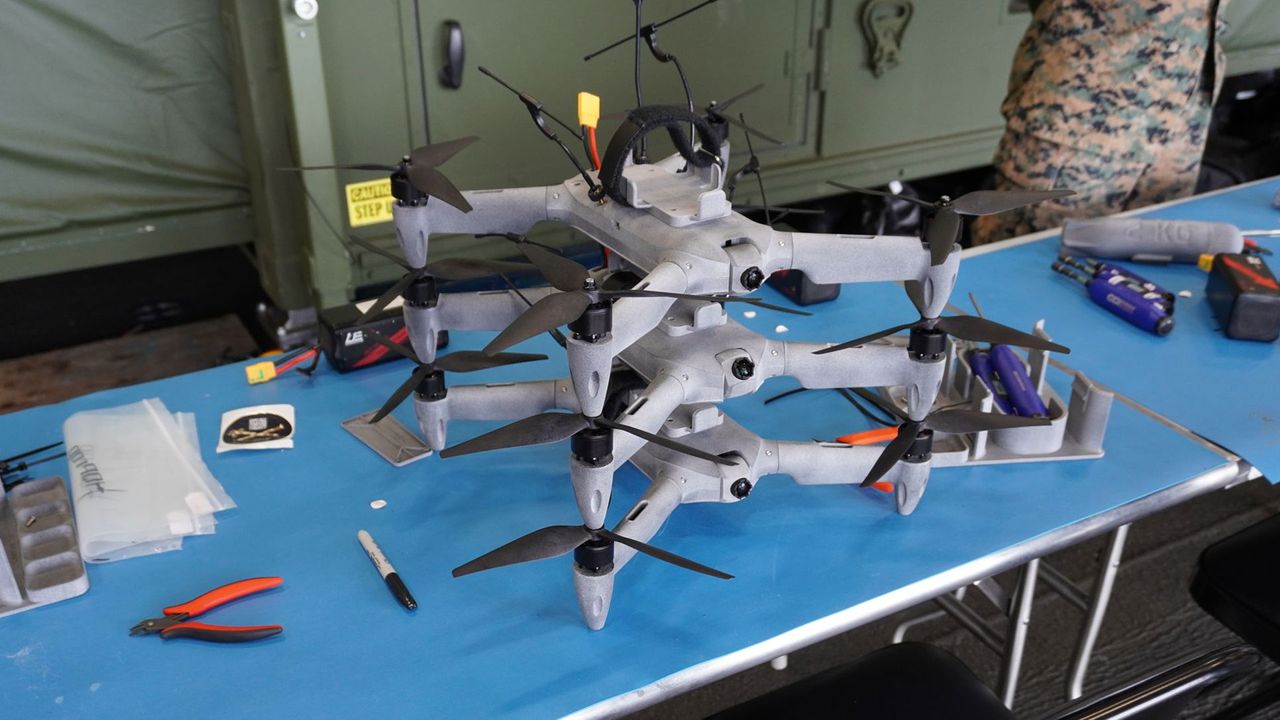
During a two-week deployment to RIMPAC 2026 off Hawaii, a containerized manufacturing facility aboard the USS Essex successfully produced twelve fully operational quadcopter drones, along with over one thousand essential components, including spare parts for Apache helicopters. This marked the first instance of the xCell expeditionary manufacturing platform from Firestorm Labs being used in a maritime setting.
Despite facing the challenges of rough seas and waves reaching up to 12 feet, the xCell platform demonstrated its capability to perform expeditionary manufacturing in real-world conditions. The containerized factory, occupying just two expandable 20-foot ISO containers or a single 40-foot equivalent, housed industrial polymer 3D printers and semi-automated assembly stations.
Among the vital parts produced were twelve Squall FPV drones, designed for U.S. forces to "Print. Build. Fly. Dominate," capable of reaching speeds up to 80 mph and maintaining flight for up to 42 minutes. The drones also participated in adversary aircraft operations in a counter-UAS exercise upon the USS Essex's arrival at RIMPAC.
Other critical components fabricated on board included printed Apache helicopter rotor droop-stops to prevent costly rotor damage during at-sea operations, and a 3D-printed vacuum-hose coupling for life preserver testing. Firestorm Labs highlighted the significance of these printed parts, stating that they eliminate the need for shipping or flying replacements across contested waters, significantly reducing fuel consumption, aircraft hours, and personnel required to maintain operational readiness.
Written by urgent.news from Tom's Hardware's reporting — not their text. Machine-written — may contain errors; check the original before relying on it.