Nespresso war ein Flop, dann wurde es zur Milliardenmarke – doch wem ist der Erfolg zu verdanken? Darüber wird bis heute gestritten
Geht es um die berühmteste Kaffeekapsel der Welt, möchte jeder ein Stück vom Ruhm: Nespresso wird 40.
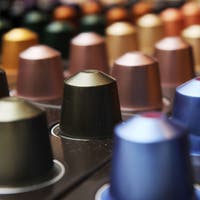
Nespresso, the world's most famous coffee capsule, once seemed like a flop before transforming into a billion-dollar brand. However, the question of who deserves the credit for this success remains a subject of debate even today.
In 1986, Nespresso was established as an independent company, but few believed in its potential. After all, there was already Nescafé, and how could one expect customers to pay a premium for a small espresso compared to a regular cup of coffee? It took years for Nespresso to gain traction within the Nestlé conglomerate, and even longer for consumers to follow suit.
The limited availability of reliable sources from the early years adds to the challenge of reconstructing the story. However, this text attempts to piece together the narrative of how this iconic coffee capsule came to be. One figure who played a significant role is Thomas Fenner, a historian who specializes in Nestlé's coffee business. Another key figure is Nespresso itself, whose origins can be traced back to the 1970s.
Before any capsule could be purchased, the coffee world was relatively simple, with two main options: instant coffee or espresso. However, as coffee brewing methods improved and machines became more affordable, consumer expectations changed. Nespresso needed to offer not just convenience but also high-quality espresso. Nestlé in Vevey recognized the potential for a new business venture and assigned an engineer to create a product that didn't exist at the time: an Italian espresso on demand.
Enter Eric Favre, the engineer responsible for the creation of the iconic capsule system. According to legend, Favre had his epiphany in Rome, where he observed a barista pouring water unevenly through the coffee, creating short bursts instead of a steady flow. Favre returned to Switzerland and began tinkering with the idea, ultimately inventing the crema that became Nespresso's signature feature.
Favre became the first CEO of Nespresso and never missed an opportunity to promote himself as its inventor. Nestlé continues to draw inspiration from this figure in its marketing efforts, but not everyone agrees with this interpretation.
Jean-Paul Gaillard, a former Nespresso business leader, argues that the story is more complex. He claims that the crucial technology for the capsule system was developed by the American research institute Battelle in 1973, which Nestlé purchased the rights to. Favre then further developed the technology. It begs the question of how much of the success story is actually accurate, but Favre himself has refused multiple interview requests, and Nespresso simply states that claims of Nestlé copying the technology from Battelle are "incorrect." Thus, the historical narrative remains a subject of ongoing debate and speculation.
Written by urgent.news from NZZ Wirtschaft's reporting — not their text. Machine-written — may contain errors; check the original before relying on it.