Moon Base | India’s lunar future
NASA has invited ISRO to participate in its latest lunar programme, which seeks to build a human outpost near the Moon’s south pole, where sunlight is available for longer periods and permanently shadowed craters contain significant deposits of water ice
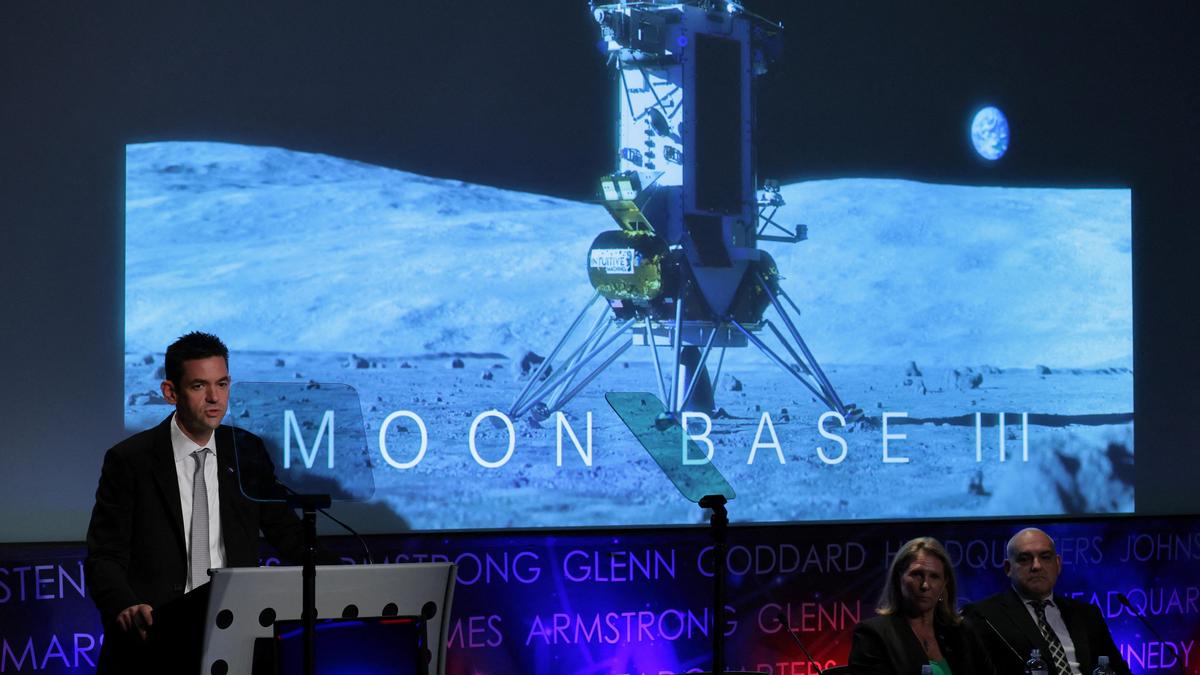
The Moon has long been considered a foreign world, but increasingly it is becoming an extension of Earth's geopolitics and political culture. At a recent meeting between India and the United States, NASA invited India to participate in their 'Moon Base' program. This facility, envisioned for the Moon's south pole, will be built in stages near permanently shadowed craters that contain significant water-ice deposits.
The goal is to establish human presence on a new celestial body around 2030, taking shape incrementally starting in 2030.
NASA is relying heavily on private industry for this project, having already awarded contracts to various companies for lunar terrain vehicles, delivery task orders, and robotic missions. In addition, the revised Artemis programme now includes a crewed test flight in 2027 and a lunar landing in 2028. India's involvement in this effort has grown since signing the Artemis Accords in 2023, with regular cooperation between NASA and ISRO.
China and Russia also plan to cooperate on an International Lunar Research Station, targeting completion in 2035. This could potentially lead to challenges for India, as the U.S. aims to establish "superiority on the Moon" and preserve its leadership in space. If India joins the International Lunar Research Station, it may face the challenge of adapting its systems to different communication protocols, data formats, or operational procedures used by China.
India will need to decide whether to build a second set of capabilities with China or persuade China to change its systems to be interoperable with American designs. This growing interdependence between nations on the Moon may lead India to reconsider its strategic autonomy in the spaceflight domain, particularly if the U.S.-China rivalry changes significantly.
Written by urgent.news from The Hindu - Sci-Tech's reporting — not their text. Machine-written — may contain errors; check the original before relying on it.
Also reported by 2 other outlets
- Moon Base | India’s lunar future thehindu.com
- Nasa’s Moon base: Too early to tell where India fits in timesofindia.indiatimes.com