Even as government considers MDR charge on UPI, data shows cash usage quickening in economy
An analysis by The Hindu shows that the growth in the value of UPI transactions has been consistently slowing since 2021-22, although the current rate of growth is still higher than that of cash with the public
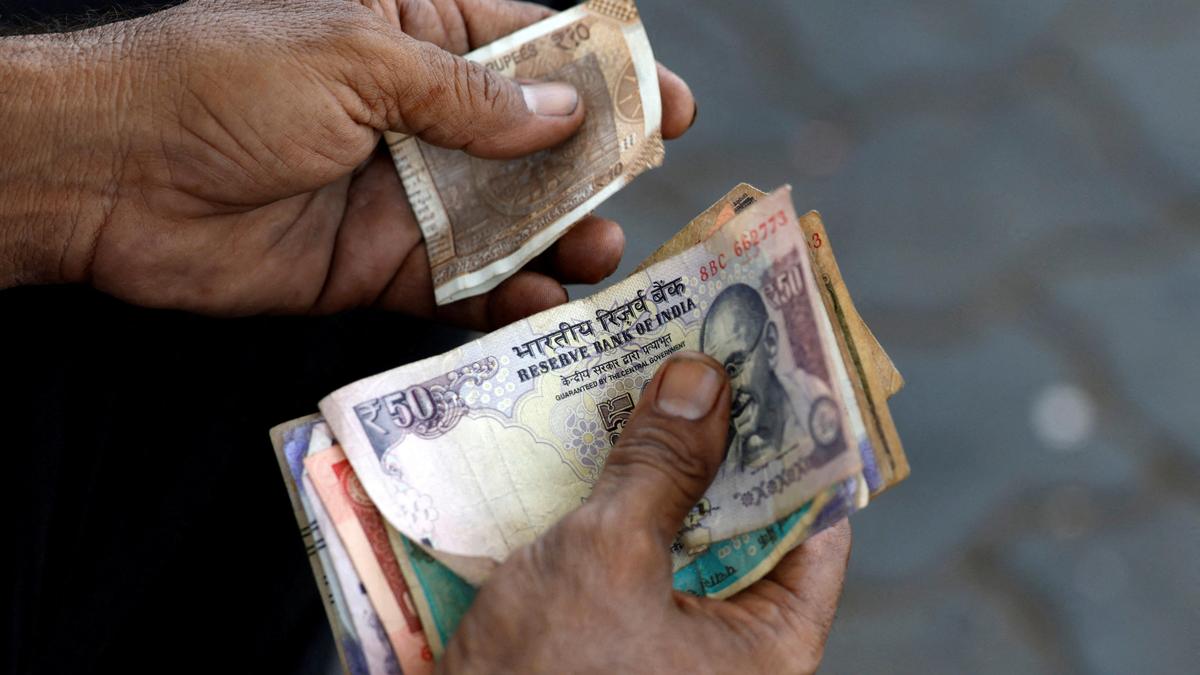
As the government contemplates the possibility of charging a Merchant Discount Rate (MDR) on Unified Payments Interface (UPI) transactions, recent data reveals that cash usage in the economy is increasing at a faster rate. While the growth of UPI transactions has been slowing down over the past five years, the value of cash held by the public has been accelerating.
In the year 2020-21, when the COVID-19 pandemic struck, the growth rate of cash with the public peaked at approximately 17%, but it has since declined consistently, reaching 4% in 2023-24. Nonetheless, the growth rate has been on the rise again, reaching 6.5% in 2024-25 and 12% in 2025-26. Cash with the public grew to ₹41.8 lakh crore by July 31, 2026, marking a 13% increase compared to the same period in the previous year.
Despite assurances from Finance Minister Nirmala Sitharaman and the Payments Corporation of India that the general public would not be required to pay the MDR on UPI transactions, the opposition argues that merchants who do have to pay this charge would likely pass on the increased cost to customers in the form of higher prices, potentially driving people back to using cash.
Meanwhile, UPI transactions have experienced a slowdown in growth over recent years, with the value of transactions growing 133% in 2019-20, 95% in 2020-21, and 105% in 2021-22. However, the growth rate has been consistently diminishing since then, reaching 20.3% in 2025-26, and further slowing to 18.7% in 2026-27. Despite this slowdown in UPI growth, the 18.7% increase in UPI transactions in 2026-27 remains higher than the 13% growth in cash with the public during the same period.
Economist Pronab Sen, former Chief Statistician of India, suggests that the simultaneous growth in both cash and UPI transactions may be masking rising inflation, as the official data may be underestimating it. He explains that an increase in money being transacted, both digitally and in cash, should be reflected in higher inflation rates, but the current official numbers do not show this effect.
Senior policy advisor at EY India, D.K. Srivastava, views the concurrent growth in cash and UPI transactions as a positive sign of a robust and thriving economy, driven by overall economic activity. However, he also cautions that an increase in cash transactions could potentially indicate economic distress due to high unemployment, particularly among the youth.
Written by urgent.news from The Hindu's reporting — not their text. Machine-written — may contain errors; check the original before relying on it.