Why India Needs a Comprehensive Polar Strategy
The Arctic and Antarctic are reshaping both the global climate and the geopolitical chessboard. Yet India remains absent from the tables where polar futures are decided.
India's strategic policies have historically been defined by its Himalayan northern borders and the Indian Ocean maritime periphery. However, as great power competition increases, the Arctic and Antarctic are emerging as new geopolitical frontiers that significantly impact India's security, economic prospects, and diplomatic standing.
The Parliamentary Standing Committee on External Affairs concluded that India's current polar engagement strategy falls short of the requirements for a proactive role in these regions. The committee's key recommendation – appointment of a polar ambassador and establishment of a dedicated Polar Affairs Desk within the Ministry of External Affairs – points to the need for a broader, integrated polar strategy encompassing scientific research, diplomacy, maritime interests, climate security, economic opportunities, and long-term strategic planning.
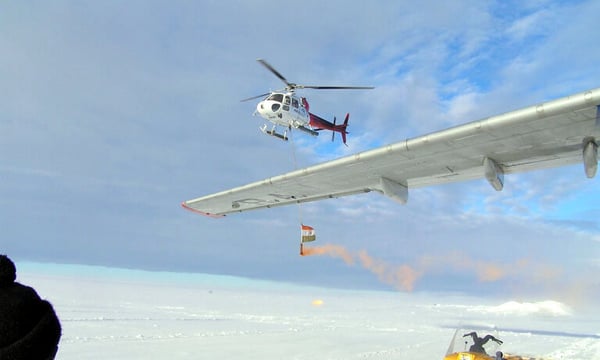
India has maintained a presence in polar regions for several decades. It initiated the Antarctic Program in 1981, establishing research stations like Maitri, Bharti, and Maitri II. In the Arctic, India has conducted research through the Himadri station in Svalbard since 2008, obtained observer status within the Arctic Council in 2012, and enacted an official Arctic policy in 2022.
These activities have bolstered India's scientific credibility, but they have also revealed a strategic gap. Many Arctic states and Arctic Council observer countries have dedicated polar ambassadors and institutional structures for diplomatic engagement, scientific cooperation, and strategic planning; India lacks such a framework.
The absence of a comprehensive polar strategy is not merely a matter of geopolitical competition; it directly impacts India's national interests. Of primary concern is climate security. The IPCC reports that the Arctic is warming four times faster than the global average, leading to shifts in atmospheric circulation, ocean systems, and weather patterns across the Northern Hemisphere.
A recent study by the Indian Institute of Tropical Meteorology has shown that the diminishing Arctic sea ice is affecting Indian monsoon patterns by altering Rossby waves and the Asian jet stream. These changes have profound consequences for Indian agriculture, food security, water management, and disaster preparedness. Moreover, the cryosphere – encompassing both the Arctic and Antarctic regions – is part of an interconnected climate system.
The melting of ice caps, whether on the ice sheets of the Himalayas or the poles, contributes to rising sea levels, threatening over 11,000 kilometers of India's coastline and island territories. Another critical factor in India's polar engagement is maritime connectivity. Over 90 percent of India's trade by volume is transported by sea.
As the climate changes, the Arctic is becoming more navigable, which may alter global shipping economics, logistics, and supply chains. Given India's maritime-centric vision reflected in initiatives such as the Strategic and Global Maritime Affairs (SAGAR) and the India-Middle East-Europe Economic Corridor (IMEC), the evolving Arctic landscape cannot be viewed in isolation.
Furthermore, geoeconomics emphasizes the role of the polar region in resource and environmental governance. The Arctic and Antarctic contain significant reserves of hydrocarbons, fisheries, and critical minerals essential for renewable energy technologies and other strategic industries. As the world grapples with resource and environmental regulations, India must participate in these discussions to secure resilient supply chains and energy independence.
Geopolitically, the polar regions are becoming arenas of strategic competition. Russia has turned the Northern Sea Route into a vital economic corridor and is bolstering its military presence in the region. NATO is intensifying its focus on the High North due to recent European security developments. China, recognizing its strategic proximity to the Arctic, initiated its Arctic White Paper in 2018, proposing the Polar Silk Road as an extension of the Belt and Road Initiative.
While India's strategic objectives differ from those of these powers—emphasizing scientific credibility and adherence to international norms rather than territorial disputes or resource conflicts—India must still navigate this evolving geopolitical environment. To maintain influence and ensure resource security, India must develop a sustained polar strategy and institutional framework capable of addressing these multifaceted challenges.
The Arctic serves as a new domain of geopolitical competition, characterized by shifting dynamics among major powers. Russia's expansion in the Northern Sea Route and increased military presence, NATO's renewed focus on the High North, and China's strategic investments in the Arctic through its Arctic White Paper and Polar Silk Road all underscore the need for India to adopt a proactive approach.
Despite India's distinct strategic priorities—centered on scientific credibility and adherence to international norms—engagement in the polar regions is essential for maintaining geopolitical influence and securing resource access. In conclusion, a comprehensive polar strategy is not only advisable but imperative for India. It will enable the country to effectively engage with these emerging frontiers, protect national interests, and contribute to global climate and maritime governance.
Written by urgent.news from The Diplomat's reporting — not their text. Machine-written — may contain errors; check the original before relying on it.