Urgent.News

600+ sources. One page. See who else covered it.

Editions

Business

Urteil: Fiskus kassiert Unternehmer bei Verzug ab – trotz pünktlich gezahlter Steuern

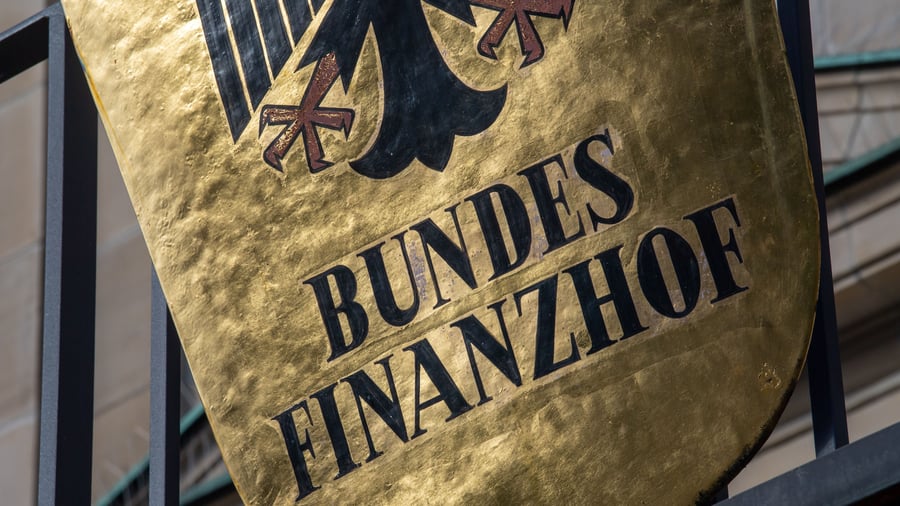
Selbst ohne Steuernachzahlung wird ein Verspätungszuschlag fällig, sobald Unternehmer die Abgabefrist für die Gewinnfeststellung überschreiten. Der Bundesfinanzhof beendet die Kulanzpraxis.

Urteil: Fiskus kassiert Unternehmer bei Verzug ab – trotz pünktlich gezahlter Steuern

A missed deadline can be costly, especially when it concerns tax deadlines. In Germany, payment and payment term dates are generally known and rarely change. To avoid risking penalties, tax-paying individuals should adhere strictly to these deadlines. The Federal Finance Court recently ruled in favor of a partner of a civil law partnership (GbR) whose case involved the application for an extension of the deadline for filing the profit declaration for the year 2020.

This declaration is necessary for the tax authorities to determine the company's profit and its distribution among the partners involved. The partner cited his tax advisors' vacation as the reason for his delay. However, the tax authority rejected his request, as the deadline for filing with the tax advisor for 2020 ended by the end of August 2022.

Despite submitting their declaration by mid-December, the GbR only received their separate and combined assessment of the tax basis – in other words, their profit declaration – at the end of January 2023. This assessment included income from business operations totaling 386,534 euros, divided between the two partners. The tax authority also imposed a late payment surcharge of 966 euros.

This surcharge was calculated from the date of the mandatory deadline for all taxpayers on August 31, 2022. No tax payment was made by either partner since no tax adjustment was requested in any of the quarters. Given that the representation partner had predicted a prospective profit of 700,000 euros, he had already requested an increase in the advance payments to the tax authority in the previous year.

Consequently, the authority had increased the payment amounts for both partners by the quarter. Due to the fact that no further payments arose after receiving the tax assessments for the year 2020, the partner appealed against the fixed late payment surcharge to the tax authority. Although the court acknowledged that a late payment surcharge should generally be fixed, they deemed it inadmissible in cases where the tax authority had approved the extension of the deadline.

The Federal Finance Court disagreed with this assessment, emphasizing that no case of the so-called back-dating existed. The back-dating would occur if the tax authority had approved the request for an extension of the deadline. However, this did not happen. Moreover, the Federal Finance Court deemed that only the tax assessment basis is determined in the assessment procedure, not the following assessment notice.

The tax consequences of the following assessment notices cannot be determined in the assessment procedure, as stated by the Federal Finance Court. Furthermore, the Federal Finance Court pointed out legal changes from 2019. The legislature had defined the imposition of a late payment surcharge after 14 months from the end of the tax year – effectively extended to the end of August 2020 due to the pandemic – as an obligatory decision, not a discretionary one.

This decision aimed to simplify the administration's actions. For profit declaration statements, the late payment surcharge was explicitly set at 0.0625 percent of the assessed income, at least 25 euros, and calculated from the beginning of each month following the delay. The practical tip is that taxpayers should always be aware of the deadlines for filing tax returns and adhere to them.

Otherwise, the tax authority can not only impose late payment surcharges but also assess additional tax liabilities, particularly in particularly persistent cases. The tax authority may threaten a fine and even declare the act as negligent tax minimization, which is unlawful. If a taxpayer deliberately fails to file a tax return to pay less tax, they may face criminal consequences, i.e., a procedure for tax evasion.

This tax tip is interesting for those who want to learn more about tax penalties. Further articles can be found on our cooperation partner Haufe.de. First publication: August 12, 2026, 11:32 AM.

Written by urgent.news from Handelsblatt's reporting — not their text. Machine-written — it may contain errors, so check the original before relying on it.

This story

This is one outlet's version. Read the fullest account.

Read the original at handelsblatt.com →

More in Business

White House Targets Transshipment Loopholes Against China

The ‘great transshipment scam’ defined by the White House takes a typical circumvention structure where China, a target of sanctions and high tariffs, evades the U.S.

  • White House releases report exposing transshipment loopholes used by China
  • Rogue nations and global arbitrageurs evade U.S. tariffs through third countries
  • U.S. plans stricter supply chain tracking, penalties for customs brokers