Upgraded Sardinia Radio Telescope To Continue Probing Mysterious Fast Radio Bursts
Largest Italian radio telescope located on an out of the way mountain plateau in southern Sardinia sheds light on the cosmos’ still misunderstood Fast Radio Bursts (FRBs).
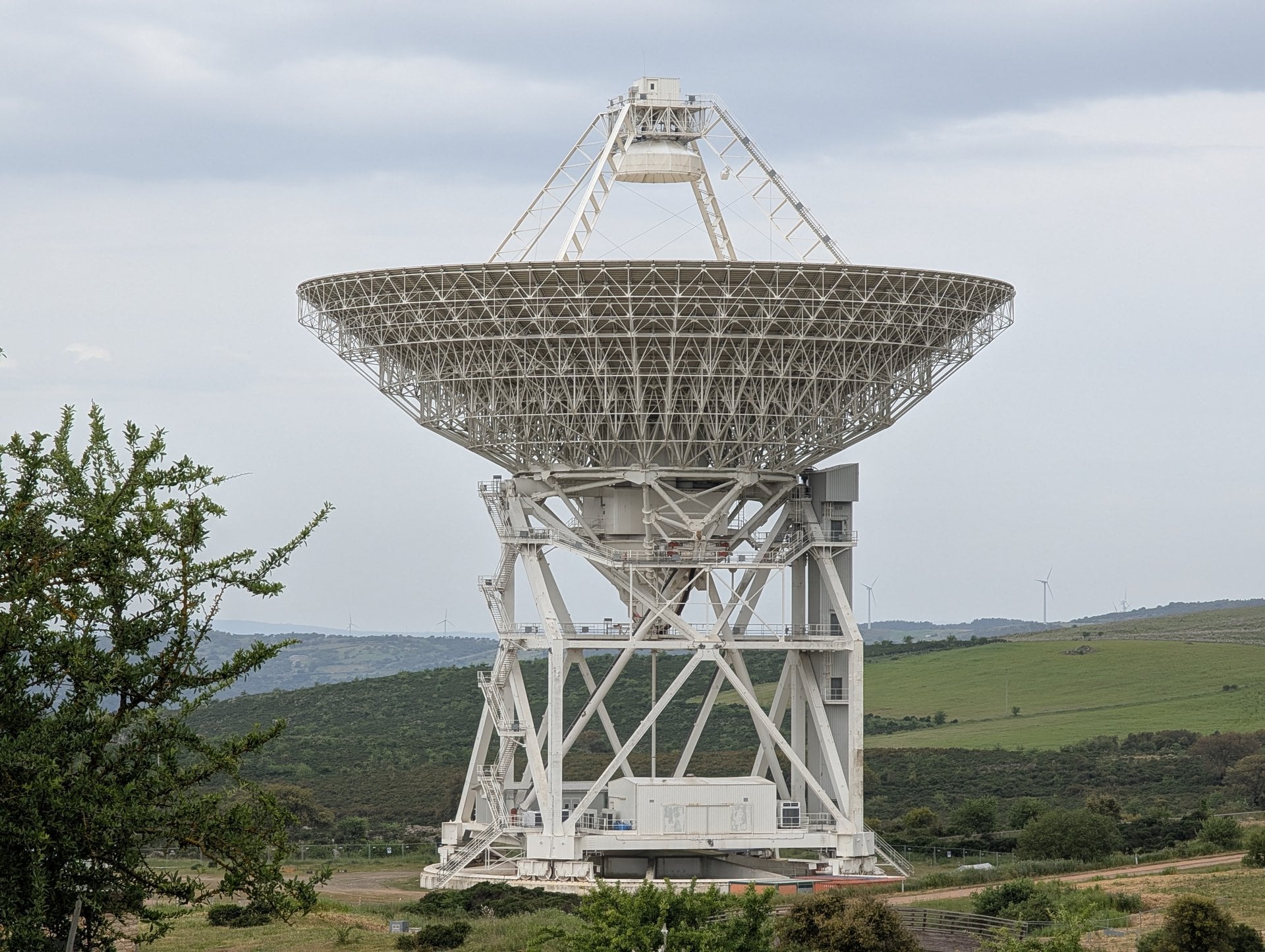
The Sardinia Radio Telescope (SRT) is a 64-meter radio telescope located in a remote, mountainous region in Sardinia, Italy. Its position was chosen due to its radio quiet and shelter from winds at an elevation of 700 meters above the Mediterranean Sea. The SRT is known for its first detection of the lowest frequency Fast Radio Burst (FRB) yet, known as FRB 180916, which was found in a star-forming region within a massive spiral galaxy located approximately 500 million light years away.
The SRT is currently undergoing technical upgrades until at least September, during which it serves as part of the European Space Agency's (ESA) deep space network. The SRT's dual-beam receiver allows for simultaneous observations at 300 MHz and 1.5 GHz, helping researchers study various transient phenomena such as magnetars, microquasars, and gamma-ray bursts.
The SRT team aims to understand the relationship between these systems and the origin of FRBs, which is still an unsolved mystery.
Written by urgent.news from Universe Today's reporting — not their text. Machine-written — may contain errors; check the original before relying on it.