Tiny satellite will use the dark side of the moon to eavesdrop on whispers from the early universe
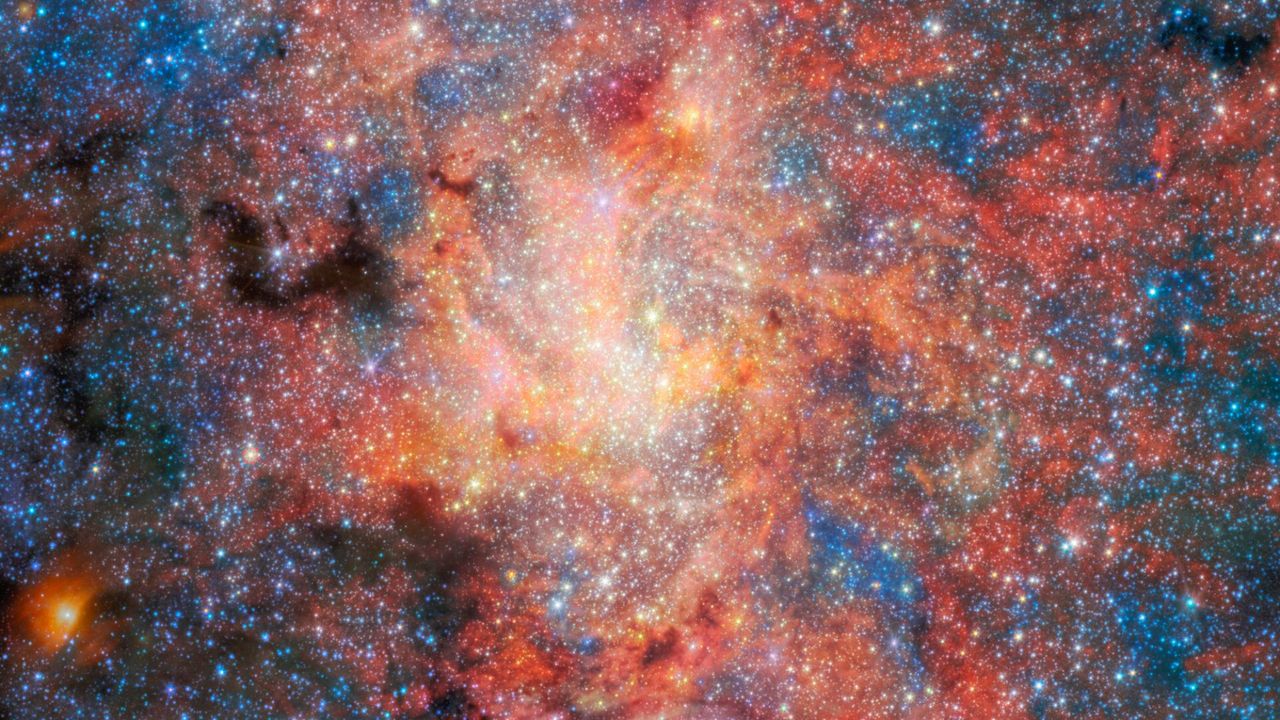
A tiny UK-developed satellite, roughly the size of a small carry-on suitcase, could help answer one of the biggest questions in cosmology: What happened during the roughly 150 million years of the cosmic dark ages, before the universe's first stars appeared?

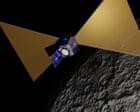
A UK-developed, satellite the size of a small suitcase, named CosmoCube, could unlock one of cosmology's biggest mysteries. The mission, led by the University of Cambridge, aims to listen for a faint signal from the distant past known as the 21-centimeter line. This signal, emitted by hydrogen atoms, is a crucial piece of the puzzle in understanding the few million years between the end of the cosmic dark ages and the birth of the first stars.
The challenge, however, is that Earth's ionosphere and interference from human-made electromagnetic signals drown out this ancient whisper. Enter the moon, with its natural shielding power. When CosmoCube orbits the far side of the moon, it will be protected from Earth's disturbances for about 40 minutes in each 2-hour orbit. Over a 2-year mission, the satellite will collect 1,000 hours of data, potentially revealing the secrets of the early universe.
The project, which has received funding from the UK Space Agency, is expected to launch within the next five years. In addition to its primary goal, CosmoCube will also investigate the role of dark matter, the invisible force that shapes galaxies. The satellite will operate at ultra-low frequencies, specifically between 10 and 50 MHz, a range inaccessible to ground-based telescopes.
The key to CosmoCube's success lies in its innovative design. The satellite will be equipped with a lightweight radio antenna and a Dicke switched calibrator to filter out noise. It will also feature a miniature radiometer, or RF-Systems-on-Chip, to detect the faint signal. The mission, which involves partners from the UK and EU, including Portsmouth University and STFC RAL Space, represents a significant step in understanding the universe's evolutionary journey from darkness to complexity.
Written by urgent.news from Phys.org's reporting — not their text. Machine-written — may contain errors; check the original before relying on it.