Scientists hope to shed light on young universe by using dark side of the moon
UK team seeking to put suitcase-sized satellite in orbit around moon in search for 21cm line radio frequency signal Little is known about what was happening shortly after the big bang, but now researchers are hoping to shed fresh light on the matter by harnessing the dark side of the moon. Scientists are hoping to put a suitcase-sized satellite into orbit around the moon, using the data it…
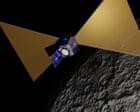
An international team of scientists is planning to launch a suitcase-sized satellite into orbit around the moon in hopes of uncovering new insights into the early universe. Focused on detecting a particular radio frequency signal emitted by neutral hydrogen atoms, known as the 21cm line, the mission aims to shed light on the critical period between the cosmic dark ages and the formation of the first stars and galaxies.
Dubbed CosmoCube, the satellite is designed to collect data as it passes over the far side of the moon, using the signal strength as a thermometer to gauge the physical temperature of the gas in the early universe. By studying the signal's amplitude and shape, researchers hope to investigate the nature of dark matter and better understand the processes that led to the formation of the universe as we know it.
The project, led by Prof Eloy de Lera Acedo from Cambridge University's Cavendish Laboratory, is expected to take two years and cost around £50 million. Despite previous attempts to detect the 21cm line using Earth-based instruments, challenges such as interference from human-made technology and the ionosphere have complicated efforts. However, researchers believe observations from the moon's dark side will help overcome these obstacles.
While the mission has already secured £2 million in funding from the UK Space Agency, some experts express concerns about the race for these measurements. With other planned lunar missions potentially introducing human-generated radio noise, the team faces a "race against time" to achieve their scientific goals.
Written by urgent.news from Guardian Science's reporting — not their text. Machine-written — may contain errors; check the original before relying on it.