SpaceX rocket's moon crash highlights 'a tangible operational risk' of lunar settlement
A SpaceX rocket body slammed into the moon earlier this month, showcasing a risk that will increase as humanity establishes a footprint on Earth's nearest neighbor.
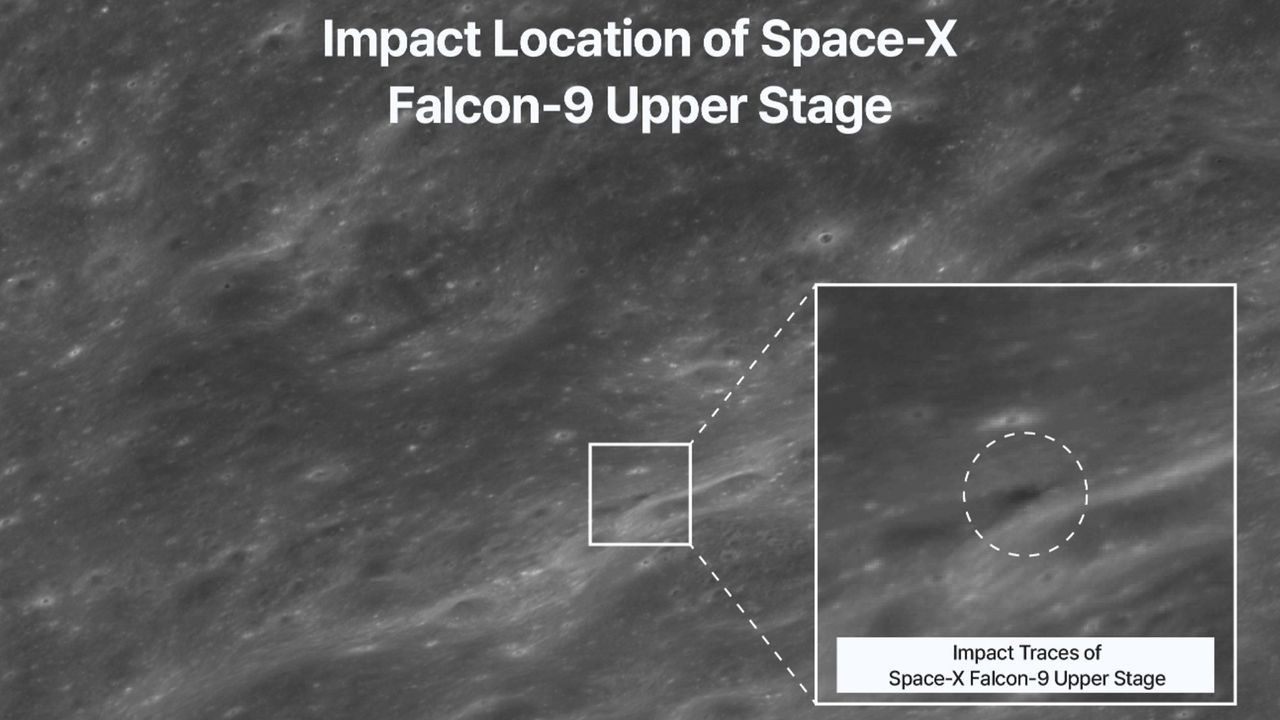
A 4.5-ton SpaceX rocket body struck lunar terrain near Einstein Crater on August 5, according to the latest reports. Images of the impact site were captured by South Korea's Danuri spacecraft and NASA's Lunar Reconnaissance Orbiter (LRO), as well as a Chinese commercial satellite. The uncontrolled collision occurred after the Falcon 9 upper stage transported Firefly Aerospace's Blue Ghost-1 lander and ispace's Hakuto-R Mission 2's Resilience lunar lander to the moon on January 15, 2025.
Although the lunar surface has returned to calmer conditions, the consequences of the unintended strike remain a concern. The incident highlights the potential risks associated with establishing permanent lunar infrastructure as more space agencies and private companies venture into lunar exploration.
Dean Sladen, a UK-based aerospace engineer, explained that uncontrolled rocket stages are becoming a legitimate operational risk as human-made debris accumulates on the moon. A direct hit is the most catastrophic scenario, but even distant impacts can generate high-speed ejecta that may degrade sensitive equipment over time.
Moreover, natural meteorites pose a continuous background risk, with their high-speed collisions carrying significantly more energy. Sladen proposed that the industry will likely need designated impact zones or strictly controlled de-orbit protocols to minimize the hazard of high-velocity ejecta to lunar habitats, solar arrays, and astronauts.
In the meantime, observatories detected sodium and lithium gas above the crash site, with the European Southern Observatory's Very Large Telescope capturing a plume of lunar material for five to ten minutes following the impact. This observation underscores the importance of capturing such events for future reference and planning.
Written by urgent.news from Space.com's reporting — not their text. Machine-written — may contain errors; check the original before relying on it.