Low water: These ships are supposed to keep our industry running
Specially designed low-water ships enable transportation even with extremely low water levels like currently in the Rhine. How the technology works - and where its limits lie.
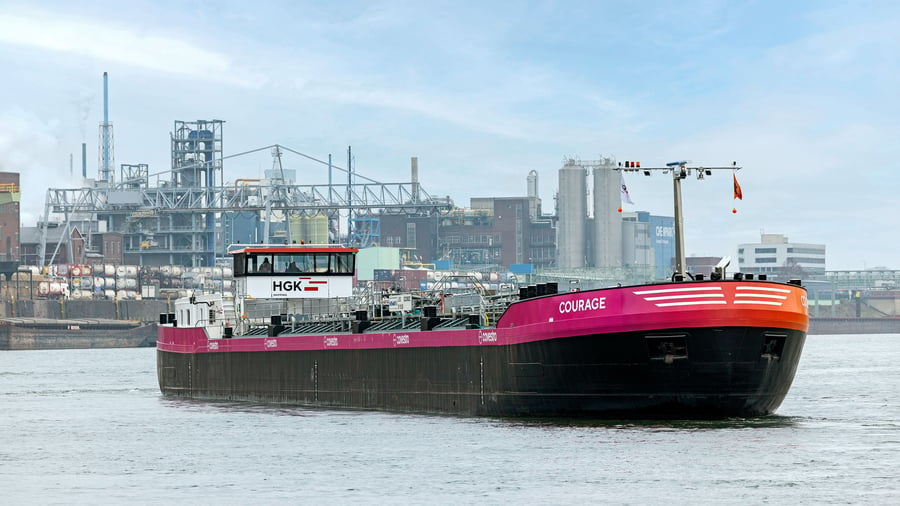
Düsseldorf. At the end of September 2021, garlands and balloons adorn the hull and superstructures of the "Gas 94", which has just been put into operation, at a berth on the edge of the Duisburg outer harbor. The red and white ship is not just another freighter. The ship, 110 meters long, 12.50 meters wide, and diesel-electric powered, is a promise: the supply of raw materials to the BASF site in Ludwigshafen will continue to run even if the Rhine has hardly any draft left.
A special ship as insurance against the next dry summer. The reason for this insurance is already three years old at this point. In the summer of 2018, the extreme low water in the Rhine caused BASF a high million-euro damage when the logistics chains broke because regular freighters could no longer reach the Ludwigshafen site. Afterwards, the group expanded its precautions: with additional low-water ships, more storage capacity, and further transport options.
The idea behind it is simple. If the water level drops, conventional ships have to reduce their cargo. For the same quantity of goods, more ships and more trips are then needed, and freight costs rise, sometimes drastically. For tanker transports from Rotterdam to Karlsruhe, the price per ton was still around 45 euros at the end of June, and in mid-August it was up to 160 euros; more than three times the regular price.
Translated by urgent.news. Machine-written — may contain errors; check the original before relying on it.