Nur wenige Schiffe schaffen es bis Basel: Das Niedrigwasser im Rhein bedroht den Importweg für die Schweiz
Die Trockenheit bedroht den Rhein als wichtigen Transportweg für die Schweiz. Das Problem: Der Schlüssel im Kampf gegen Niedrigwasser liegt in Deutschland.
Low-water conditions on the Rhine threaten Switzerland's import route, with only a few ships making it to Basel. The key to combating low water lies in Germany. Rudolf Gelpke, a pioneer of Swiss river shipping, proved that a steamship could navigate the Rhine against strong currents to Basel in 1904 with a coal shipment. However, the current drought has drastically lowered the river's level, making freight transport over Europe's most important waterway exceptionally difficult.
About one-tenth of Switzerland's imports arrive via the Rhine at Basel. Captains have always been on edge around the Rhein, whose currents and shallows are challenging to navigate on its long journey through Germany. Gelpke's innovation enabled Basel to become the gateway for imported raw materials into Switzerland, even though coal is no longer the primary import.
Instead, mineral oil products like gasoline and diesel, along with grains, coffee, cocoa, aluminum, steel, and numerous containerized goods, are transported via the Rhine. The issue arises when there is insufficient water. "Never have I seen anything like this," says Leon Van Dongen, a spokesperson for Rhenus Alpina, the largest terminal operator at the Basle harbor.
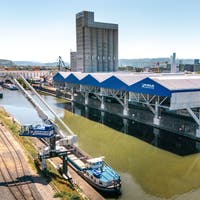
The harbor basin is empty, except for a dredger unloading its cargo. Meanwhile, many goods that arrived have bypassed Gelpke's pioneering method, arriving in Basel by truck instead of ship due to the low water. This solution is costly, as a single river freighter can carry 900 tons of aluminum, whereas approximately 38 trucks are needed to replace it.
When the river reaches Basel, it is no longer navigable. Van Dongen prefers truck deliveries for practical reasons, though the cargo arrives more slowly and conveniently by ship. The current situation requires more trains, more space on the timetable, but also more trucks and drivers. Many shipments are seeking alternative routes, requiring more trains, more space on the timetable, but also more trucks and drivers. A "tussle" over transportation resources is ongoing.
Written by urgent.news from NZZ Wirtschaft's reporting — not their text. Machine-written — may contain errors; check the original before relying on it.
This story
This is one outlet's version. Read the fullest account.