New York aquarium study suggests beluga whales may recognise themselves
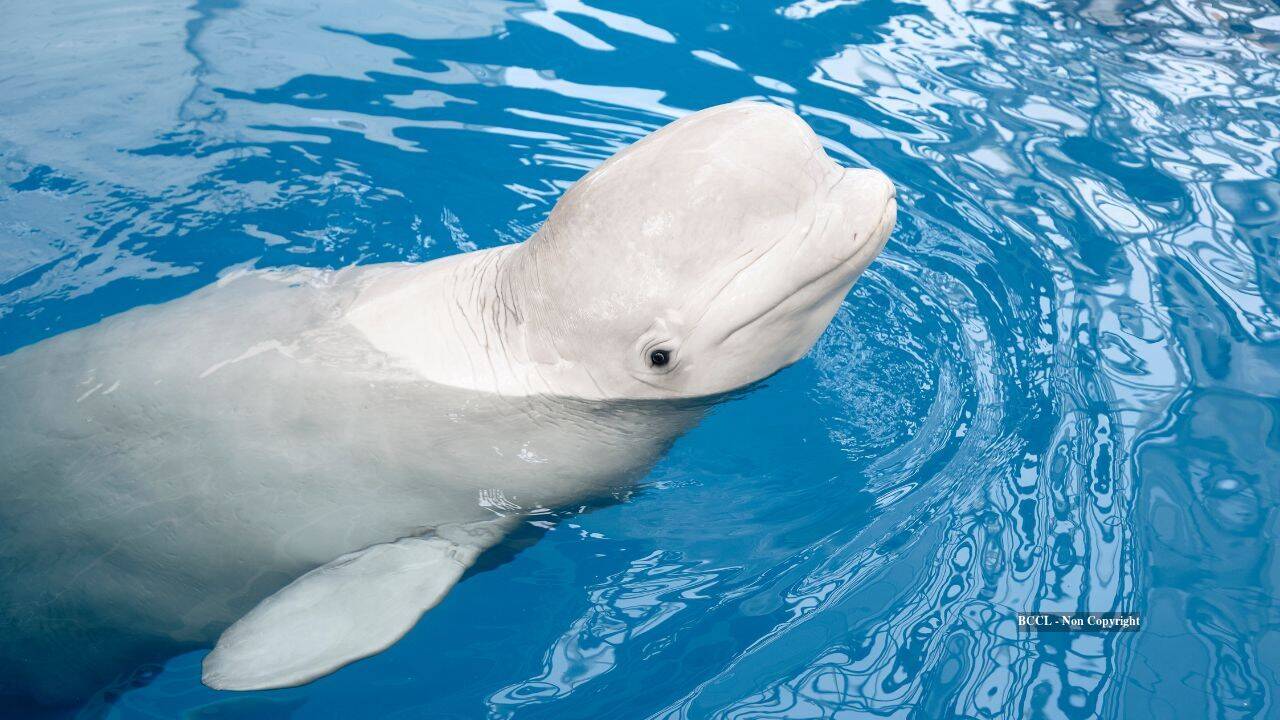
In 2001, researchers at the New York Aquarium embarked on an experiment to determine whether beluga whales, known for their expressive faces and complex social lives, could recognize themselves in a mirror. The study, led by cognitive psychologist Diana Reiss, involved four female belugas - three adults, Kathy, Marina, and Natasha, and Natasha's 7-year-old daughter, Maris.
Over the course of 98 mirror sessions, the animals were exposed to a two-way plexiglass mirror and a transparent control surface. The team recorded and analyzed the animals' behavioral responses during this period.
The results were groundbreaking. Among the four beluga whales, Natasha and her daughter Maris demonstrated several self-directed behaviors, such as blowing bubbles and barrel-rolling while watching their reflections. Natasha even showed mark-directed behavior when a non-toxic, temporary mark was placed on her body, indicating she recognized the difference between her own reflection and the actual mark.
This made Natasha the first non-delphinid cetacean to pass the mark test, placing belugas on the list of animals capable of mirror self-recognition.
Belugas' capacity for mirror self-recognition suggests a level of self-awareness previously undocumented in the species. Self-awareness is often linked to complex cognitive abilities like empathy, theory of mind, and advanced social cognition. Belugas are highly social animals that live in complex groups and communicate using a wide range of vocalizations. The ability to recognize oneself may play a role in their social interactions, helping them understand their own actions in relation to others.
While the mirror test is a widely used method for testing self-awareness in animals, critics argue that it may be biased towards species that heavily rely on vision. Nonetheless, other researchers maintain that passing the test indicates an understanding of the concept of reflection, even if it doesn't necessarily mean the animal possesses a "human-like sense of self."
Despite these debates, the mirror test remains a valuable tool for studying self-awareness in animals, with the beluga whale study adding to a growing body of evidence that self-awareness is more common in the animal kingdom than once thought.
Written by urgent.news from Times of India's reporting — not their text. Machine-written — may contain errors; check the original before relying on it.