Life on Mars? It Remains a Tantalizing Topic for Scientific Study
Earth’s neighbor still has secrets that science is trying to figure out, and one of them is potential signs of life.
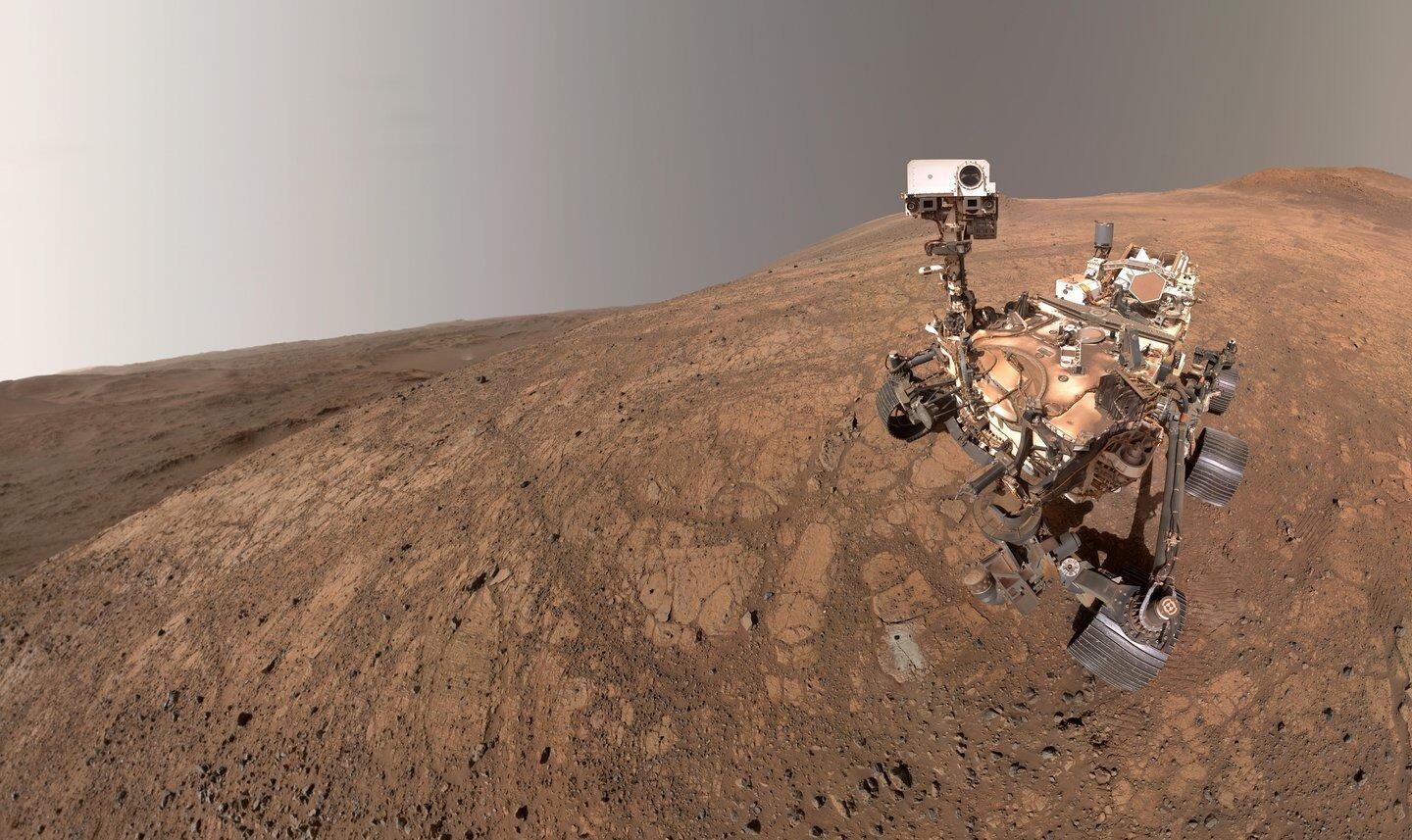
The fascination with the possibility of extraterrestrial life, particularly on Mars, has persisted for millennia. Astrologer Percival Lowell proposed in 1890 that intelligent beings had constructed canals on the red planet. Today, we possess landers and rovers exploring the Martian surface and orbiting spacecraft conducting observations. The prospect of humans setting foot on Mars in the near future, either through NASA's Artemis moon missions or private ventures led by entrepreneur Elon Musk, continues to stir interest.
Mars is the most promising potential candidate for harboring extraterrestrial life due to its proximity and favorable conditions. The planet resides within the habitable zone of the sun, close enough to support liquid water without being incinerated by excessive heat. It possesses a rocky surface that could harbor life, provided it has the necessary elements.
However, Mars lacks the essential components for life as we know it. Its atmosphere is far too thin to sustain liquid water on the surface, and its lack of a magnetic field leaves it vulnerable to harmful solar radiation.
Despite these challenges, a wealth of research suggests that Mars once had the necessary conditions to support life. Astronomical observations dating back centuries have indicated the presence of ice caps on Mars, confirmed by NASA's Odyssey spacecraft in 2002. In 1947, Gerard P. Kuiper discovered the presence of carbon dioxide, oxygen, nitrogen, and other molecules in Mars' atmosphere.
In the 1970s, NASA's Mariner 9 mission provided evidence of ancient water beds on the planet's surface, indicating that it once had a warming climate amenable to liquid water. Some studies even propose that Mars may have harbored an ocean the size of Earth's Arctic Ocean.
Scientists posit that Mars once had an atmosphere and liquid water, but the exact fate of these components remains a mystery. The prevailing theory attributes their loss to a combination of factors, including precipitation as ice, escape through the thinning atmosphere, and entrapment within the planet's crust. While the chemical composition of Mars' soil remains largely unknown due to the absence of Martian samples returned to Earth, research on the planet's soil composition, particularly from NASA's Phoenix Mars Lander, indicates that it is chemically similar to Earth's polar dry valleys, suggesting potential habitability.
Written by urgent.news from CNET's reporting — not their text. Machine-written — may contain errors; check the original before relying on it.