Agriculture: Farmers' Association fears partial total crop failure
The long drought is affecting wheat, maize, potatoes – and is having a harsh impact on farmers' harvests. The industry is calling for millions in aid due to a "brutally tense" economic situation.
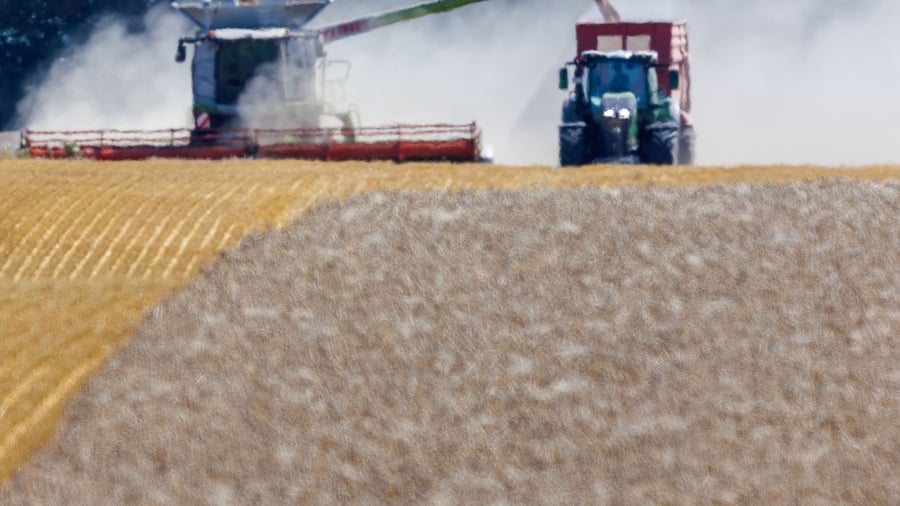
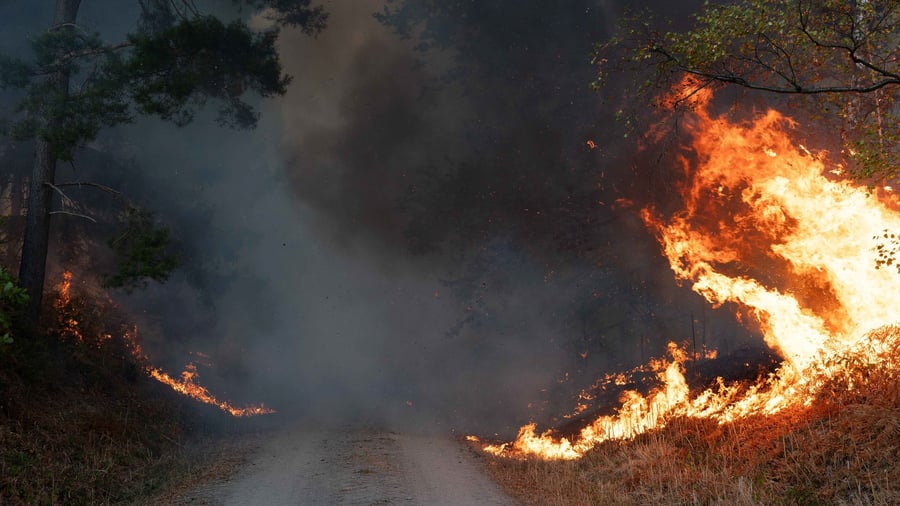
Farmers are bracing themselves for significant losses in this summer's harvest due to the ongoing drought - in some cases, even total losses are threatened. "We expect below-average harvests for grain, particularly wheat, and rapeseed," said Bauernpräsident Joachim Rukwied to the Redaktionsnetzwerk Deutschland. Larger damages are evident, especially in southern Germany.
The farmers' association again called for immediate government assistance due to the tense situation on many farms. "For autumn crops, the trend is that we will have to expect significant yield losses here as well," Rukwied said. This applies to potatoes, vegetables, sugar beets, corn, and soybeans. "In southern parts of Germany, this could lead to a total loss of yield."
The situation is slightly better in northern regions, where it has rained occasionally. There, the crops still look acceptable, Rukwied said. However, the trend will also be towards below-average harvests there. "We had 11 millimeters of rain in July and eight millimeters so far in August," said the association president, who runs a farm in Baden-Württemberg. "The biggest rain event in July brought three or four millimeters. That's just a drop in the bucket."
Especially in southern Germany, it's becoming a problem that no more feed is growing, he said, referring to grass and hay from meadows. Some farms in the south are switching to slaughtering animals earlier than planned. A more detailed balance of the 2026 harvest will be presented by the farmers' association next Tuesday.
According to an estimate already submitted by the German Raiffeisen Association, a significantly smaller grain harvest is expected: the amount is likely to fall to 40.6 million tons - after 45 million tons in 2025. Alone during the heat and drought period in mid-June, around three million tons of grain and rapeseed were lost, the association found as a representative of 1,600 cooperative companies in agricultural trade and processing. This means revenue losses of 600 million euros.
Rukwied was cautious about artificial irrigation. "In Germany, about three percent of the area can be irrigated," he said on TV channel Phoenix. This only pays off for fruit and vegetables. He thought about optimized methods - such as collecting water in winter and using it for irrigation in summer. It was also important to quickly obtain more resistant plant varieties, also against heat.
Rukwied said the financial burdens for the entire industry are immense. "I know colleagues who can no longer pay their plant protection and fertilizer bills and have to go to the bank." The demand for liquidity and bridging loans is high. "The economic situation of agriculture is brutally tense." On the one hand, there are high costs for operating resources, and on the other hand, low prices for products.
The farmers' association demands millions in aid. The farmers' president called for rapid assistance for the industry - for example, by increasing EU-planned fertilizer aid of 60 million euros to 180 million euros nationally. 80 percent of EU agricultural financing direct payments should be brought forward from December to October. In addition, diesel taxes should be reduced until the end of November.
At the beginning of the year, tax relief for agricultural diesel and electricity costs had already come into force for agriculture due to coalition laws.
Left-wing agricultural politician Ina Latendorf warned: "The climate crisis is eating away at German fields." Those who fall into an existential crisis due to climate-related crop losses should not be left alone. "That's why we need a crisis fund. At the same time, we must make agriculture more crisis-resistant."
Green faction deputy Julia Verlinden said that in addition to questions about acute aid, measures for a future-proof agriculture must also be initiated. Its performance in times of the climate crisis depends on intact soils. If agricultural minister Alois Rainer is serious about protecting the industry from drought and heat, he would launch a "climate-proof soils" program for better water absorption and water storage capacity.
The CSU politician had already spoken of the drought developing into a "serious burden." "We will not leave the affected farms alone with their worries," he said. The states are responsible for aid payments in extreme weather such as drought, the ministry explained. A prerequisite for federal participation is a classification as an "event of national magnitude." This will be significantly evaluated only at the end of August after the harvest.
Translated by urgent.news. Machine-written — may contain errors; check the original before relying on it.