Hidden moth population found after 70 years
Dr Dave Wainwright describes the discovery as one of the highlights of his career.
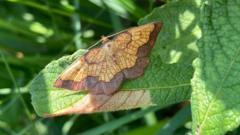
A rare species of moth, the dark bordered beauty, has been discovered after being absent from its known English habitat for more than seven decades. Conservationist Dr Dave Wainwright, who has devoted his career to finding this elusive creature, expressed immense relief upon its rediscovery at Wallington estate in Northumberland.
The previously known site for the dark bordered beauty was Strensall Common in Yorkshire, but its population has been dwindling due to climate change and a wildfire. The species was once widespread across northern England and Scotland, but habitat loss has significantly reduced its numbers.
Wainwright, who started working for Butterfly Conservation in 2004, had previously searched for new English colonies of the moth without success. However, during his most recent visit to the Wallington estate, he found a male specimen within minutes of his arrival. He admitted to feeling hopeful but unprepared for the discovery, stating that it was one of his career's highlights.
The caterpillars of the dark bordered beauty only feed on two plants: aspen and creeping willow, making conservation efforts more challenging. The discovery of the moth at Wallington has opened up new possibilities for its habitat, as the site's environment differs from Strensall Common. Conservationists hope that this discovery will lead to the identification of additional colonies across the Northumberland/Cumbria border.
The National Trust, which manages the Wallington estate, expressed hope to expand the potential habitat for the moth.
Written by urgent.news from BBC Science's reporting — not their text. Machine-written — may contain errors; check the original before relying on it.