CSIR-WRI turns fish wastewater into crop production input
Council for Scientific and Industrial Research-Water Research Institute (CSIR-WRI) scientists have developed an integrated aquaculture-agriculture system to boost food production while reducing pollution from fish farming wastewater.
Researchers at the Council for Scientific and Industrial Research-Water Research Institute (CSIR-WRI) have created a method to turn fish wastewater into a valuable resource for crop production. By treating the nutrient-rich wastewater from fish farming, the Integrated Agriculture-Aquaculture System transforms waste into an input for growing crops, thereby reducing pollution and making more efficient use of limited water supplies.
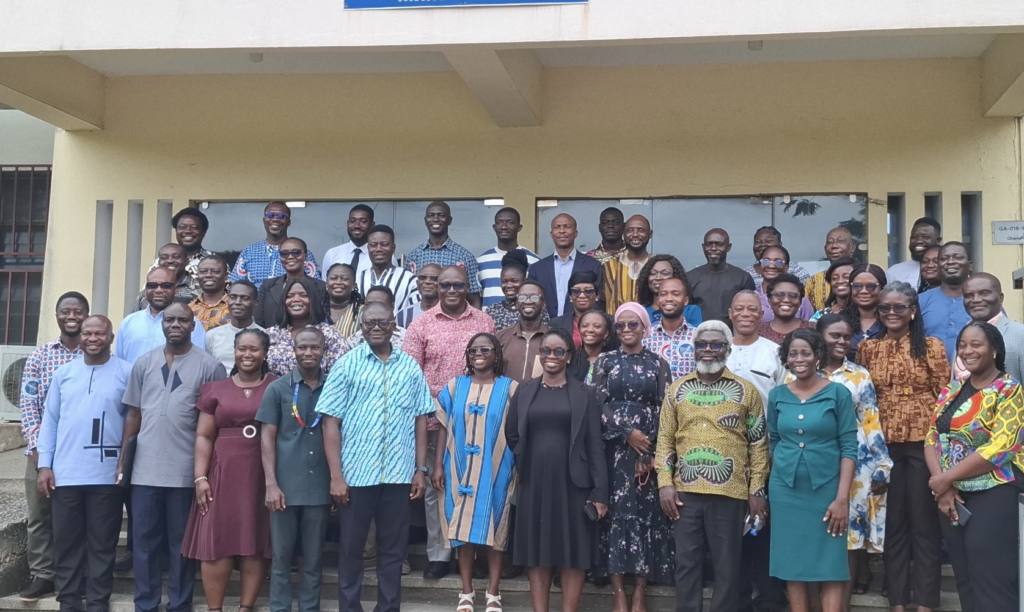
Dr. Seth Agyakwah, who leads the Aquaculture division at CSIR-WRI, explained this approach at the Institute’s recent mid-year review. He stated that the system assesses the nutrient content of fish wastewater and utilizes it to cultivate crops that match those requirements. Trials have yielded promising results, such as cucumbers, showcasing the potential of this system to bolster food production.
Dr. Agyakwah emphasized that this technology is especially beneficial for fish farmers operating in earthen ponds, concrete tanks, reservoirs, and tarpaulin tanks, as these often discharge wastewater without considering its potential for crop production. He highlighted that utilizing wastewater from one resource to produce useful products can serve as an input for another, addressing both food and environmental concerns.
Dr. Agyakwah also noted that this method would help mitigate the environmental and health risks related to using polluted water for vegetable cultivation. Farmers who currently rely on gutter water for irrigation, which may contain harmful contaminants, could benefit significantly from this innovation. To support the adoption of this technology, the CSIR-WRI has conducted training sessions for youth, women, and men, with backing from the Economic Community of West African States (ECOWAS) and the West and Central African Council for Agricultural Research and Development (CORAF).
These trainees have received assistance in developing business plans and honing entrepreneurial skills, although access to financing remains a significant hurdle in turning this technology into a commercially viable operation. Dr. Agyakwah urged the Ministry of Food and Agriculture to adopt the integrated system as a model for food production, particularly in regions facing water scarcity.
He also suggested that the technology could function as a climate-smart intervention by enabling farmers to optimize water usage and enhance their resilience to climate shocks. In a separate discussion, Dr. Sylvester Afram Boadi, a Research Scientist at CSIR-WRI, called for better coordination among the various institutions responsible for planning in the areas of water, energy, food, and the environment.
Fragmented planning often leads to missed opportunities, he pointed out, citing examples where energy infrastructure could simultaneously support irrigation and community water needs. Dr. Boadi recommended that the National Development Planning Commission (NDPC) take the lead in cross-sectoral planning efforts to ensure that infrastructure projects yield benefits across all sectors.
Written by urgent.news from MyJoyOnline Ghana's reporting — not their text. Machine-written — may contain errors; check the original before relying on it.