'Full-on berserker mode': Archaeologists solve mystery of medieval soldiers with gruesome square holes in their skull
A new analysis of skulls from a 14th-century battle in Sweden reveals a spiked club inflicted the death blow.
Archaeologists have solved the mystery behind gruesome square holes found in the skulls of medieval soldiers who died during the 1361 Battle of Visby. The Danish king Valdemar Atterdag led the Danish forces, which outnumbered the Gotlander defenders of the city of Visby, 300 to 1,800. The battle took place on the Swedish island of Gotland and ended with the Danish victory.
The mass grave of the fallen defenders was first excavated in the early 20th century, but experts have long questioned the details of the battle and the techniques used in medieval combat.
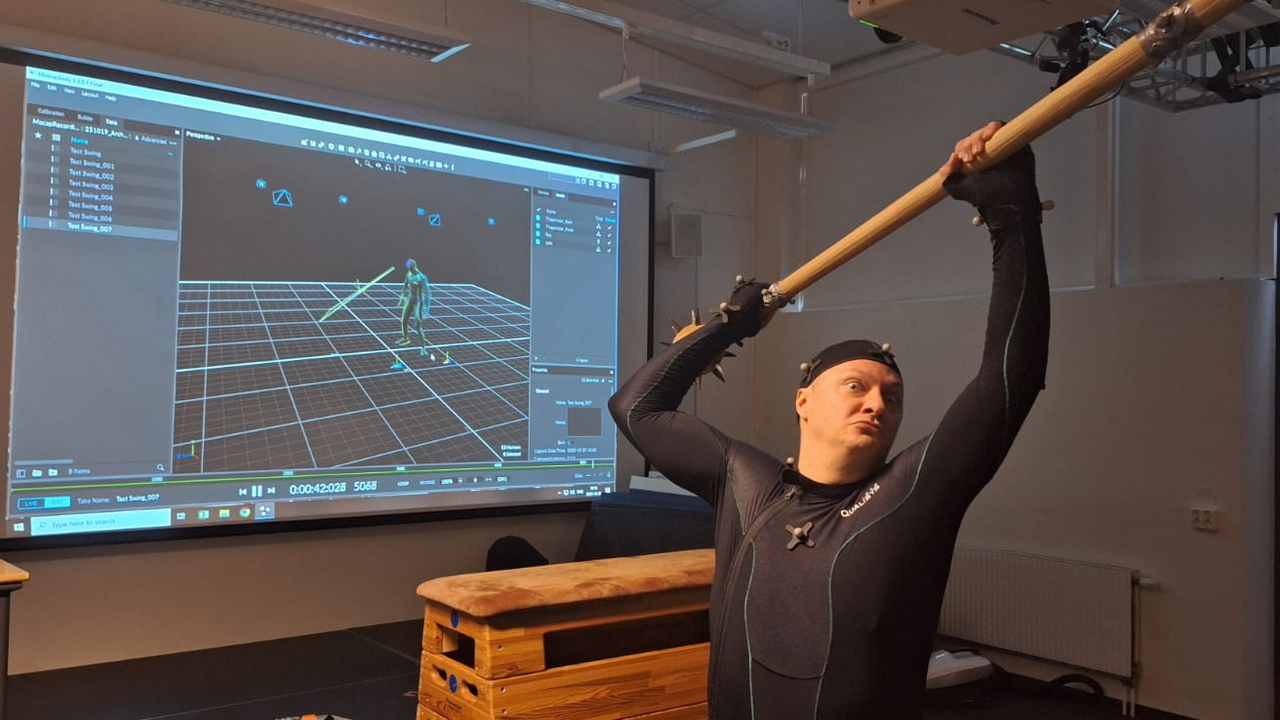
To better understand the injuries suffered by the soldiers, a team of researchers, including biological anthropologist Patrick Randolph-Quinney from Uppsala University in Sweden, collaborated with conflict archaeology experts, ancient DNA specialists, medieval historians, and weapon specialists. They conducted a series of experiments using replica medieval weapons and motion-capture technology to test their assumptions about the cause of the square holes in the skulls.
The researchers created a replica human body using cow bones covered in a thick layer of gelatin designed to simulate human muscle tissue. They then used a range of replica weapons, including a crossbow, an ax, and a spiked club, each of which was meant to deliver blows to the gelatin-covered body. The results showed that neither a crossbow nor an ax caused the square-shaped holes found in the Visby skulls.
However, the spiked club produced the exact damage observed in the skeletons, suggesting that it was the weapon responsible for the fatal injuries.
The findings challenge the conventional historical narrative, which portrayed the defenders of Visby as poorly trained and equipped individuals who were no match for the Danish army. Instead, the research indicates that medieval militias were likely quite familiar with advanced combat techniques, even if they were not part of a standing army. The study also highlights the importance of interdisciplinary collaboration in solving historical mysteries and provides new insights into the complex world of medieval warfare.
Written by urgent.news from Live Science's reporting — not their text. Machine-written — may contain errors; check the original before relying on it.