THE CONVERSATION: How a simple biofiltration system is helping clean up a polluted river
At the Water Hub in Franschhoek, researchers are turning a polluted river into a testing ground for a different approach to wastewater treatment. By combining natural filtration, scientific monitoring and community participation, they are showing how contaminated water can be cleaned, reused and put to work locally.
In the Water Hub in Franschhoek, researchers are utilizing a simple biofiltration system to transform a polluted river into a testbed for innovative wastewater treatment methods. This approach combines natural filtration, scientific monitoring, and community participation to clean, reuse, and repurpose contaminated water locally. Millions of liters of polluted water flow through South African rivers and eventually make their way to the sea.
The Stiebeuel River in Franschhoek, located about 75km east of Cape Town, is severely polluted due to inadequate sanitation and drainage systems in the nearby informal settlement of Langrug. With over 26,000 residents living in densely populated housing, aged and overstretched infrastructure struggles to manage the waste effectively.
As a water researcher at the University of Cape Town’s Future Water Institute, the author is part of a team of water researchers who are working in tandem with nature and learning from it to treat and reuse water. At the Water Hub, they are establishing a living laboratory on an old, abandoned wastewater treatment plant to showcase how highly contaminated water can be transformed into a safe resource without the use of chemicals.
In a recent study, the researchers demonstrated the effectiveness of this natural water filtering system by converting old drying beds into filtration stations. By filling these beds with small stones, biochar, and coarse sand, they allowed polluted river water to slowly seep through, removing pollutants such as bacteria and nutrients. After roughly five days, the water becomes safe for irrigation purposes.
The naturally treated water consistently contained no E. coli bacteria, indicating that it no longer harbors human or animal waste. Furthermore, the system removed between 85% and 95% of ammonia and phosphorus – pollutants that contaminate rivers and dams. These pollutants are absorbed by the filter beds, where natural microbes feed on and break down much of the pollution.
Additionally, plants absorb excess nutrients like ammonia and phosphorus, further aiding in cleaning the water before it re-enters the river or is used for irrigation.
While nature-based systems cannot entirely replace traditional wastewater treatment plants, they do offer a viable alternative for municipalities facing challenges such as rising electricity costs, deteriorating infrastructure, and limited technical skills. Nature-based wastewater treatment systems can also contribute to better water management in drought-prone areas, providing a local source of treated water for irrigation and other purposes.
The Stiebeuel River is so polluted that it is now unsuitable for bathing or drinking. Once a site for bathing, it has since become a dumping ground for solid waste. The river carries excessive E. coli bacteria levels, far exceeding the South African water quality guidelines of 400,000 colony forming units per 100ml. It also contains high concentrations of ammonia and phosphorus from household cleaning agents, which can lead to harmful algal blooms that release toxins and deplete oxygen in lakes and slow-moving rivers.
The proliferation of microplastics and traces of pharmaceuticals further exacerbate the problem, leading to a gradual decline in water quality, increased treatment costs for municipalities, and heightened pressure on already scarce freshwater resources.
Currently, sewage is typically treated using energy-intensive methods, including chemical disinfection. However, the biofiltration system built at the Water Hub does not require such measures. Water from the Stiebeuel River is pumped into a 10,000-liter tank and subsequently discharged into two supply tanks, which feed a biofilter – a natural water-cleansing system. This design emulates the way healthy wetlands naturally purify water.
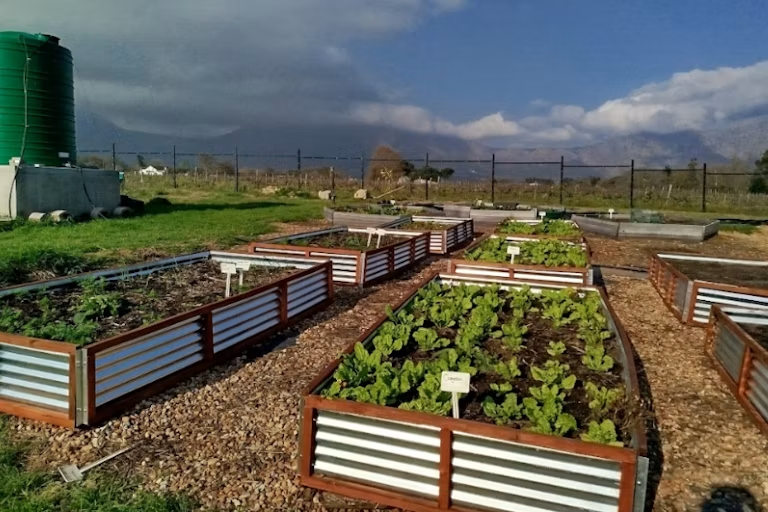
The research has shown that the system effectively reduces ammonia and phosphate concentrations by up to 90% and removes 99% of harmful bacteria. It also achieves over 90% removal of certain pharmaceutical compounds and microplastics. Approximately 50,000 liters of contaminated water are treated daily, with about 3,000 liters per day used to irrigate vegetable gardens managed by young women from the informal settlement.
These gardens provide opportunities for skill development, food production experience, and the establishment of small-scale enterprises. The remaining water is discharged back into the river, playing a crucial role in sustaining river ecosystems and vegetation, thereby aiding in cleaning downstream water.
To further enhance water quality and promote sustainable practices, the Water Hub exemplifies how wastewater can be cleaned and reused near its source, rather than relying on centralized large treatment plants. This decentralized approach can be replicated in other communities, enabling improved water quality in areas where municipal service delivery is failing.
Although setting up a nature-based system is relatively inexpensive, ongoing maintenance costs and skills required for basic operations are minimal. Nonetheless, operating the system necessitates continuous monitoring and oversight.
Written by urgent.news from Daily Maverick's reporting — not their text. Machine-written — may contain errors; check the original before relying on it.