Mammal ancestors were giving birth to live young 236 million years ago
Almost all mammals give birth rather than laying eggs, and we have new clues about when they began to do so
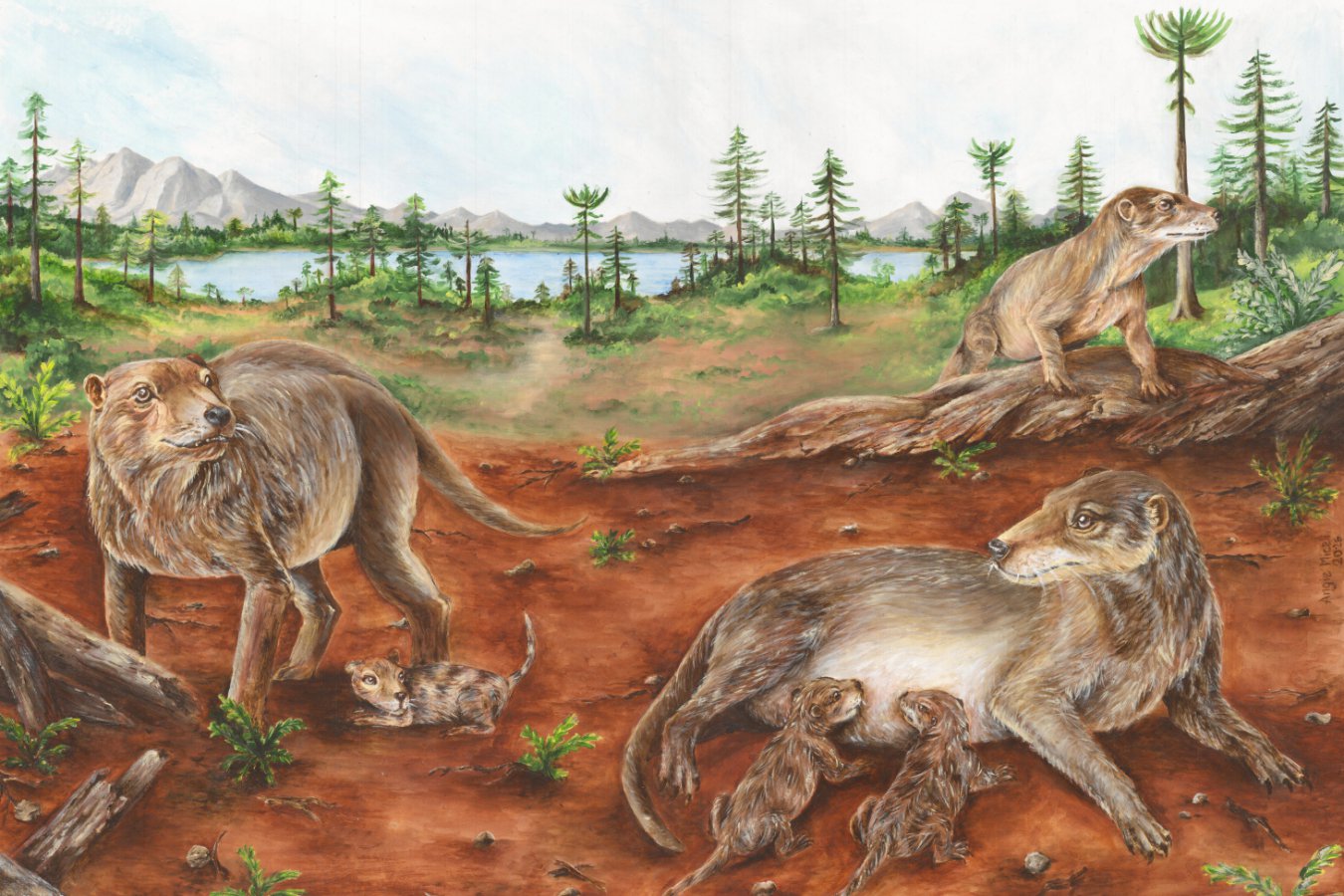
A group of animal relatives that lived 236 million years ago may have given birth to live young, according to new research. This finding pushes back the timeline for the development of viviparity, a key characteristic of most modern mammals, by 90 million years. The study focused on Chiniquodon theotonicus, a cynodont that emerged during the Permian geological period, around 260 million years ago.
Cynodonts are considered direct ancestors of all mammals alive today. Researchers examined a fossilized leg bone of Chiniquodon theotonicus, which they discovered during a postgraduate class at the University of Buenos Aires in Argentina. The discovery of a growth line in the bone suggested that the animal experienced a growth spurt following its birth.
By comparing the ratio of newborn to adult size in Chiniquodon theotonicus to that of modern animals, the researchers concluded that this ancient mammal ancestor likely gave birth to live young, similar to placental mammals. This discovery sheds light on the evolutionary origins of viviparity and provides new insights into the transition from egg-laying to live birth in the mammalian lineage.
Written by urgent.news from New Scientist's reporting — not their text. Machine-written — may contain errors; check the original before relying on it.