Early experience reshapes zebrafish retinal cells, alters behavior
The cells undergo a classic form of plasticity previously thought to occur only in downstream visual circuits.
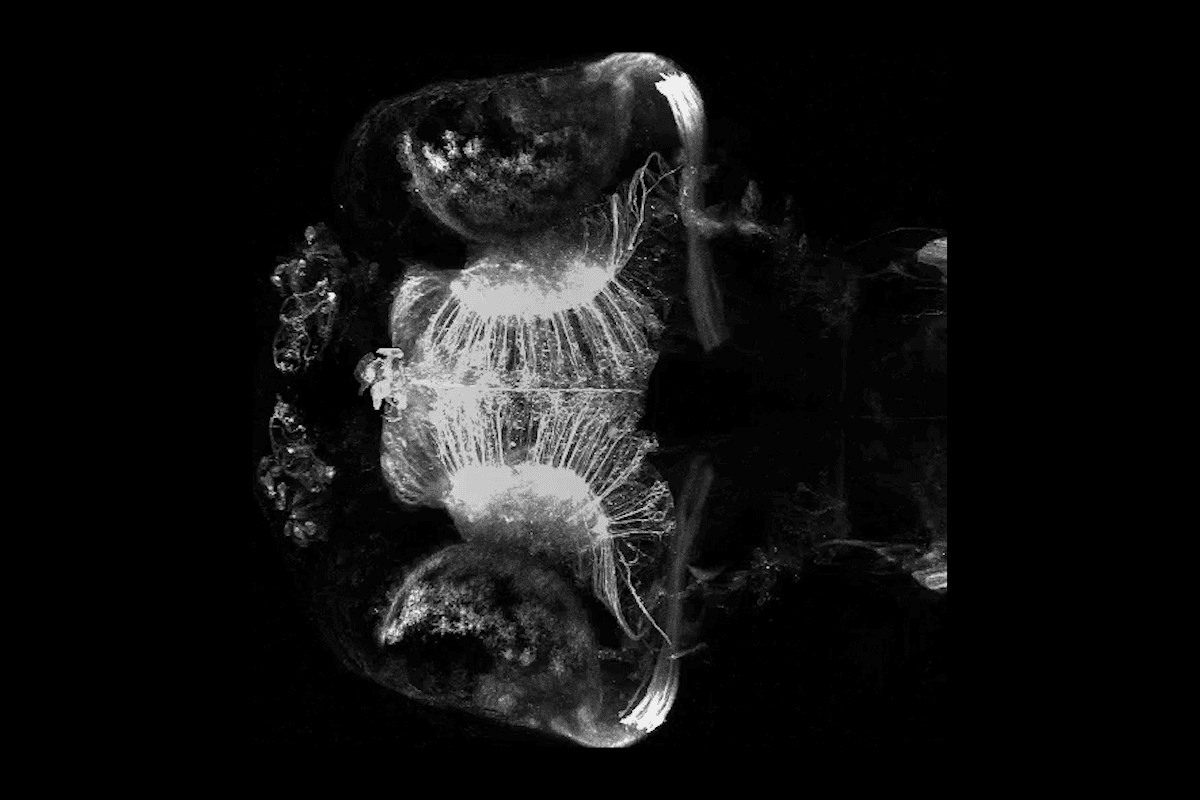
Zebrafish study reveals that early visual experiences alter retinal cells' shape and behavior. It challenges the belief that visual circuits only become plastic downstream. Researchers found that larvae living in V-shaped channels with horizontal or vertical stripes had changes in the shape of their amacrine cells, which are essential for orientation selectivity.
These cells elongated parallel to the stripes, while rounder cells formed perpendicular to them. The altered cell shapes affected retinal output, causing bias towards the stripe orientation fish saw. In another experiment, fish that experienced specific visual environments preferred swimming towards corresponding angles. The study suggests that visual experiences during early development can shape the retina's circuitry, impacting behavior.
Furthermore, zebrafish raised without the TENEURIN-3 gene and in a horizontal environment showed normal behavior, indicating that the cells can see the stimuli but lose the ability to adapt. This research bridges the gap between morphology, function, and behavior, providing new insights into how animals interpret their environment.
Written by urgent.news from The Transmitter's reporting — not their text. Machine-written — may contain errors; check the original before relying on it.