A 236-million-year-old fossil challenges the story of mammalian live birth
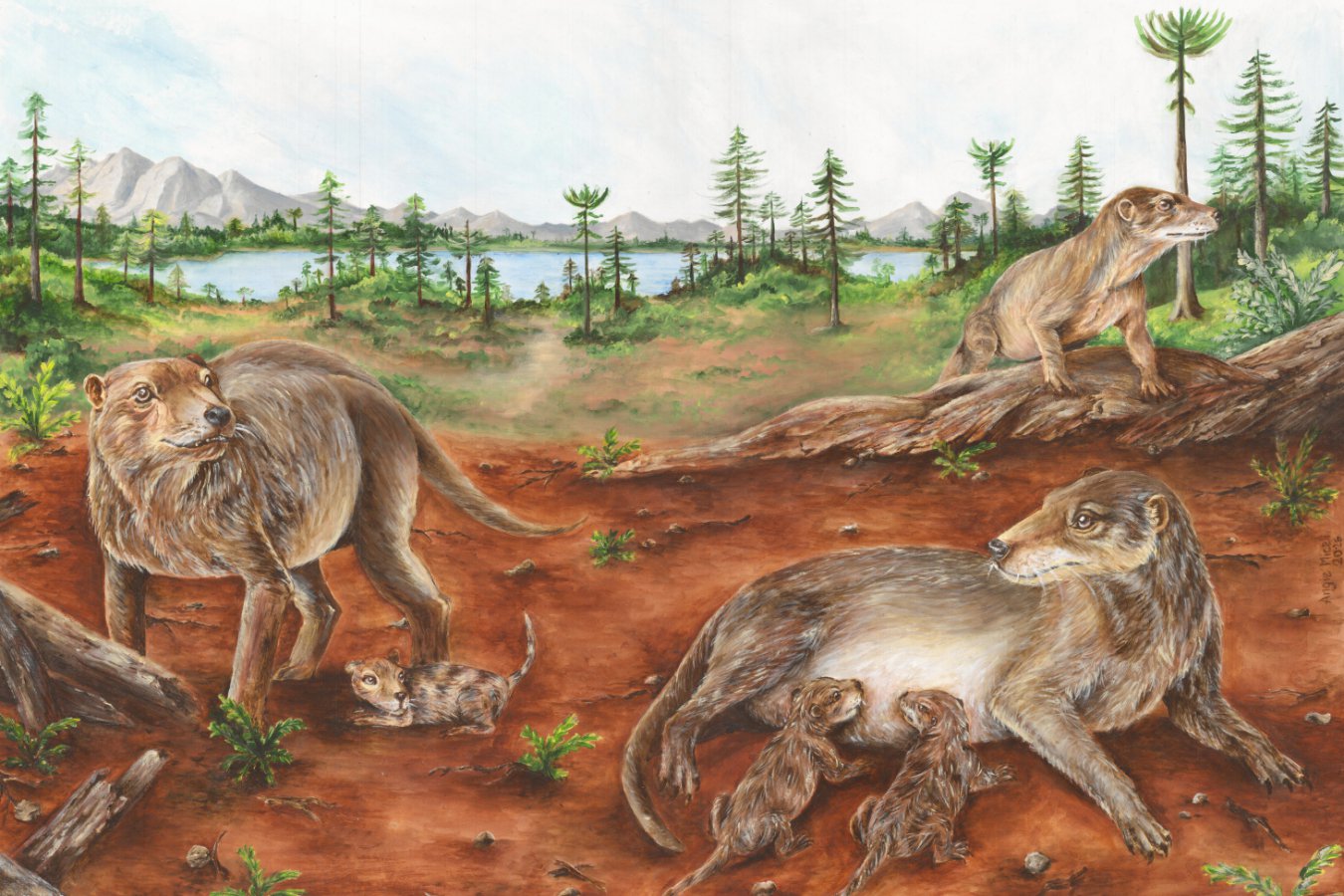
Some cynodonts may have been giving birth to live young much sooner in evolutionary history than previously assumed. A new Frontiers in Mammal Science study has offered the first compelling evidence that cynodonts may have been viviparous—a reproductive mode characterized by live birth.

A new study published in Frontiers in Mammal Science reveals evidence that a 236-million-year-old cynodont named Chiniquodon theotonicus may have been one of the earliest mammals to give birth to live young, challenging the prevailing theory that live birth only evolved later in the mammalian lineage. Dr. Leandro Gaetano, the lead author from CONICET in Argentina, explains that this suggests viviparity (live birth) originated in the mammalian lineage at least 95 to 90 million years earlier than previously thought.
The study analyzed the bone microstructure of a fully grown C. theotonicus specimen found in northwestern Argentina, discovering distinctive neonatal growth lines that indicate a rapid growth spurt after birth. Comparing the estimated birth and adult weights of C. theotonicus with contemporary mammals, reptiles, and birds, the research shows the newborn weighed around 1.7 kg (3.7 pounds) and the adult about 12 kg (26 pounds), resulting in a neonatal-to-adult mass ratio of 14%.
This ratio is comparable to modern placental mammals and significantly higher than that of reptiles or birds, which have neonatal-to-adult mass ratios ranging from 0.1% to 4.5%.
The findings challenge the notion that live birth is a relatively recent evolutionary development in mammals, suggesting that C. theotonicus represents a case where early cynodonts exhibited traits similar to modern placental mammals. While the study does not definitively answer whether this trait was unique to C. theotonicus or part of a broader trend among early mammals, it opens the door to further investigation into the early origins of viviparity in the mammalian lineage.
Written by urgent.news from Phys.org's reporting — not their text. Machine-written — may contain errors; check the original before relying on it.
This story
This is one outlet's version. Read the fullest account.