Japan's Hiroshima produces 60% of farmed oysters, but up to 90% have died
Hiroshima's oyster farmers face catastrophic losses this season, reporting mortality rates soaring to ninety percent, well above normal thresholds. Investigations are underway to pinpoint rising sea temperatures and environmental shifts as possible culprits. This alarming situation jeopardizes local dining establishments, tourism activities, and livelihoods. While government assistance provides…
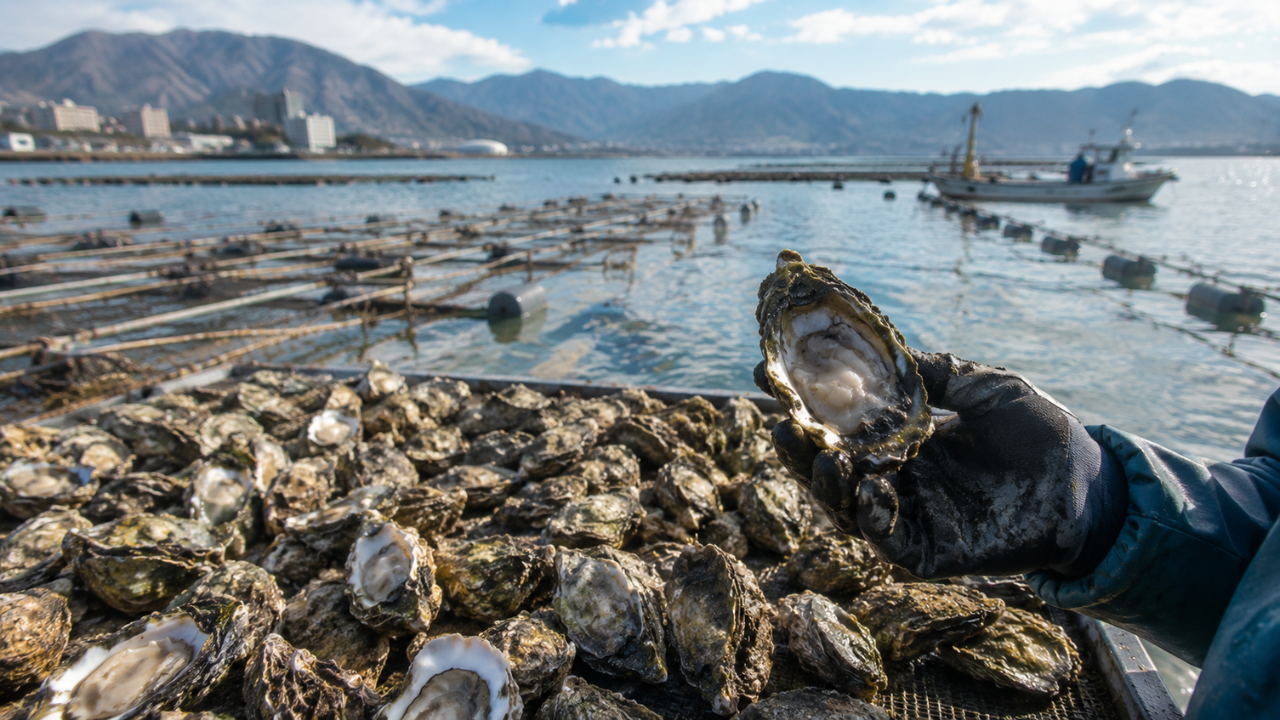
Hiroshima Prefecture in Japan accounts for roughly 60% of the country's farmed oysters, but this season, up to 90% of cultivated oysters have perished in several coastal districts. Oyster farmers are pulling up their rafts with alarmingly low survival rates, with Higashihiroshima and Kure experiencing the worst losses. The agriculture minister, Norikazu Suzuki, visited the region to assess the damage.
Hiroshima Prefecture supplies nearly 60% of Japan's farmed oysters, and the Seto Inland Sea, encompassing Hiroshima to Hyogo, contributes around 80% of the national production. Officials are investigating the cause, considering factors such as rising sea temperatures, reduced rainfall, high salinity, low oxygen, and decreased food availability.
Climate change may also be exacerbating these conditions. Farmers report oyster size reductions, smaller oysters, and a lack of quality oysters for gift orders. The situation is causing financial strains for restaurants, tourism, and local jobs tied to the oyster industry. The government is providing low-interest loans and financial aid to affected businesses, but addressing the root environmental cause will be challenging.
Written by urgent.news from Times of India's reporting — not their text. Machine-written — may contain errors; check the original before relying on it.