Gravity can’t be an instantaneous force
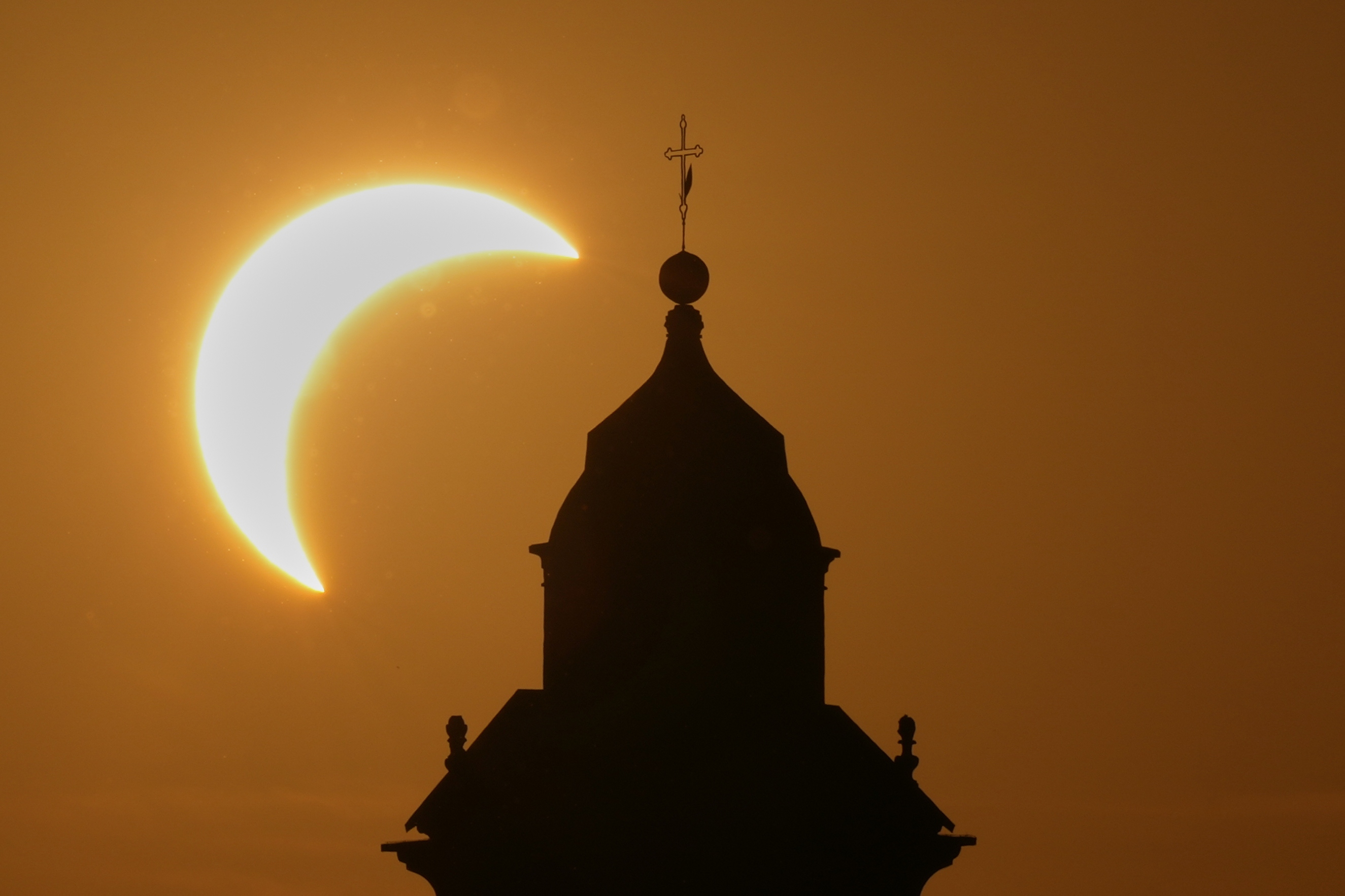
When you look at the Sun, the light you’re seeing isn’t the light that’s being emitted right now. Instead, you’re seeing light that’s a little more than eight minutes old, since the Sun is some 150 million kilometers (93 million miles) away, and light — although it’s fast — can only travel through the Universe at a specific speed: the speed of light. But what about gravitation? Everything on…
The speed of light has been a subject of study for centuries, with early experiments attempting to measure its speed. One such attempt was made by Galileo, who set up an experiment using lanterns on mountain peaks, but found the result to be instantaneous. In 1676, Ole Rømer made the first robust measurement of the speed of light by observing Jupiter's moon Io. He noticed a delay in the appearance of Io's light as it emerged from behind Jupiter, which allowed him to calculate the finite speed of light.
Rømer's findings influenced other scientists of the time, such as Christiaan Huygens and Isaac Newton. Huygens developed a wave-like theory of light, while Newton proposed a particle-like theory. However, Newton's approach assumed an instantaneous speed of gravity, with every massive object in the Universe exerting an attractive force on every other massive object without any delay.
It wasn't until later that the finite speed of gravity was confirmed through observations of gravitational microlensing events. These events occur when a background star's light gets distorted and magnified as it passes near a massive object. The gravitational bending of space creates a specific signal that reveals the mass and speed of the intervening object.
Only in the case of perfect alignment between the observer, the foreground mass, and the background light source does a ring, or Einstein ring, form. This provides a way to measure the speed of the gravitational effect, which is found to be equal to the speed of light.
Written by urgent.news from Big Think's reporting — not their text. Machine-written — may contain errors; check the original before relying on it.