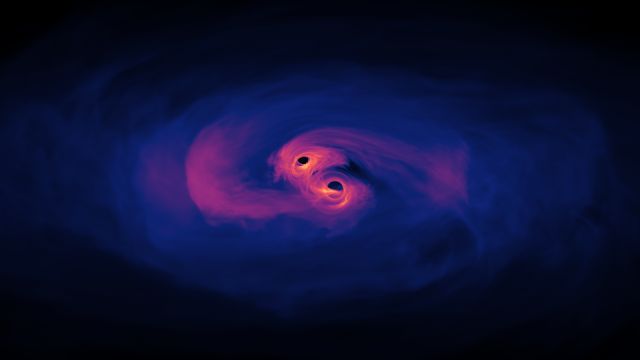
Bizarre new astronomical object dubbed a 'black hole star'
The discovery of a new type of astrophysical object could take us closer to solving one of astronomy's biggest puzzles from the early universe.
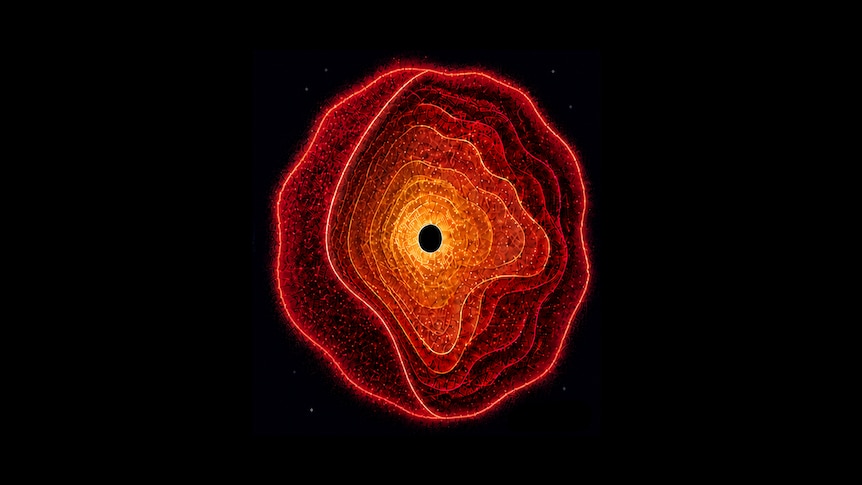
Astronomers have unveiled a groundbreaking discovery using the James Webb Space Telescope: a peculiar cosmic entity dubbed a "black hole star." This enigmatic object is a supermassive black hole cloaked in gas, originating from the universe's infancy. Its discovery may shed light on the enigmatic "little red dots" observed in early cosmos imagery by the JWST.
The object, approximately the size of our solar system, is enshrouded in gas and emits 100 billion times the energy of any known star. Investigated closely by researchers, it appears to be a rare blend of both a star and a black hole. It possesses the mass of a million suns but is contained within a gas cloud spanning the size of our solar system.
Professor Nicholas Seymour of Curtin University remarked that the object's mass, while substantial, pales in comparison to the billion-solar-mass behemoths observed in the early universe. Dr. Rohan Naidu, the lead researcher from the University of Hawaii, emphasized the remarkable physics of this black hole star, stating, "We are excited to be studying a new kind of astrophysical object."
This revelation challenges the traditional understanding of black hole formation, suggesting that supermassive black holes could emerge without the presence of surrounding galaxies. The researchers are optimistic that further studies using advanced telescopes like radio telescopes may reveal even more of these early black hole stars, potentially unlocking the secrets of how these cosmic giants grew so rapidly in the early universe.
Written by urgent.news from ABC News AU's reporting — not their text. Machine-written — may contain errors; check the original before relying on it.