Millions crowd cities to see Spain's first total solar eclipse in over a century
As the sky darkened, gradually at first and then quickly, people broke into applause and cheered. It was the Spain's first total solar eclipse in more than a century.
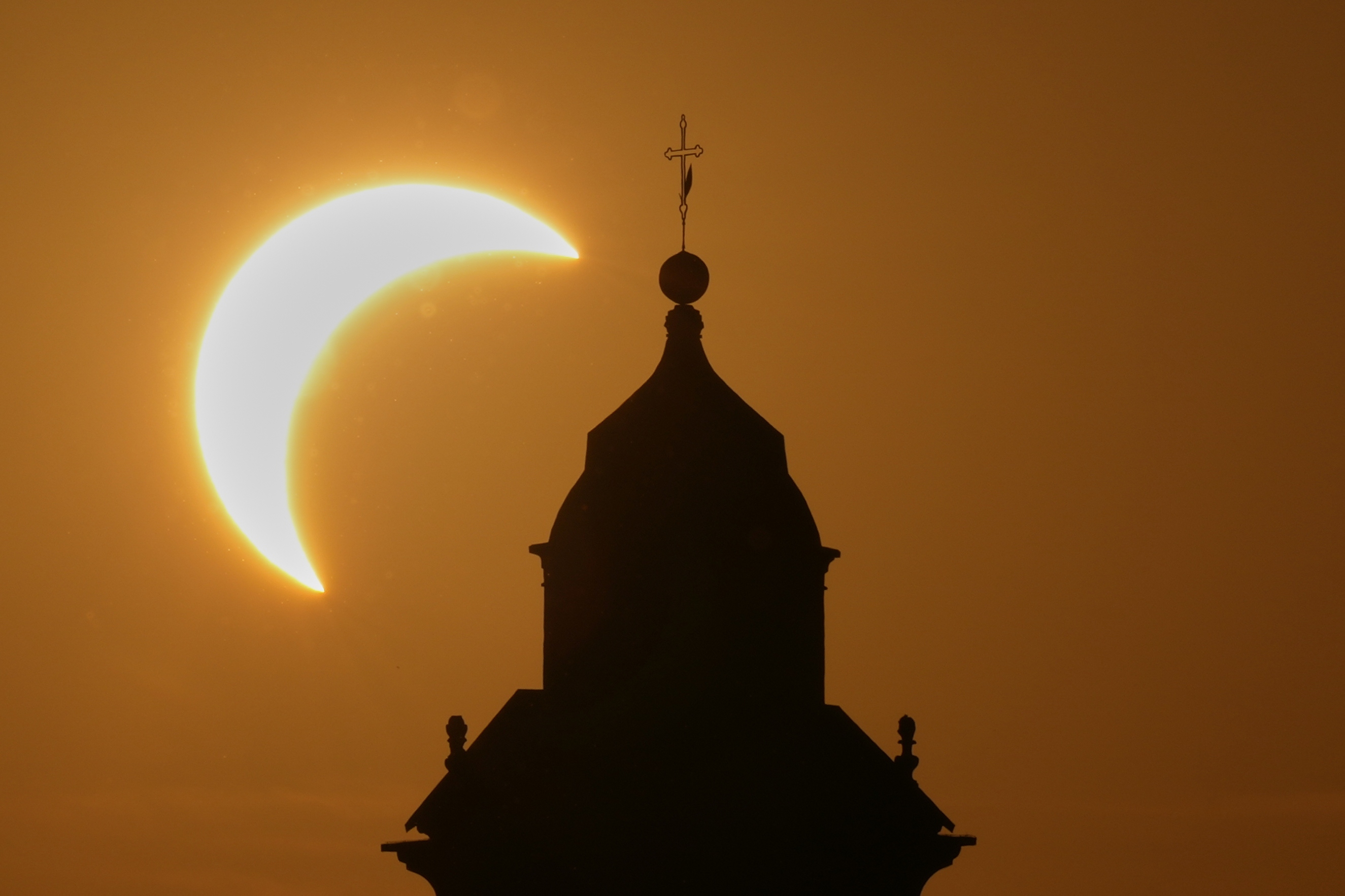
Spain experienced its first total solar eclipse in over a century on Wednesday, as the celestial event briefly turned day to night across the country. The rare occurrence was visible in parts of Greenland and raced south to smother the coast of Iceland, before arcing across the Atlantic Ocean towards Spain. Crowds lined the beaches in the Balearic Islands to watch the lunar shadow as it moved diagonally from the northern coast to the islands.
The Moon's outer corona, shimmering out of the edges of the shadowy disc, drew gasps and cheers from spectators. Isabel Troyano, a 56-year-old homemaker, said she had "goosebumps" while watching the spectacle with her son in Tarragona, on Spain's Mediterranean coast. Alejandro Cuesta, a 30-year-old nanoscience researcher, described the experience as "incredible" and said he "almost burst into tears".
The total eclipse – a first in mainland Europe since 2006 – lasted just minutes, but scientists were eager to study the Sun's atmosphere and its outermost layer during the brief event. The partial eclipse was visible across Europe and in North America and northwest Africa. Special viewing glasses were in high demand, and supplies quickly sold out. Weather conditions in Spain were favorable, although there were concerns about high temperatures and the risk of wildfires.
Tourism officials predict nearly 450,000 extra visitors could bring a 347-million-euro boost to the Spanish economy, and nearly 25,000 police officers were mobilized to ensure the event went smoothly. The next total eclipse will cross southern Spain and northern Africa in August 2027, while an annular eclipse is expected to visit the Iberian Peninsula in 2028.
Written by urgent.news from New Straits Times's reporting — not their text. Machine-written — may contain errors; check the original before relying on it.
This story
This is one outlet's version. Read the fullest account.