From Timers to Networks: What Connected Irrigation Reveals About Outdoor Automation
Watering a lawn or garden has traditionally relied on preset schedules that do not necessarily reflect current conditions. Connected irrigation systems are attempting to address that limitation by combining timers with environmental sensors and centralized software. How the Pieces Connect RainPoint’s smart garden system provides one case study in how manufacturers are connecting timers,…
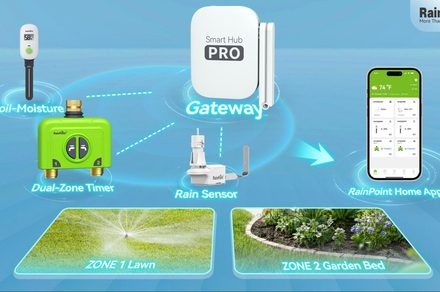
Irrigation systems have historically relied on preset watering schedules that do not adapt to real-time conditions. However, connected irrigation solutions are emerging to address this limitation by integrating timers, environmental sensors, and centralized software. RainPoint's Smart Irrigation Ecosystem serves as an example of this trend, combining a dual-zone smart water timer, soil-moisture sensor, and rain sensor with an app for user control.
The gateway acts as the communication center, transmitting outdoor data to inform watering settings. Once integrated with a home Wi-Fi network, the timer and sensors can be managed through the app, allowing users to configure automation rules for adjusting watering schedules based on sensor data. This approach enables different property areas to have distinct watering schedules, reflecting a broader trend in connected-home systems where various spaces can be managed through a unified interface.
Connected outdoor devices face unique challenges compared to indoor smart-home products. Factors such as wireless range, gateway positioning, weather exposure, battery life, and reliable communication between components can impact performance. Regular maintenance, including battery replacement for sensors and firmware or app updates for software, is also required.
RainPoint's introduction of the irrigation ecosystem at CES 2026, earning a TWICE Picks Award for its integrated platform, signifies the potential for long-term applicability. However, its success will depend on factors like dependable scheduling, sensor accuracy, and consistent wireless performance across various properties and growing seasons.
The broader implications of smart garden technology extend beyond irrigation. As automation expands into exterior spaces like gardens, the key consideration shifts from mere connectivity to the ability of multiple devices to consistently exchange useful information. Homeowners evaluating this technology should consider practical aspects such as the number of planting zones, device distance, local weather conditions, and Wi-Fi coverage to determine if a connected irrigation network provides significant benefits over traditional timers.
Ultimately, the effectiveness of connected irrigation lies in its ability to make watering more responsive without imposing excessive setup and maintenance demands. The success of smart garden programs highlights the potential of outdoor automation, while questions about reliability, app support, and long-term ownership remain crucial in assessing its practical value.
As AI technology continues to advance, its integration into enterprise software, such as sales interactions, also presents challenges in providing consistent, reliable, and accurate responses to user inquiries.
Written by urgent.news from Digital Trends's reporting — not their text. Machine-written — may contain errors; check the original before relying on it.