Yorkshire crowds gather for 'incredible' eclipse
People gather in York, Leeds and Bradford to view the most significant solar eclipse since 1999.
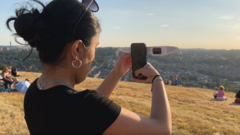
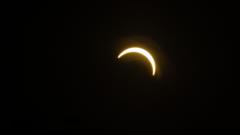
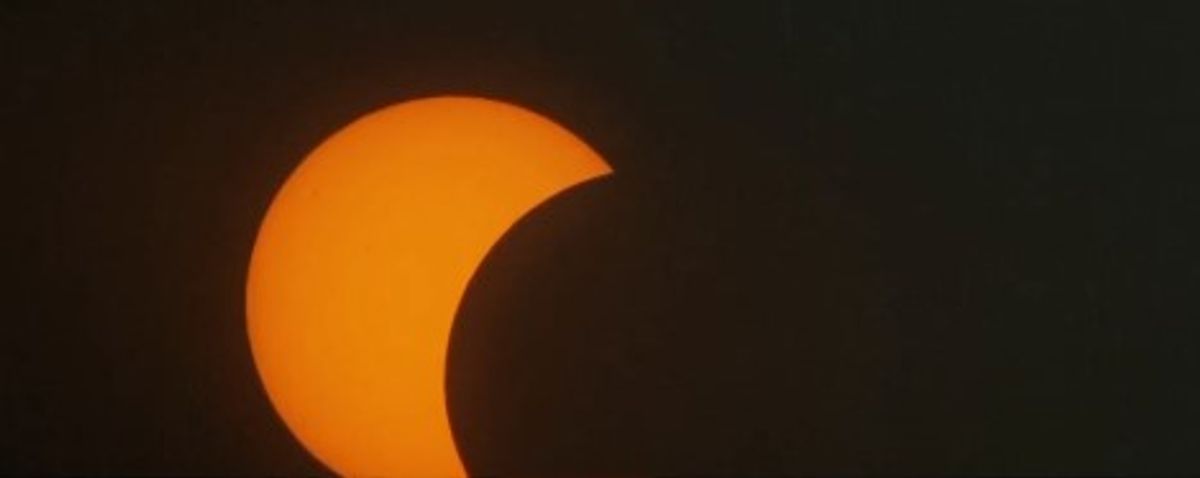
Crowds across Yorkshire gathered to witness the most significant solar eclipse since 1999. The Moon passed between the Sun and Earth, casting a shadow that partially blocked out the Sun's light. The York Astronomical Society set up telescopes at Beetle Bank Farm in York, while families created pinhole cameras and donned protective solar glasses.
Brian Jones, a member of the society, expressed delight at being among approximately 200 people sharing this rare occasion. He shared that the universe is meant to be shared and that we are all composed of "star stuff," tracing our origins back to ancient stars.
Eleven-year-old Rory described the experience as "incredible," emphasizing it as a once-in-a-generation event. Brother Max commented that it felt unusually cold as the Sun was obscured by the Moon. Their mother, Tracey, expressed her luck at witnessing a second solar eclipse in her lifetime. Ash, aged 18, was fascinated by the unknown aspects of astronomy, highlighting the fascination of not knowing what lies beyond our understanding.
At Roundhay Park in Leeds, hundreds of people gathered and stood in lines to observe the eclipse through telescopes set up by the Leeds Astronomical Society. Meera Daby and her family used a colander as a makeshift pinhole camera due to sold-out solar glasses. They were taking advantage of the summer holidays, inviting family members to watch the solar eclipse together.
At the University of York's Ron Cooke Hub, physicists assembled to view the eclipse through five telescopes, specifically designed to observe the Sun in a safe wavelength called H Alpha. This technique minimizes the energy emitted by the Sun, allowing for safe observation. Mark Laughton, a PhD student, explained the setup and emphasized the importance of engaging with the community to introduce people to physics in a safe and accessible environment.
Written by urgent.news from BBC Science's reporting — not their text. Machine-written — may contain errors; check the original before relying on it.