Scientists just created female clones of male mice
Scientists have deliberately turned male mouse embryos into females for the first time. A team based in Japan used a CRISPR-based approach to remove the Y chromosome from male cells and create female clones of male mice. “No one has done this before,” says Monika Ward, a reproductive biologist at the University of Hawaii, who…
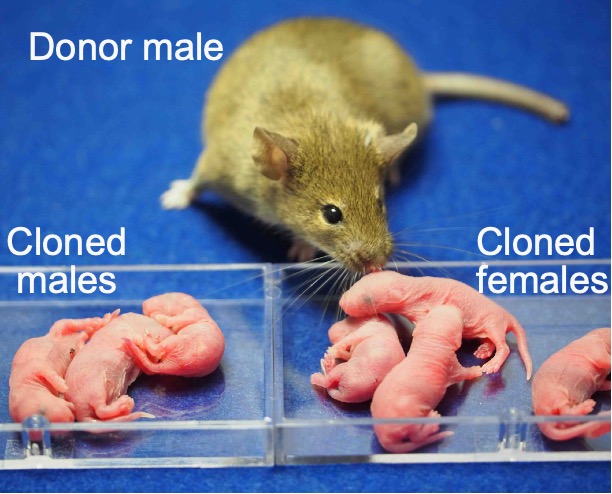
Scientists have successfully transformed male mouse embryos into female versions for the very first time using a CRISPR-based technique. A team from Japan achieved this by removing the Y chromosome from male cells, resulting in female clones of male mice. This groundbreaking research, led by Takashi Ishiuchi and Shogo Matoba, was published in a preprint paper on bioRxiv and could potentially reshape our understanding of reproduction.
Monika Ward, a reproductive biologist at the University of Hawaii, noted that no one had accomplished this previously. The study's findings could lead to novel insights into reproduction and aid in the conservation of endangered species. Ishiuchi and Matoba's work could also offer a solution to the challenges faced when cloning mammals, as cloning a male animal typically results in all male offspring.
By eliminating the Y chromosome, they can generate female offspring, thus expanding the possibilities for cloning efforts. The researchers hope their technique might aid in the rescue of endangered species, particularly when only a few individuals remain. While the approach shows promise, it does have limitations. Currently, it requires hollowed-out egg cells, which need to be sourced from females of the same species or closely related ones.
Additionally, the technique isn't applicable to species with XO chromosomes, as XO female mice tend to be infertile. However, complementary technologies, such as the one developed by Katsuhiko Hayashi, could potentially address these challenges and further expand the possibilities of cloning.
Written by urgent.news from MIT Technology Review's reporting — not their text. Machine-written — may contain errors; check the original before relying on it.
Also reported by 1 other outlet
- Scientists just created female clones of male mice technologyreview.com