Will Myanmar Get What It Wants From ASEAN?
A Bangkok visit by junta leader Min Aung Hlaing reinforced the two countries’ ties.
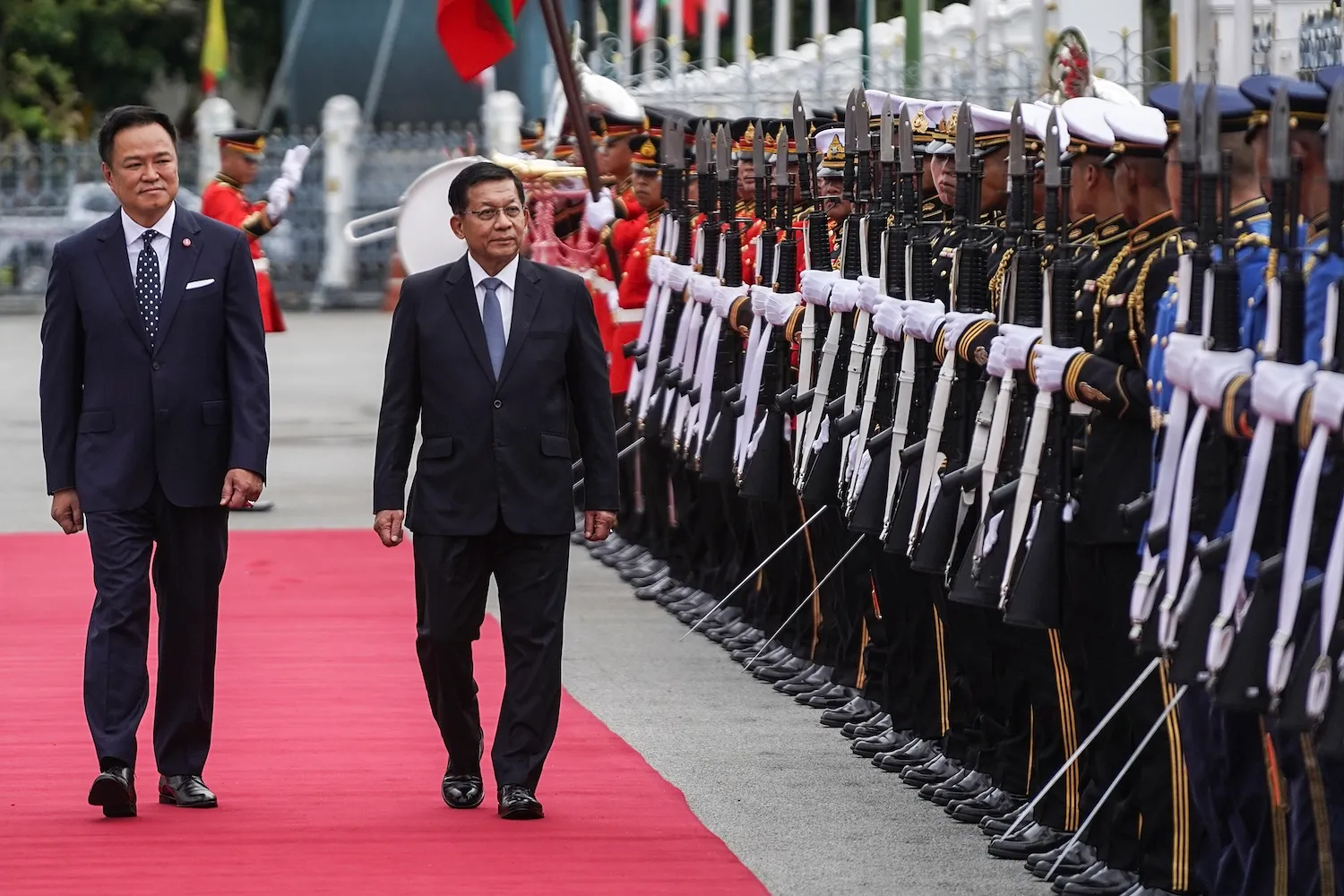
This week's highlights include Myanmar junta leader Min Aung Hlaing's visit to Bangkok for a diplomatic push, the Philippines' slowing economic growth, and a school shooting bringing Thailand's gun culture to the global spotlight. Myanmar's junta leader visited Bangkok last week as part of an ongoing and successful diplomatic push following the 2025-2026 sham elections and his inauguration as president in April.
The visit marks the latest phase in Thailand's normalization of relations with Myanmar, which shares a 1,500-mile border with the country.
Thailand's foreign minister has stated that they need to be realistic in their dealings with Myanmar, but not everyone is on board with this approach. In July, Thailand hosted an informal meeting between Myanmar's foreign minister and ASEAN foreign ministers, which resulted in a joint statement outlining topics for cooperation, including against transnational crimes, transboundary pollution, boosting bilateral trade, and memorandums of understanding on labor, tourism, and space. However, progress on these issues remains uncertain.
Myanmar has made some progress in normalizing relations with ASEAN, with Thailand pledging to support Myanmar's full and equal participation in the organization. The Philippine president also called for the "complete and unconditional release" of opposition leader Aung San Suu Kyi, which was rebuffed by Myanmar's Foreign Ministry.
To be accepted as a full member again, Myanmar needs to overturn the five-point consensus, which was agreed upon by ASEAN leaders and Min Aung Hlaing in the aftermath of the 2021 coup. However, there has been little progress on these points, with Myanmar's parliament even voting to formally reject the five-point consensus in July.
Meanwhile, the Philippines' GDP growth has dropped to 2.3 percent in the second quarter of 2026, marking the slowest growth since 2009. This slowdown can be attributed to the flood control corruption scandal and the massive disruption to global energy markets following U.S. attacks on Iran and Iran's closure of the Strait of Hormuz. Both factors have resulted in a spike in inflation and a sharp slowdown in consumer spending for the Philippines.
Lastly, Vietnamese President To Lam visited Australia and New Zealand on a four-day trip starting Sunday, as part of a diplomatic blitz. The president has been visiting 11 countries, highlighting the importance of diplomatic relations in the region.
Written by urgent.news from Foreign Policy's reporting — not their text. Machine-written — may contain errors; check the original before relying on it.