Multi-layered security strategy needed for more secure borders
LETTER: Recent drug-smuggling cases have shown that criminal networks are becoming more organised, mobile and creative.
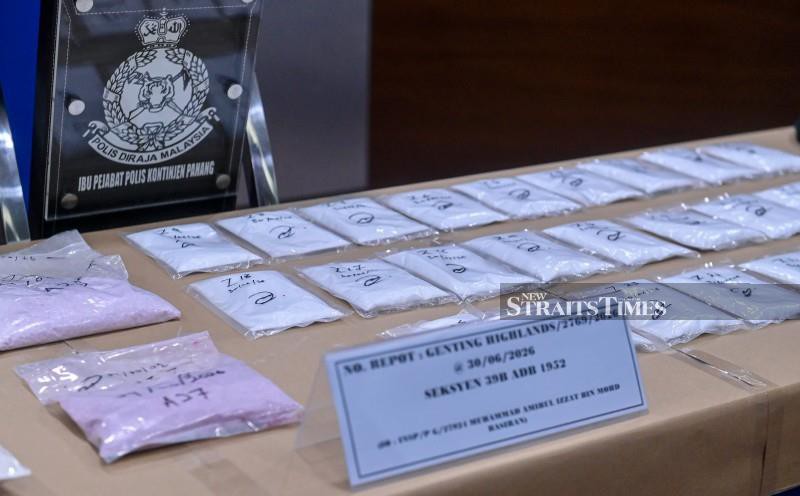
Recent drug-smuggling incidents highlight the growing sophistication of criminal networks, employing commercial flights, cargo vessels, fishing boats, tankers, concealed road compartments, and illicit border crossings. This poses significant threats to public safety, economic stability, and the vulnerability of young individuals to exploitation.
In February 2026, Malaysian Maritime Enforcement Agency officials in Pahang apprehended 1.572 tonnes of methamphetamine worth around RM83.75 million from two ships, detaining 18 crew members from Thailand and Indonesia, marking the agency's largest drug seizure in Pahang waters. Subsequently, police disrupted six trafficking attempts via Kuala Lumpur International Airport in July, seizing 247.8 kilogrammes of cannabis valued at approximately RM19.82 million, believed destined for Europe, and arresting seven suspects.
Reports also reveal how syndicates attract vulnerable individuals. In July, officers in Johor apprehended eight individuals, including a 16-year-old allegedly involved in drug transport, seizing drugs worth RM3.04 million. Additionally, between 2024 and April 2026, Malaysian authorities detained 180 locals abroad as suspected drug mules.
A recent case involving a Malaysia Airlines pilot smuggling drugs into Indonesia also shocked the public. To combat these persistent crimes, a comprehensive multi-layered security strategy is required. The foundation should be the adoption of advanced technologies such as artificial intelligence and a unified real-time border intelligence system, overseen by the Malaysian Border Control and Protection Agency (AKPS).
This system would enable police, customs, immigration, maritime enforcement, port, and airport authorities to rapidly compare passenger data, cargo declarations, vehicle movements, vessel records, and criminal watchlists. Shared risk alerts would empower officers to flag suspicious individuals and shipments more swiftly, while facilitating the smooth passage of lawful travelers and businesses.
Enhanced surveillance beyond conventional checkpoints is also imperative. Coastal radar, drones, thermal cameras, cargo scanners, detection dogs, and mobile patrol teams should be strategically deployed based on risk assessments. At sea, authorities should scrutinize abnormal vessel movements and ships disabling tracking signals.
On land, patrols should rotate locations and times to evade syndicate predictability. The deployment of this advanced equipment must be accompanied by well-trained analysts, regular maintenance, and functional command centers. Investing in border patrolling officers is equally crucial. AKPS has indicated a need for 400 investigators, along with a much larger workforce to support its operations.
Personnel should receive joint training in narcotics detection, counterfeiting identification, financial investigation, cyber evidence, and human trafficking cases. Integrity is paramount, with high-risk postings requiring rotation, protected reporting channels, and independent corruption investigations. Regional collaboration must also be expedited and practical.
While ASEAN customs authorities have already facilitated joint operations and information-sharing against illicit drugs and other illegal trade, Malaysia should establish round-the-clock contact points, shared suspect and vessel alerts, coordinated patrols, joint investigations, and swifter actions against criminal assets. Local communities, fishermen, and transport workers should also be equipped with safe channels to report suspicious activities.
While Malaysia cannot eradicate every crime at its borders, fortifying security through interconnected agencies, reliable technology, transparent officers, and trusted regional partners can make smuggling far more challenging, costly, and risky. A secure border should safeguard legitimate movement while thwarting those who exploit it.
Dr. G Periasamy, a senior research fellow at the National Institute of Public Administration (INTAN), emphasizes these points in a recent article published by the New Straits Times Press (M) Bhd.
Written by urgent.news from New Straits Times's reporting — not their text. Machine-written — may contain errors; check the original before relying on it.