Once-in-a-generation solar eclipse wows millions in UK and Europe
More than 95% of the Sun was covered by the Moon in Cornwall, while parts of Spain experienced the magic of a total eclipse.
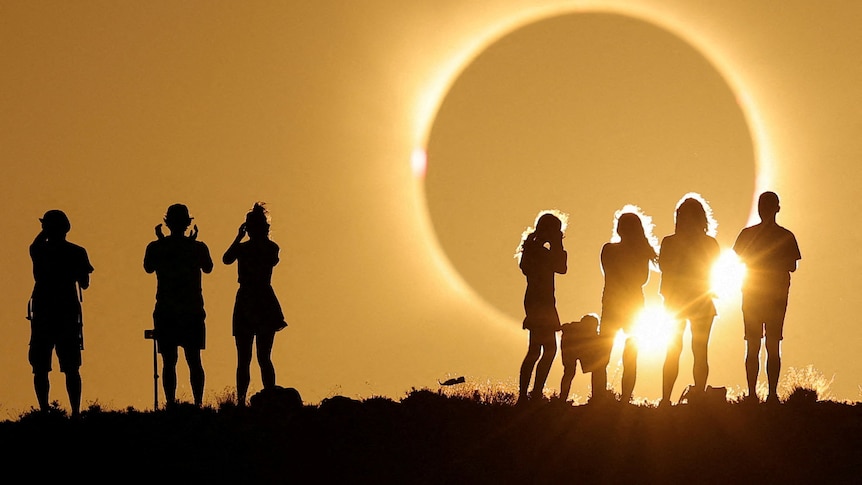
A rare and spectacular solar eclipse swept across parts of the UK and Europe last night, captivating millions who witnessed its breathtaking display. The phenomenon, described as a once-in-a-generation event for the region, treated observers to a mesmerizing sight of the Moon slowly enveloping the Sun.
In the UK, the partial eclipse reached its peak just after 7pm, with most people observing more than 90% of the Sun obscured by the Moon. Meanwhile, regions like Greenland, Iceland, and Spain were treated to the awe-inspiring total eclipse, with the latter experiencing the complete darkness of the celestial event.
As the eclipse unfolded, crowds at viewing sites erupted in gasps and cheers, marveling at the sight and acknowledging the vastness and wonder of the Universe. Astronomy enthusiasts noted that the event served as a humbling reminder of the cosmos' grandeur.
The total eclipse's path began in Siberia, Russia, before curving around the Arctic Ocean and arriving in Iceland in early evening. From there, it swept southwards, providing a partial eclipse for the UK. The partial eclipse commenced around 6pm in northern Scotland and just before 6:20pm on the south coast of England. In cloud-free areas, spectators enjoyed an unrivaled view as the Moon moved slowly across the Sun over the course of an hour.
Despite some cloud cover in northern England, Scotland, and Northern Ireland, numerous people still braved the weather to witness the eclipse at iconic landmarks across the country. Some had managed to secure solar eclipse glasses, but these protective eyewear were in short supply in the lead-up to the event, with retailers capitalizing on the demand.
Solar eclipses occur when the Moon passes between the Sun and Earth, casting a shadow on our planet. In the UK, the Sun, Moon, and Earth were not perfectly aligned, resulting in a partial eclipse with the Moon covering around 90% of the Sun. In contrast, during the total eclipse in Spain, the Sun, Moon, and Earth were precisely aligned, creating a unique celestial spectacle.
Chilean scientist Yasmin Catricheo traveled to A Coruña, north-west Spain, for the event. Upon witnessing the total eclipse, she expressed her amazement, stating that words could not describe the feeling. A total solar eclipse happens roughly every 18 months, but they are rare occurrences for a specific location, occurring once in about 400 years.
The total eclipse in Spain was accompanied by the red glow of the Sun's corona, along with small loops of pink gas called prominences, visible only to those closely observing the event. The Moon then gradually revealed the Sun it had hidden, leaving spectators in disbelief.
The rarity of the total eclipse is a cosmic coincidence, as the Sun is 150 million kilometers away from Earth, 400 times farther than the Moon. Due to the Moon's diameter being 400 times smaller than the Sun's, both celestial bodies appear the same size in our sky. If the Moon were slightly smaller or in a different orbit, total eclipses would never occur.
Total solar eclipses are expected to become more frequent between 2026 and 2028, with three total eclipses visible worldwide during this period. However, the UK will not experience a total solar eclipse until 2081, when up to 99% of the Sun will be covered. The next total solar eclipse for the UK will occur in 2090.
Written by urgent.news from BBC News's reporting — not their text. Machine-written — may contain errors; check the original before relying on it.
This story
This is one outlet's version. Read the fullest account.