Banco Carrefour does not just want to issue cards. Its CEO has a strategy
Quando Felipe Gomes chegou ao Banco Carrefour três anos atrás, encontrou uma instituição pressionada pela queda do lucro e do resultado operacional. Após cinco anos no comando da operação brasileira da Ticket, da francesa Edenred, o executivo desembarcou com um plano para reorganizar o banco e recuperar sua capacidade de crescer. Na primeira etapa, o […] The post O Banco Carrefour não quer só…
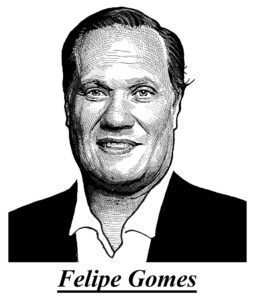
When Felipe Gomes arrived at Banco Carrefour three years ago, he found an institution pressured by a drop in profit and operating result. After five years at the helm of the Brazilian operation of Ticket, from the French Edenred, the executive arrived with a plan to reorganize the bank and recover its growth capacity. In the first stage, the focus was on profitability.
The bank of the French retailer toughened credit granting criteria, reformulated operations with little scale (such as payment terminals), and sought to keep operational costs growth below inflation. In addition, it reinforced customer acquisition by stores and digital channels and expanded the sale of loans, insurance, and other products to those who already had a card.
But the most important change began in 2024, with the integration of the group's brands. Until then, the cards of Atacadão, Carrefour, and Sam's Club worked independently: each one concentrating its benefits in the respective network. The order was to bet on "transversality": all cards would have benefits in all group stores. "When we saw that the strength was not vertical, but transversal, we realized that the customer was spending outside what they could spend inside another unit of the group," Gomes said to Brazil Journal.
The bank started this movement and, according to the CEO, helped Carrefour Brasil itself to see its different operations as parts of the same ecosystem. It worked. The net profit of Banco Carrefour quadrupled in three years, reaching R$ 300 million, and the credit portfolio grew 56% to R$ 26.4 billion. Now, Gomes says he is entering his "second term": transforming the institution into a multi-product bank, with digital accounts, loans, insurance, services for companies, payment terminals, and receivables anticipation.
"We need to grow, and not only grow in current products, but create a broader and multi-product strategy," Gomes said. The transversality is the basis of this expansion. According to the CEO, customers who previously consumed in only one brand and started buying at Carrefour, Atacadão, and Sam's Club increased their average spending by 200%.
The result contradicted the fear that one brand would simply steal sales from another. On the contrary: customers continued buying in their usual network, but started acquiring products within the group that they previously sought from competitors. Proof of this is that the use of the bank's card in competing establishments fell by 7 percentage points.
With the gear more lubricated, Gomes' idea is to gather this information in a single view of the consumer and use it to offer credit, insurance, and services more suitable for each profile - segments that already represent half of the operating profit. Although the card continues to be the largest product of Banco Carrefour, the sum of the other lines (personal credit, insurance, payroll, and bill payment) already accounts for more than half of the operating profit - and the idea is to increase this account.
About 65 million consumers pass through the retail operations of Carrefour Brasil monthly, while the bank has only 7.2 million customers. It is in this difference that Gomes sees his main growth opportunity. One of the next bets is a digital account, already in tests. The account will allow incorporating consumers who frequent stores but are not initially approved to receive a card.
These customers will be able to move resources and access discounts, installments, and other benefits. "It's the beginning of a simpler relationship, with less risk for both sides. Later, I can enter with other financial products," Gomes said. Digital has already gained space in distribution. Currently, 82% of active customers use the applications of Grupo Carrefour Brasil and about 80% of loans are contracted through the app.
Even so, stores continue to be relevant: two-thirds of new customers are acquired physically, by a network with about 3,500 sellers and supervisors. "The store is the best sales channel you can have. Food retail generates a very high frequency and greatly increases our ability to relate to the customer," Gomes said. The second front of expansion of Banco Carrefour is the small business market.
Approximately one-third of the group's revenue comes from business clients, mainly restaurants, traders, and distributors that buy at Atacadão. Despite this, the bank is still predominantly focused on individuals. To occupy this space, the institution is creating a B2B vertical. The plans include accounts for legal entities, working capital, receivables anticipation, and a card aimed at small entrepreneurs.
Gomes says that many business owners already use personal cards from Atacadão to buy inputs, a sign of unmet demand. The bank is also preparing a new version of its payment terminal. The operation has existed since 2022, but it is still small and, according to Gomes, had little connection with the rest of the group. The new model aims to form a flywheel: the merchant sells through the terminal, anticipates receivables under potentially better conditions, and uses the resources to recompose their stocks at Atacadão.
Gomes states that he does not intend to enter a generalized dispute with Stone, Pagbank, and other acquiring companies. "I'm not entering the war of payment terminals," he says. "But I will have financial products with a payment terminal where I can be much more capable of giving a cheaper receivables anticipation if he buys in my store."
Translated by urgent.news. Machine-written — may contain errors; check the original before relying on it.