Newly Analyzed Skull Fragments Suggest Ancient Human Species Had a “Mosaic” Anatomy
Learn more about adult Homo antecessor skull fragments from a Spanish cave that highlight the species' mosaic anatomy.
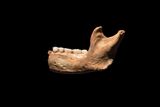
A recent analysis of newly discovered skull fragments from a Spanish cave complex suggests that the ancient human species Homo antecessor may have had a more "mosaic" anatomy than previously thought. The findings, published in the Journal of Human Evolution, shed new light on the evolutionary relationship between Homo antecessor and modern humans.
The Gran Dolina cave complex, located in northern Spain, was the first and only site where H. antecessor remains had been found until now. Researchers have previously identified samples from between 13 and 15 individuals at the site, but recently uncovered 24 new fossils. Among these new specimens were three fragments of parietal skull, which form the upper and sides of the human skull.
Comparing the thickness of the skull layers using micro-computed tomography, a technique that reveals minute features, researchers were able to analyze the samples in a more detailed way than previously possible. The results showed that the middle layer of the H. antecessor skulls was the thickest of the three, comprising roughly half of the total skull thickness. This is similar to the composition seen in modern humans.
However, there were differences between the two species. Unlike modern humans, H. antecessor had thinner outer skull layers and thicker inner layers. Additionally, the teeth of H. antecessor more closely resembled those of more ancient species, while other bone features shared similarities with modern humans.
The researchers noted that while the new data suggests a "mosaic" anatomy for H. antecessor, the limited number of identified samples means that further excavation campaigns could refine these interpretations. The authors emphasized the importance of continued research to test these observations and explore their implications.
Written by urgent.news from Discover Magazine's reporting — not their text. Machine-written — may contain errors; check the original before relying on it.