How 3 Jewish refugees from the Nazis built Iceland’s classical music scene from scratch
Closed borders and antisemitism made the country's musical genesis story all the more unlikely, but as a newly translated book shows, perseverance and luck helped make history The post How 3 Jewish refugees from the Nazis built Iceland’s classical music scene from scratch appeared first on The Times of Israel .
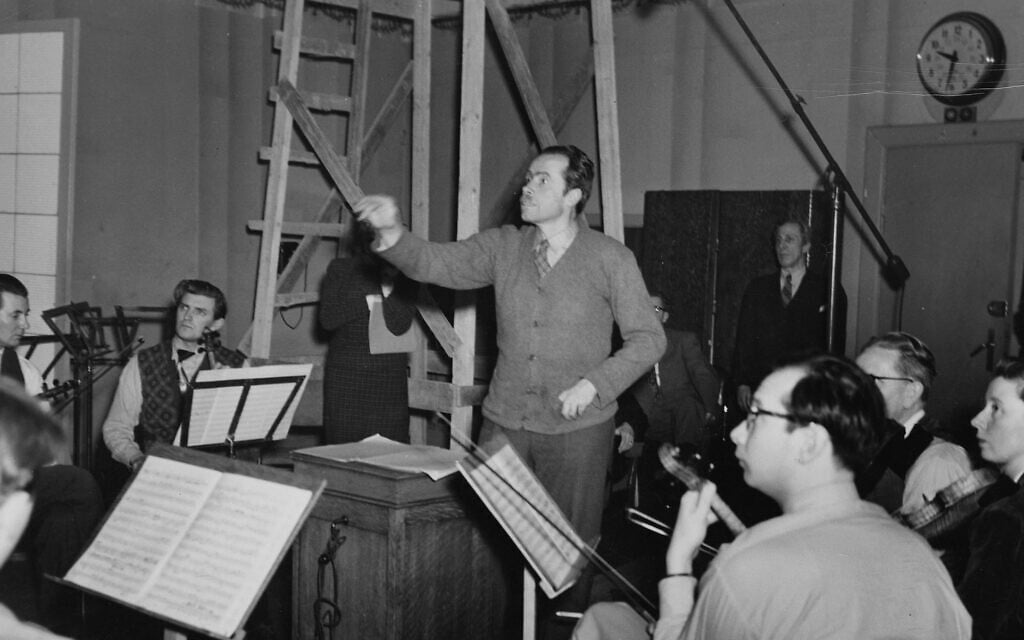
In the autumn of 1935, a small fishing port named Reykjavik was struggling to make ends meet. With a population of fewer than 30,000 people, the city had no concert hall, orchestra, or conservatory. Amidst this bleak backdrop, three Jewish musicians from Nazi Germany found themselves in Iceland, seeking refuge from the horrors of war.
The first to arrive was Victor Urbancic, a Viennese conductor, in 1938. Born in 1903, Urbancic had trained as a pianist, composer, and conductor at the Vienna Conservatory. However, his Catholic upbringing and Jewish wife, Melitta, made it impossible for him to continue his career in Nazi Germany. After failing to find a safe haven in Switzerland and the United States, Urbancic settled in Iceland, where he became the chief conductor of the Reykjavík Orchestra.
He led the first performances of Bach's "St. John Passion" and Mozart's "Requiem" and even taught piano and theory at the Reykjavík School of Music.
Next was Robert Abraham, a pianist born in Berlin in 1912. Abraham had trained at the Berlin Hochschule für Musik before fleeing the country in 1934. Alone and unaccompanied, he sailed for Iceland in late 1935 and was advised to settle first in the fishing town of Akureyri. There, Abraham became a central figure in Icelandic choral music. He conducted the Iceland Symphony Orchestra and contributed significantly to the development of Icelandic classical music.
Lastly, Heinz Edelstein, a cellist and teacher from Freiburg, arrived in Iceland in the same year as Abraham, but with a family instead of alone. With two sons in tow, Edelstein's journey to Iceland was different from the others. He brought his wife and children with him, hoping to escape the horrors of war and build a new life in a foreign land. Edelstein's contributions to Icelandic classical music are less documented, but his role as a teacher and performer was undoubtedly significant.
These three refugees, despite their vastly different backgrounds and personal circumstances, found a way to contribute to the development of Icelandic classical music. Their stories, though largely untold for nearly a century, offer a painful reminder of Iceland's own Holocaust history and the resilience of the human spirit. A newly translated book, "Music at the World's End: Three Refugee Musicians from Nazi Germany and Their Contribution to Iceland's Music Life," by Icelandic musicologist Árni Heimir Ingólfsson, sheds light on their individual pathways to Iceland and the role they played in shaping the country's musical landscape.
Written by urgent.news from Jerusalem Post's reporting — not their text. Machine-written — may contain errors; check the original before relying on it.
This story
This is one outlet's version. Read the fullest account.