Have physicists finally discovered glueballs? New evidence points to yes.
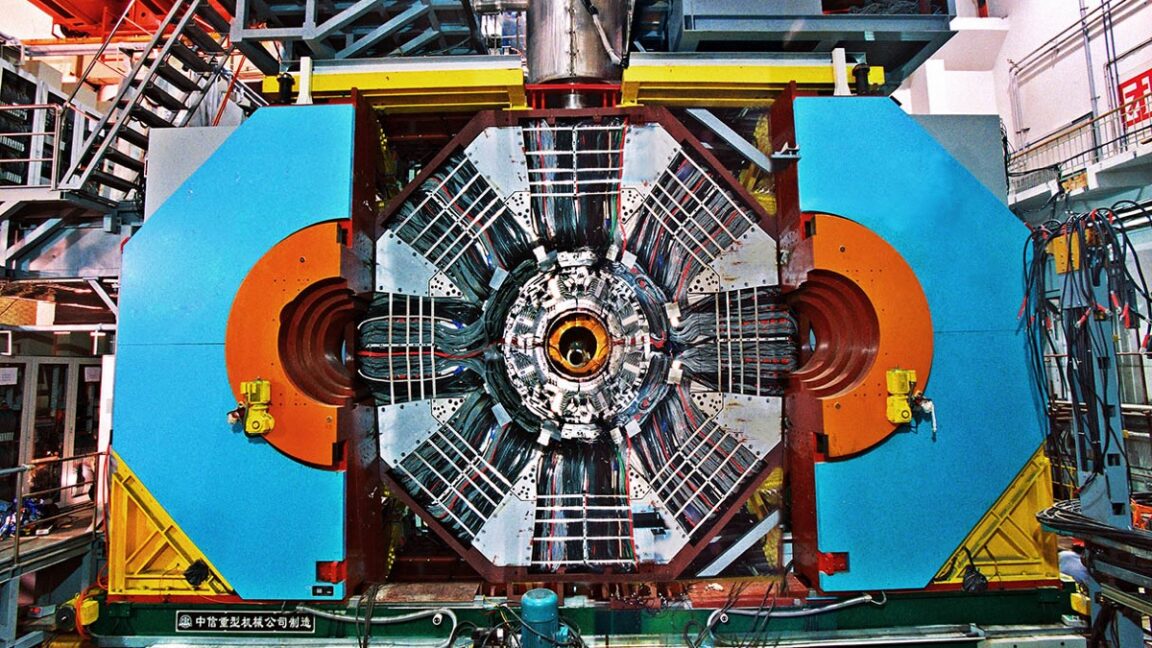
Physicists from the Beijing Spectrometer III (BES III) experiment have presented compelling evidence suggesting the existence of glueballs, a hypothetical composite particle composed solely of gluons, according to quantum theory. The findings were published in a preprint on arXiv last month and were also discussed at the International Conference on High Energy Physics (ICHEP) last week.
Everything we observe in the universe is constructed from quarks, which are bound together by gluons to form protons and neutrons, the central components of every atom. The Higgs boson, discovered in 2012 after extensive searching, was hailed as the final missing piece of the Standard Model of Particle Physics. However, numerous questions remain unanswered, including the existence of glueballs.
The Standard Model predicts their presence as a direct outcome of quantum chromodynamics, the theory governing the strong nuclear force. In fact, it suggests the existence of multiple types of glueballs.
Matthew Francis, writing for Ars in 2015, highlighted the significance of these particles, stating that if the Standard Model is accurate, glueballs should exist.
Written by urgent.news from Ars Technica's reporting — not their text. Machine-written — may contain errors; check the original before relying on it.
This story
This is one outlet's version. Read the fullest account.