Have physicists finally discovered glueballs? New evidence points to yes.
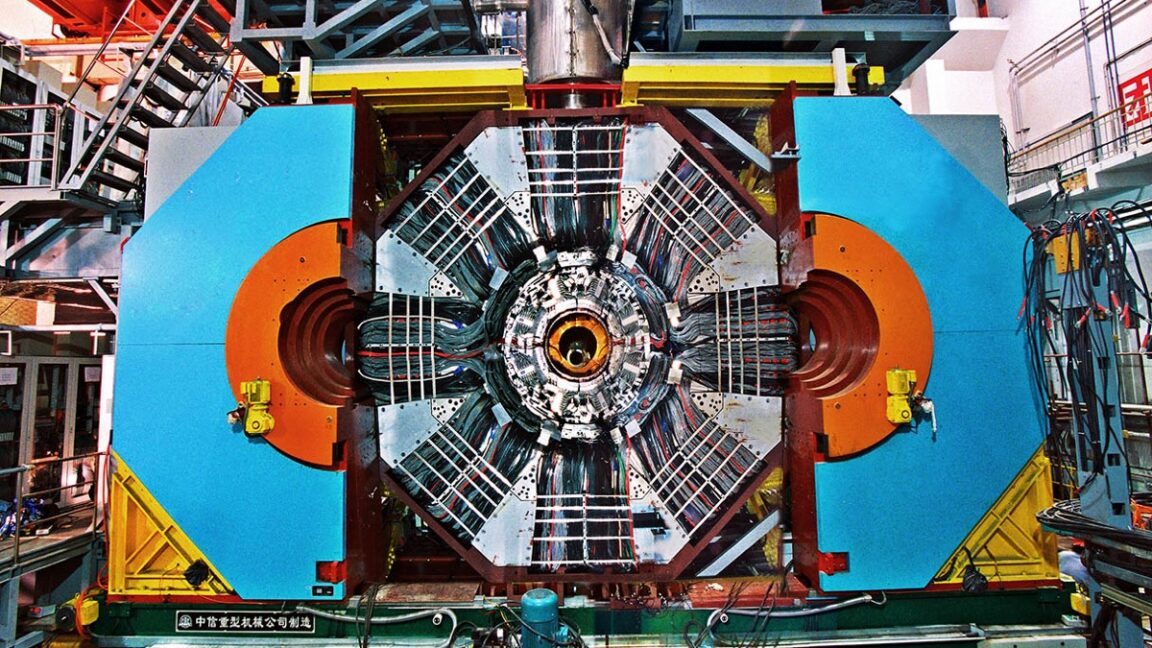
Physicists at the Beijing Spectrometer III (BES III) experiment have presented compelling evidence suggesting the existence of glueballs, a hypothetical composite particle comprising solely of gluons, according to quantum theory. This discovery was published in a preprint on arXiv earlier this month and was also discussed at the recent International Conference on High Energy Physics (ICHEP).
Everything we observe in the universe is comprised of quarks bonded by gluons, the carriers of the strong nuclear force, to form protons and neutrons, which make up the nucleus of every atom. The Higgs boson, discovered in 2012 after years of searching, was considered the ultimate missing piece in the Standard Model of Particle Physics. However, numerous questions remain unanswered, including the existence of glueballs.
Theoretical predictions indicate that glueballs should indeed exist, as they are a direct consequence of quantum chromodynamics - the theory governing the strong nuclear force. In fact, there should be multiple types of glueballs. As Matthew Francis of Ars Technica wrote in 2015, "Glueballs are the ultimate test for the Standard Model".
Written by urgent.news from Ars Technica Science's reporting — not their text. Machine-written — may contain errors; check the original before relying on it.