‘Blow to China's pride’: Fallout extent from Long March 7A rocket failure hinges on what went wrong
A Long March 7A rocket exploded shortly after liftoff on Monday (Aug 10), bringing its half-decade run of successful missions to a fiery end. The extent of the fallout on China’s space programme will hinge on what investigators uncover, say analysts.
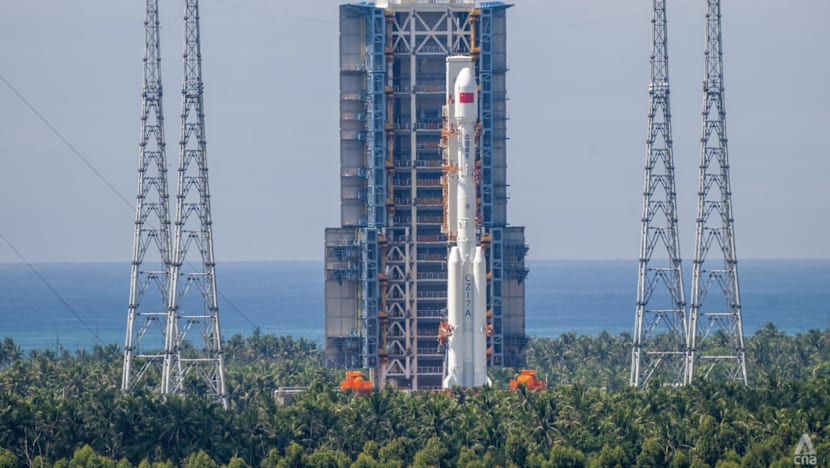
A Long March 7A rocket suffered a catastrophic failure shortly after liftoff on Monday, Aug 10, marking the end of its five-year streak of successful missions. The magnitude of the impact on China's space program will depend on the findings of investigators, according to analysts. The key question is whether the fault was specific to the 7A model or if it involved components shared with other rockets.
If it was specific, the effects would likely remain contained, said Svetla Ben-Itzhak, an assistant professor of space and international relations at Johns Hopkins University's SAIS. However, given the rocket's established track record, experts are concerned about the possibility of a basic design flaw, assembly process error, or software error that could be easily rectified.
The Long March 7A is a medium-lift rocket primarily used for sending satellites into high orbit. It is a newer member of China's Long March family of rockets, which has been instrumental in the country's space program. The rocket's 18th mission, which ended in failure, was particularly significant as it marked the first launch since a failed maiden flight six years ago.
Written by urgent.news from Channel News Asia's reporting — not their text. Machine-written — may contain errors; check the original before relying on it.
This story
This is one outlet's version. Read the fullest account.