Why submarine attacks may prove to be the Achilles’ heel for China’s new carrier fleet
China’s rapidly expanding aircraft carrier fleet may be vulnerable to attack from submarines – an area where its defensive capacity lags behind that of the United States – according to a new report. This gap is drawing increasing attention as Beijing builds more sophisticated carriers and sends them deeper into the western Pacific, where the People’s Liberation Army Navy (PLAN)’s knowledge of the…
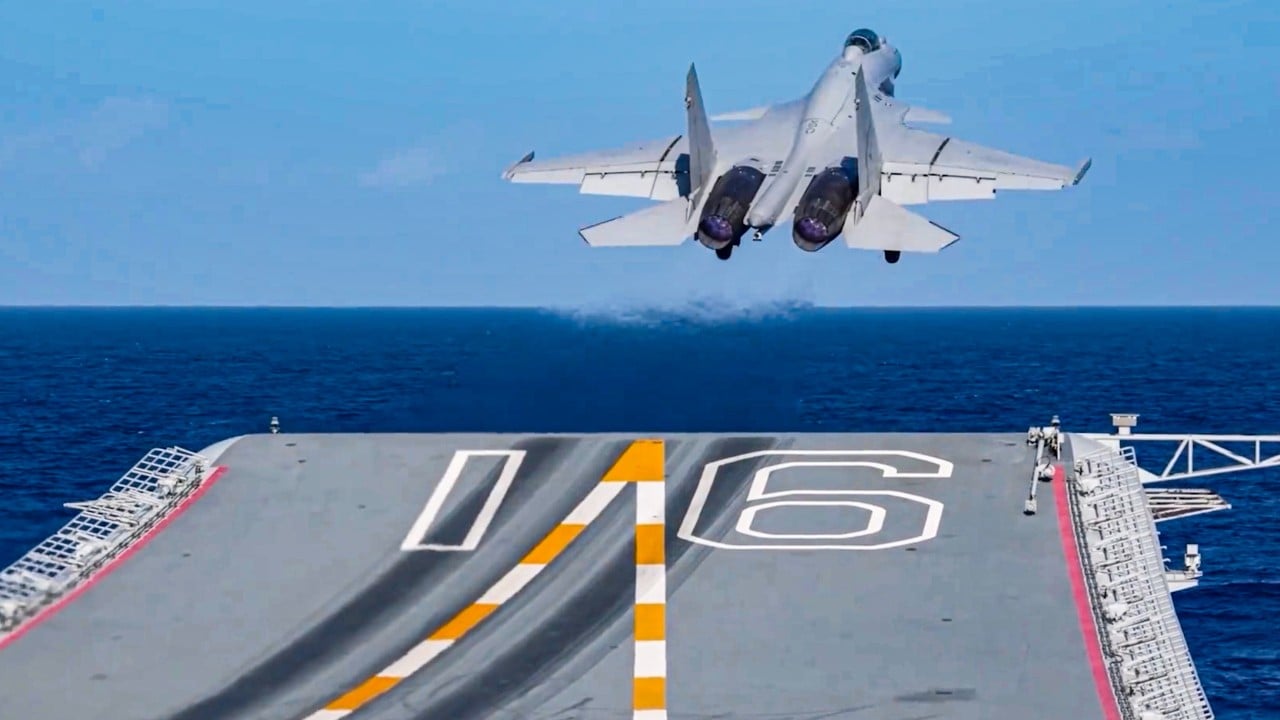
China's rapidly growing aircraft carrier fleet may be at risk from submarine attacks, a weakness that sets it apart from the United States' naval strength. This concern is growing as Beijing continues to develop more advanced carriers and deploy them in the western Pacific. A recent report by the Center for Strategic and International Studies outlines a "cost-imposition" strategy which includes various tactics to threaten China's carriers.
In this strategy, submarine ambushes appear to be the most vulnerable area for China's navy. US attack submarines operating in the western Pacific are seen as a significant threat to Chinese carrier groups. The report highlights that China's underwater detection and tracking capabilities are substantially behind those of the US Navy, making the carriers prone to such attacks.
Geography also plays a role in this vulnerability as it is essential to guard a limited number of maritime chokepoints along the first island chain to protect the Chinese fleet from the wider Pacific. The report also points out that even though the PLAN has invested heavily in improving its undersea awareness and prediction capabilities, important gaps still exist.
Chinese sources acknowledge that China's meteorological and oceanographic capabilities are still lagging behind those of the US Navy. Beijing has been trying to close this gap by developing a network of satellites, research vessels, buoys, underwater gliders, and seabed sensors through the Transparent Ocean program. Additionally, China has also been enhancing its anti-submarine warfare capabilities by expanding its fleet of fixed-wing maritime patrol aircraft and Type 927 ocean-surveillance ships.
However, experts believe that protecting the carriers goes beyond just preventing submarine attacks. Undersea warfare is a crucial part of the PLA's naval strategy, as it aims to maintain sea control in wartime, especially in the first island chain and beyond into the Indian Ocean. China considers Taiwan as its territory, and it has never ruled out the use of force to reunite with it.
Despite this stance, the US opposes any military action against Taiwan and is committed to providing the island with defensive arms. Chinese military-affiliated authors have warned that the depths of the seas near China's coast are too open, making it difficult for the country to monitor and control them effectively. Although China has made progress in anti-submarine warfare, experts believe that US submarines are some of the quietest in the world, making them a significant challenge for China.
Developing effective undersea operations in the Indian Ocean could raise the stakes, especially if Japan were to intervene in a conflict over Taiwan.
Written by urgent.news from Reuters Business via SCMP's reporting — not their text. Machine-written — may contain errors; check the original before relying on it.
This story
This is one outlet's version. Read the fullest account.