Why submarine attacks may prove to be the Achilles’ heel for China’s new carrier fleet
China’s rapidly expanding aircraft carrier fleet may be vulnerable to attack from submarines – an area where its defensive capacity lags behind that of the United States – according to a new report. This gap is drawing increasing attention as Beijing builds more sophisticated carriers and sends them deeper into the western Pacific, where the People’s Liberation Army Navy (PLAN)’s knowledge of the…
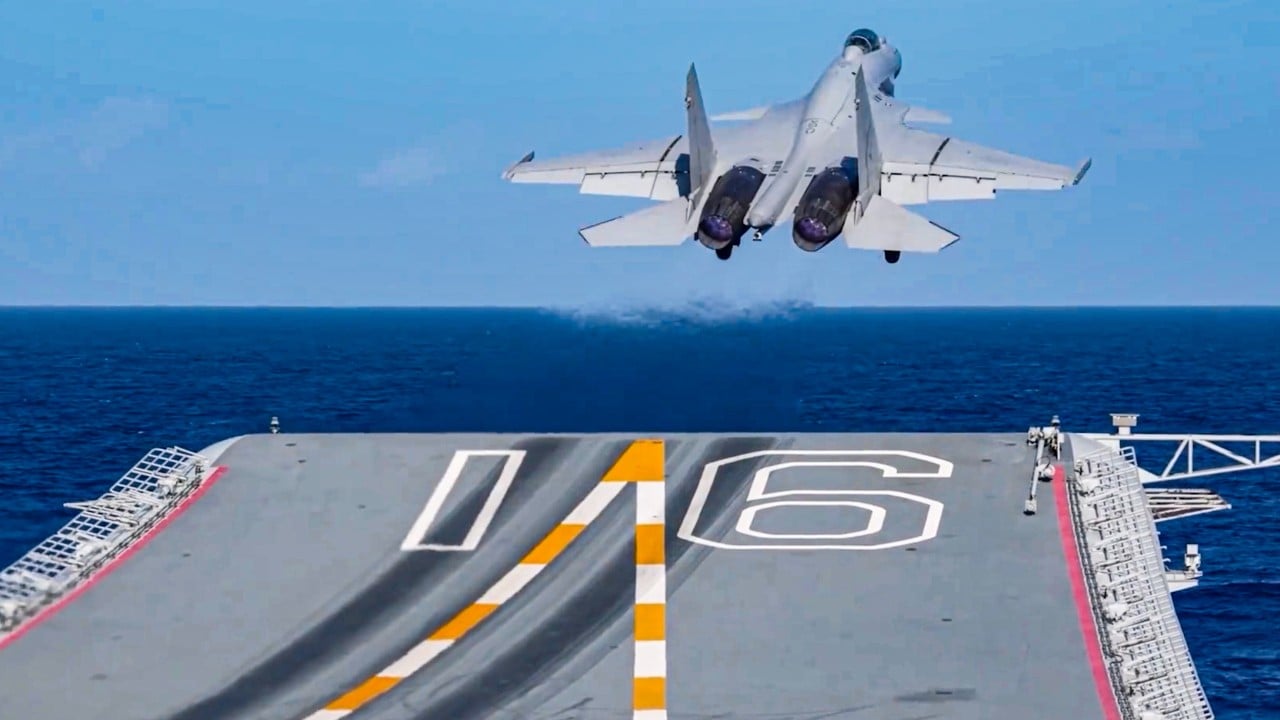
A new report highlights that China's growing aircraft carrier fleet may be vulnerable to submarine attacks, an area where its defense capabilities are lacking compared to the United States. The report, published by the Centre for Strategic and International Studies in Washington, outlines a "cost-imposition" strategy that could potentially threaten China's carriers.
This strategy involves various methods, including land-based strike networks, long-range air strikes, cyber and electromagnetic attacks, and drone swarms. However, the strategy's most concerning aspect appears to be submarine ambushes, which experts believe could expose the high-value ships. This vulnerability is largely due to China's lack of advanced undersea detection and tracking capabilities.
Geography also plays a role, as certain maritime chokepoints along the first island chain could be targeted by US and allied forces to threaten the carriers as they pass through. Despite the PLAN's recent investments in improving its undersea awareness, experts note that important gaps remain, particularly beyond the first island chain.
China has been working to close the gap through programs like Transparent Ocean, which aims to establish a network of sensors across strategically important waters. However, naval strategy analysts emphasize that protecting carriers is just one aspect of China's broader undersea warfare strategy, which is crucial for achieving sea control in wartime.
Written by urgent.news from South China Morning Post's reporting — not their text. Machine-written — may contain errors; check the original before relying on it.