The legacy of the 1956 women’s march: Sophie de Bruyn's plea for action against GBV
On Women’s Day, Sophie de Bruyn delivered a powerful critique of gender-based violence in South Africa, urging citizens and leaders to take action against this pervasive issue.
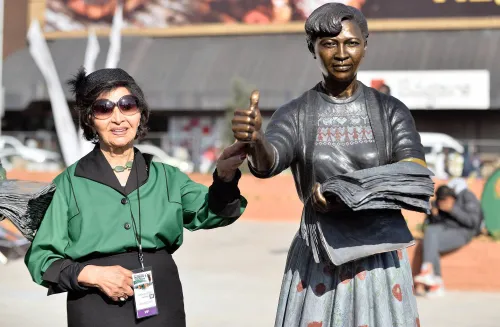
Sophie de Bruyn, a stalwart of the struggle, delivered a powerful plea for action against gender-based violence (GBV) during a commemoration of Women's Day at the Union Buildings. She reflected on the impact of their silent protest on August 9, 1956, which brought together over 20,000 women and presented petitions with more than 100,000 signatures to protest apartheid pass laws.
De Bruyn acknowledged the freedom they fought for, yet lamented that it has become a painful paradox. Today, women are prisoners in their own homes, and GBV continues to cast a dark cloud over society. She expressed her sorrow for the girl-child, daughters, mothers, and grandmothers who are abused, violated, and silenced, emphasizing that this is not the freedom they marched for.
Addressing officials and politicians, De Bruyn urged them not to let their sacrifices be in vain. She called for cleansing of corruption, protection of women and children, honest and accountable leadership, and for the people to match the bravery of 1956 with bold action against crime, insecurity, poverty, corruption, unemployment, homelessness, violence, and many other ills that restrict their future, safety, freedom, and prosperity.
The Commission for Gender Equality (CGE) and the KZN Network on Violence Against Women echoed De Bruyn's sentiments, highlighting the lack of outrage to hold the SAPS, National Prosecuting Authority, and criminal justice cluster accountable. They commended the president for appointing the National Gender-Based Violence Council but emphasized the need for full resources to implement its initiatives.
KZN Network on Violence Against Women's director, Cookie Edwards, expressed concern that GBV is accepted as normal in most communities. She encouraged women to break the silence and come forward, but noted the lack of resources to help them escape toxic relationships. Edwards stressed the importance of providing accommodation and skills training for survivors, as well as holding individuals responsible for addressing GBV.
Written by urgent.news from IOL's reporting — not their text. Machine-written — may contain errors; check the original before relying on it.
This story
This is one outlet's version. Read the fullest account.