Supreme Court says use of pellet guns in ‘exceptional circumstances’ is part of graded police response
Apex court says it will examine particular incidents during which the police used pellet guns indiscriminately or arbitrarily in violation of the standard regulations mapping graded responses for crowd control
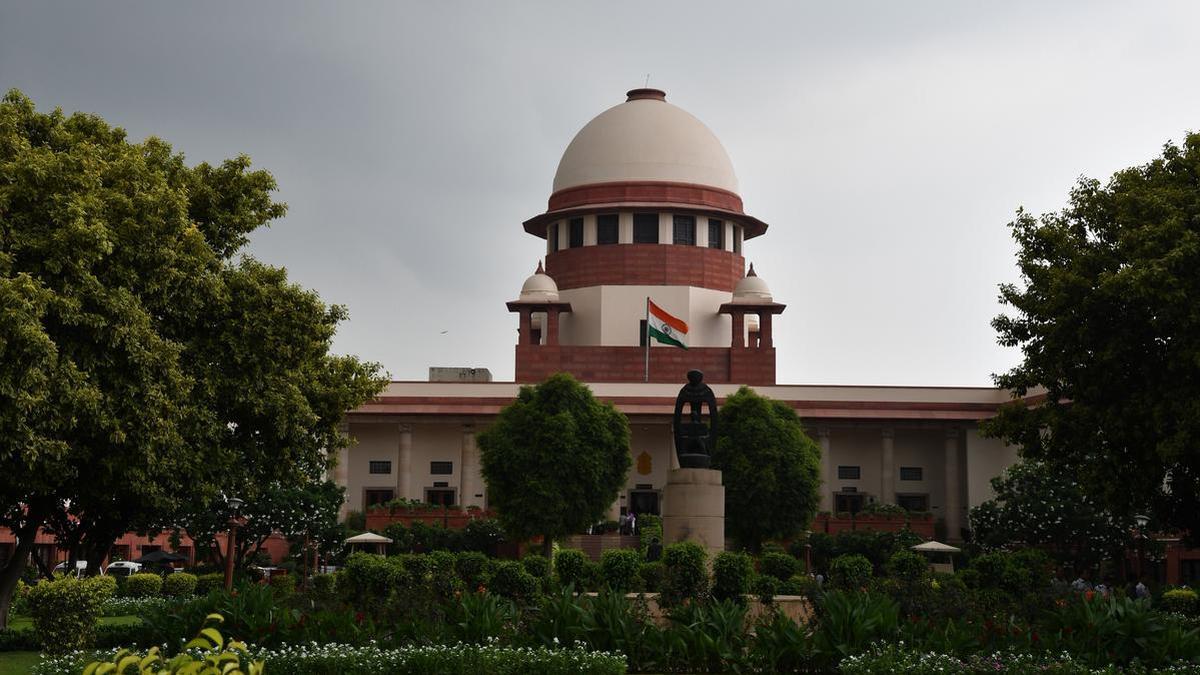
The Supreme Court ruled on July 30, 2026, that police may employ pellet guns in "exceptional circumstances" as part of a tiered strategy to manage civilian protests. However, the court did not specify which situations would warrant the use of these non-lethal weapons and did not request any clarification from the Union government during the hearing. At least 10 individuals were wounded by pellets on July 20, according to an RTI response.
The court, presided over by Chief Justice of India Surya Kant and Justice Joymalya Bagchi, emphasized that the state should handle student protests with non-violence and avoid brutality. Nonetheless, the judges acknowledged the potential for protesters' intentions to shift from legitimate to harmful purposes, leading to violence. They stressed that police must be prepared to respond accordingly, incorporating force when necessary to manage a potentially unruly crowd.
While the court refrained from advocating a complete prohibition on the use of pellet guns, it indicated that it would investigate specific instances where such weapons were used recklessly or improperly. The petition, filed by former IPS officer Yashovardhan Azad and two pellet injury victims, Prashant Kumar Singh and Shekh Irshad Mansoori, requested a ban on the deployment of pellet guns by law enforcement agencies during civilian assemblies.
The court questioned the petitioners' claim of a vague prayer, instructing counsel Vrinda Grover to refine the petition to challenge the rules permitting the use of pellet guns. Grover noted the absence of specific standing orders within the Delhi Police mandating their use. The court also inquired about the provision of protective gear for police officers to help them make more measured decisions in confrontational situations, as every individual involved in such scenarios remains human.
During the proceedings, one of the petitioners, Prashant Kumar Singh, and Mr. Mansoori were injured by pellets during a police crackdown on July 20 that involved the use of pump-action guns, dispersing a crowd with splinter-like pellets, even after some protestors had raised their hands in surrender. Ms. Grover urged the court to compel the Union government and Delhi Police to preserve certain records, including duty logs, weapon and ammunition logs, and the register of the Rapid Action Force (RAF) deployment on the day of the incident.
The previous court order had already mandated the safeguarding of video evidence and communication logs related to the incident.
Previously, the court had directed the preservation of footage from CCTV cameras, body-worn cameras, and drones, as well as communications from the Wireless and Police Control Room. The court also ordered the Delhi government to provide comprehensive medical treatment to Mr. Singh for his injuries.
Written by urgent.news from The Hindu's reporting — not their text. Machine-written — may contain errors; check the original before relying on it.
This story
This is one outlet's version. Read the fullest account.