SPD: "A storm will sweep the party leadership away": Is the SPD facing a revolt?
If the state elections in the east turn out to be a disaster, Bärbel Bas and Lars Klingbeil's days at the top of the SPD could be numbered. But the possible successors also offer little hope.
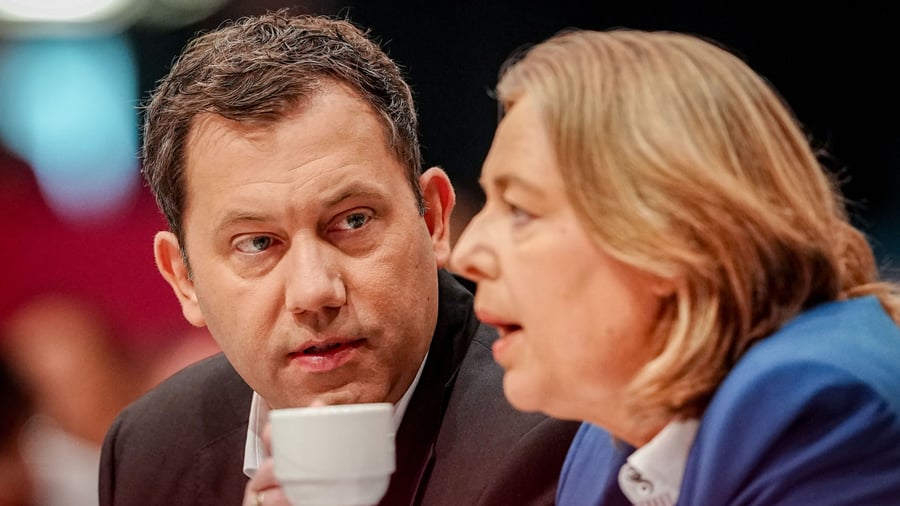
The return from vacation was probably supposed to be more relaxing for Lars Klingbeil (SPD). Hardly back, the Union accused the Finance Minister of cheating on tax reform. And even within his own ranks, Klingbeil, as SPD chairman, immediately faced criticism. The working group "Migration and Diversity" within the SPD called for an extraordinary party conference in the fall to reorganize the party leadership.
"There is a massive irritation in the population regarding social democracy in our country," said the two chairmen of the working group, Mehria Ashuftah and Orkan Özdemir, to "Spiegel". Given the "existential-threatening trend at the federal level," an extraordinary federal party conference in the coming fall is inevitable.
Previously, open letters from the SPD Groß-Gerau and the SPD Bielefeld had become known, both of which sharply criticized the party leadership. "The anger is growing, the discontent is rising," wrote the comrades from Groß-Gerau, looking at the social reforms. The Bielefeld SPD demands that Klingbeil and his co-chairwoman Bärbel Bas separate party leadership and ministerial offices.
For now, it is only the third or fourth row that is rebelling, but the increasing number of open letters shows that there is a growing discontent within the SPD. "It can't go on like this," is a sentence that is currently often heard in the party.
"The mood is terrible," complains a campaigner, and many see the responsibility for this with Bas and Klingbeil. "Many have given up on the party leadership," says a comrade. Already at the end of next month, Klingbeil and Bas could lose their jobs if the three state elections in Saxony-Anhalt, Berlin, and Mecklenburg-Vorpommern do not go well.
"Then a storm will break over the SPD that will sweep away the party leadership," says a Social Democrat. However, it is also possible that Klingbeil and Bas will survive this storm. The situation of the SPD before the state elections can be described as dramatic without exaggeration.
In Saxony-Anhalt, the SPD could for the first time in the history of the Federal Republic be voted out of a state parliament; in polls, it stands at six percent. In Berlin, the SPD is only in fifth place, despite the self-demontage of the Berlin CDU. In Mecklenburg-Vorpommern, Prime Minister Manuela Schwesig has approached 30 percent but is still behind the AfD.
The campaigners blame the federal government for the poor poll ratings. The SPD has been stagnating at 12 to 13 percent for months. It is almost impossible for the SPD campaigners in the East to distance themselves from these poll ratings.
Instead of doing everything possible to revive the former people's party, the two party leaders have been accused of lacking ideas and being absent, according to SPD politicians. They hardly participated in the creation of the new basic program, and the debates about the new program are often described as boring.
A plan for how the SPD can get out of the crisis is not in sight, criticize several high-ranking party members. Especially Bas is "blank" when it comes to the future of the Social Democrats, says an SPD politician.
The Bundestag member Mahmut Özdemir already expressed his frustration on Instagram weeks ago. "At an extraordinary party conference, we need to discuss the direction we want to take as an SPD," he wrote.
The environment of Klingbeil rejects the criticism. Bas and Klingbeil significantly contributed to the basic program process, and Klingbeil made a start for modern social democratic politics with his keynote speech at the Bertelsmann Foundation in March.
The dual function of party leadership and ministerial office also makes sense, as the SPD party leader must deal with topics such as pensions and finances because he sits in the coalition committee. At the same time, the coalition has agreed on a reform package that will move the country forward.
However, the reforms, such as the abolition of the "pension at 63," are perceived by SPD campaigners as a disturbance. Schwesig announced a veto against the pension reform in the Bundesrat if she is re-elected and tries to distance herself from the federal SPD in the election campaign.
On their first posters, there is not even an SPD logo. Also in Saxony-Anhalt, a distance from the federal SPD is noticeable.
As SPD General Secretary Tim Klüssendorf was on tour in the state last week, he did not complete a single event with the top candidate Armin Willingmann.
The Berlin SPD top candidate Steffen Krach is annoyed by the federal government's proposal to ban expropriations, which has made the idea of the Berlin Left popular again.
SPD-NRW top candidate Jochen Ott calls for a new appearance, saying the federal government urgently needs "a narrative." An example could be the British Labour Party under the new Prime Minister Andy Burnham.
The SPD leadership does not want to take the criticism and open letters too seriously; official inquiries are left unanswered. However, it is a bad idea for sub-districts, working groups, and deputies to start personnel debates before the state elections, says a leadership figure.
This would only harm the SPD. The question is who could succeed Bas and Klingbeil. There are no logical candidates for succession. Names mentioned include Hubertus Heil and Alexander Schweitzer, but they do not represent a new beginning.
Translated by urgent.news. Machine-written — may contain errors; check the original before relying on it.