Roman Series: NASA’s New View of the Dark Universe
Meet NASA’s newest space telescope: Roman. With similar resolution to Hubble but a field of view 100 times larger, the Nancy Grace Roman Space Telescope will settle essential questions in astronomy. NASA scientists Josh Schlieder and Alina Kiessling explain how that wide view will help us understand dark energy, one of the most puzzling mysteries in space. We’ll also meet Nancy Grace Roman, who…
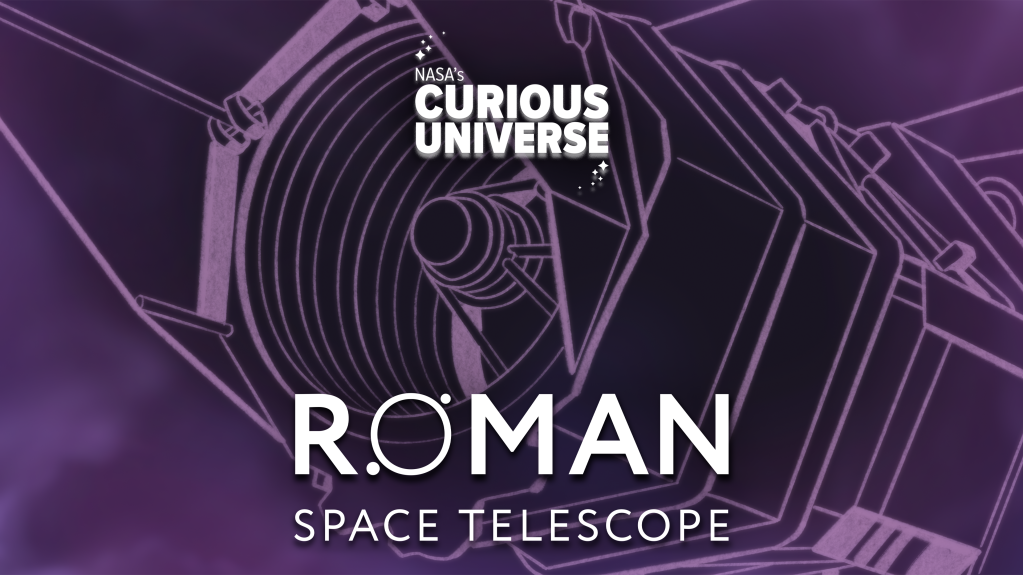
NASA's new space telescope, the Nancy Grace Roman Space Telescope, aims to unravel some of the biggest mysteries in astronomy. This telescope boasts a 100-fold larger field of view compared to its predecessor Hubble, allowing it to capture breathtaking images of galaxies and planets in vast expanses of the universe.
One of its primary missions is to explore the enigmatic force known as dark energy, which is believed to be causing the accelerated expansion of the universe. With its advanced capabilities, Roman will be able to collect vast amounts of data, including over a billion galaxies and thousands of exoplanets orbiting distant stars.
Nancy Grace Roman, the namesake of this remarkable telescope, played a pioneering role in shaping modern astronomy. Born in 1925, she grew up under a star-filled sky in Nevada, where she developed a deep interest in the cosmos. Despite facing gender barriers in her field, Roman pursued her passion for astronomy, earning a Ph.D. and securing a research position at a prestigious observatory.
Throughout her career, Roman encountered numerous challenges, including being underestimated by her peers. However, her unwavering determination and resilience led her to make significant contributions to the field. In 2020, NASA renamed the Wide Field Infrared Survey Telescope (WFIRST) to honor Nancy Grace Roman's monumental impact on astronomy.
As the Nancy Grace Roman Space Telescope embarks on its mission, it carries forward the legacy of its namesake, promising to illuminate the darkest corners of the universe and expand our understanding of the cosmos.
Written by urgent.news from NASA Science's reporting — not their text. Machine-written — may contain errors; check the original before relying on it.